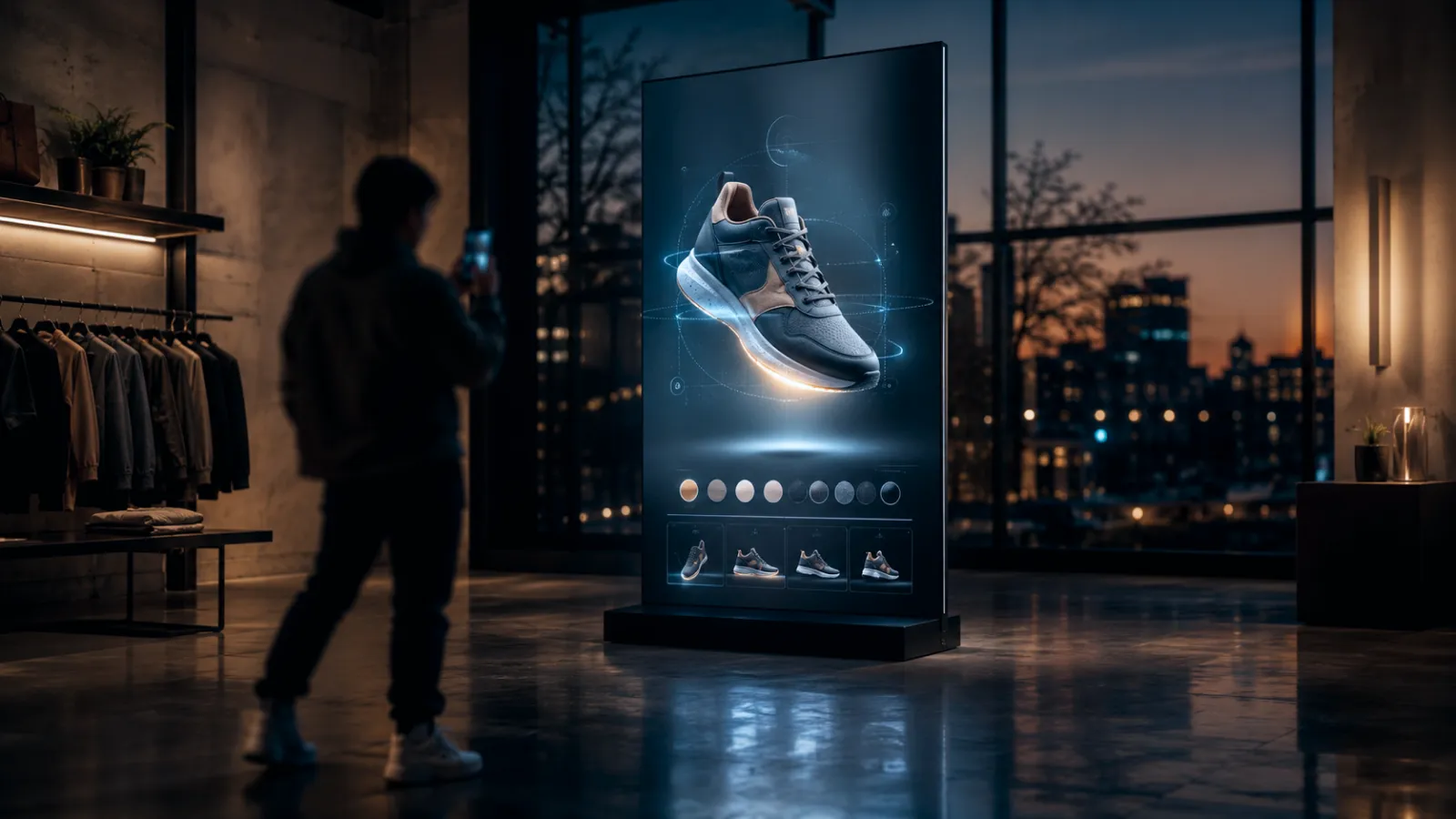
Your building isn't finished. Your investor is in Singapore. Your prospect wants to "see the space" before signing a 10-year lease.
Commercial real estate has always been a visual business. But showing unfinished spaces, coordinating international tours, and converting remote stakeholders into signed deals? That's where traditional marketing breaks down.
Gaussian Splatting is changing this. The same technology powering Zillow's SkyTour and reshaping residential real estate is now entering the commercial sector—with implications that go far beyond prettier property photos.
This guide covers how CRE developers, brokers, and property managers can leverage 3D Gaussian Splatting (3DGS) for pre-leasing, investor presentations, and construction documentation.
Who this is for: Commercial real estate developers, property managers, CRE brokers, and investment managers evaluating 3D visualization technology for office, retail, and industrial properties.
Key Takeaways
- Gaussian Splatting enables smooth, continuous navigation through commercial spaces—unlike Matterport's point-to-point teleportation
- Pre-lease unfinished spaces by capturing during construction and showing prospects what's coming
- Remote investor presentations become immersive experiences, not slideshows
- Costs range from $2,000 to $50,000+ depending on property size and viewer customization
- ROI metrics to track: Lease-up velocity, tour-to-visit conversion, investor close rate
- Best for: Large office floors, retail centers, mixed-use developments, construction progress documentation
What Is Gaussian Splatting for Commercial Real Estate?
3D Gaussian Splatting (3DGS) is a photorealistic 3D capture technology that reconstructs spaces as millions of tiny light-emitting points. Unlike mesh-based approaches (traditional 3D modeling) or stitched panoramas (Matterport), Gaussian Splatting creates true 3D depth that viewers can navigate smoothly.
For a technical deep-dive, see our Complete Guide to 3D Gaussian Splatting.
Why It Matters for Commercial Properties
Commercial spaces have unique visualization challenges:
- Scale: Office floors, warehouses, and retail centers are significantly larger than residential
- Stakeholder diversity: Tenant reps, investors, architects, and facility managers all need different information
- Decision timelines: Commercial leases are measured in years and millions of dollars
- Pre-construction marketing: Unlike residential, CRE often needs to market spaces before they exist
Traditional virtual tours (360 photos stitched together) create a "teleportation" experience—you jump from point to point. Gaussian Splatting enables continuous, drone-like navigation, letting viewers explore as if physically walking through the space.
Why CRE Is Adopting 3DGS in 2026
Industry Momentum
The residential real estate industry broke ground first. Zillow's SkyTour, launched in late 2025, was the first major platform to ship Gaussian Splatting. Apartments.com (CoStar Group) followed with exterior 3DGS support.
Now that momentum is spilling into commercial:
- Virtual tour software market: Growing at 15-20% CAGR through 2033
- Remote stakeholder expectations: Over 50% of CRE prospects now expect virtual tours before physical visits
- Pre-leasing demand: Data center and office pre-leasing is driving need for visualization of unfinished spaces
The Technology Shift
Several converging factors make 2026 the inflection point:
Capture simplicity: Professional-quality 3DGS can now be captured with a smartphone. No specialized equipment required for initial assessment.
Processing speed: Cloud processing that took days now completes in hours.
Web delivery: WebGPU and Three.js advancements mean high-quality 3DGS renders directly in browsers—no downloads, no plugins.
AI integration: Tools like Apple's SHARP can generate 3DGS previews from single images, enabling rapid prototyping.
Commercial Real Estate Use Cases
1. Pre-Lease Marketing
The most transformative use case. Traditional pre-leasing relies on renderings, floor plans, and imagination. Gaussian Splatting lets you capture during construction and show prospects exactly what's coming.
How it works:
- Capture the space at various construction stages (monthly updates)
- Process each capture as a separate 3DGS model
- Present prospects a timeline: "Here's where we are today, here's the projected finish"
- Update the model as construction progresses
Benefits:
- Prospects can explore actual spaces, not artist interpretations
- Construction progress is documented automatically
- Marketing can begin earlier in the development cycle
- Reduces prospect uncertainty about "final product"
Ideal for: Spec office developments, retail centers under construction, build-to-suit projects
2. Investor Presentations
Investment decks are static. Site visits are expensive. Gaussian Splatting creates immersive investor experiences that communicate scale and quality better than any photograph.
Use cases:
- Fundraising presentations for new developments
- Portfolio tours for institutional investors
- Due diligence materials for acquisitions
- Quarterly updates for limited partners
Why investors respond:
- Demonstrates technological sophistication and project management
- Enables detailed exploration without travel
- Creates shareable materials for investment committees
- Shows properties alongside comps in a consistent format
Pro tip: Create investor-specific tours highlighting different aspects—financials for CFOs, sustainability features for ESG-focused LPs, amenities for tenant-focused investors.
3. Construction Progress Documentation
Beyond marketing, 3DGS serves as a visual record of construction progress. Capture monthly, and you have:
- Dispute resolution documentation
- Progress verification for lenders
- Historical record for as-built documentation
- Training materials for facility management
Integration opportunity: Link 3DGS captures to project management timelines, creating a visual history that supplements traditional progress reports.
4. Multi-Tenant Property Showcasing
Large commercial properties often have multiple available spaces with different configurations. Gaussian Splatting enables:
- Unified property tours with individual suite access
- Side-by-side comparisons of available spaces
- Tenant fit visualization (show how different businesses would use the space)
- Vacancy marketing across the entire portfolio
Example workflow:
- Capture entire property with emphasis on available suites
- Create navigation that highlights vacancies
- Add annotations with square footage, pricing, and availability
- Update as spaces are leased or become available
5. Retail Flow Visualization
For retail centers, understanding customer flow is critical. Gaussian Splatting enables:
- Virtual walkthrough of customer journeys
- Sightline analysis from key locations
- Tenant placement visualization
- Wayfinding planning and validation
For leasing teams: Show prospective tenants exactly what their storefront visibility looks like from major entry points and traffic corridors.
Gaussian Splatting vs. Matterport for Office and Retail
If you're evaluating 3D visualization for commercial properties, you're likely comparing Gaussian Splatting to Matterport. Here's how they differ:
| Aspect | Gaussian Splatting | Matterport |
|---|---|---|
| Navigation | Smooth, continuous (drone-like freedom) | Point-to-point teleportation |
| Visual quality | Photorealistic with reflections, parallax, true 3D depth | Good consistency, potential stitching artifacts |
| Capture time | 15-60 minutes; Processing: hours | 30-90 minutes; Processing: minutes to hours |
| File size | 50-500 MB; Self-hosted, data ownership | Subscription-based, vendor-hosted |
| Outdoor capability | Excellent | Limited |
| Best for CRE | Complex spaces needing depth, investor presentations, construction documentation | Standard listings, facility documentation, quick deployments |
| Floor plans | Not native (requires separate capture) | Built-in floor plan generation |
| Measurements | Requires additional processing | Integrated measurement tools |
When to Choose Gaussian Splatting
- Premium positioning: Luxury office, flagship retail, institutional-grade developments
- Large open spaces: Atriums, warehouses, open-plan offices
- Outdoor integration: Campus properties, retail centers with exterior areas
- Custom branding: Branded viewer experience, no Matterport watermarks
- Data ownership: Self-hosted, no subscription lock-in
When to Choose Matterport
- Quick turnaround: Need tours live within days
- Measurement-critical: Tenants need precise square footage verification
- Budget constraints: Matterport's subscription model may be more accessible
- Portfolio standardization: Consistent format across many properties
Hybrid Approach
Some CRE teams use both technologies:
- Matterport for initial vacancy marketing and measurements
- Gaussian Splatting for investor presentations and premium listings
ROI Framework for Developers
Commercial real estate marketing has always been measurable. Here's how to quantify 3DGS value:
Metrics to Track
Lease-up velocity
- Baseline: Average days from listing to signed lease (pre-3DGS)
- Target: 15-25% reduction in lease-up time
- Measurement: Compare similar properties with/without 3DGS tours
Tour-to-visit conversion
- Baseline: What percentage of virtual tour viewers request physical visits?
- Target: Higher quality visits (pre-qualified through virtual exploration)
- Measurement: Track virtual tour engagement → physical visit requests → signed leases
Investor engagement
- Baseline: Presentation-to-meeting conversion rate
- Target: Increased engagement time with investment materials
- Measurement: Time spent in 3DGS tours, return visits, sharing behavior
Geographic reach
- Baseline: Percentage of prospects requiring physical visits before commitment
- Target: Enable commitments from remote stakeholders
- Measurement: Deals closed without in-person visits
Sample ROI Calculation
Scenario: 200,000 SF Class A office development
| Factor | Value |
|---|---|
| Average rent | $45 PSF |
| Annual rent (full occupancy) | $9,000,000 |
| Monthly vacancy cost | $750,000 |
| Current average lease-up | 8 months |
| Target lease-up (with 3DGS) | 6 months |
| 3DGS investment | $25,000 |
Potential value: 2 months faster lease-up = $1,500,000 in avoided vacancy ROI: 60x return on investment
Even a 1-month improvement pays for the technology many times over.
Technical Considerations
Large Space Challenges
Commercial properties present unique technical challenges:
Reflective surfaces
- Glass curtain walls, polished floors, and mirrored surfaces can confuse capture algorithms
- Solution: Multiple capture angles, professional processing with artifact removal
High ceilings and atriums
- Standard smartphone capture may miss upper portions
- Solution: Drone capture, elevated camera positions, or multiple floor captures
Lighting variation
- Office buildings have dramatic lighting differences between perimeter and core
- Solution: Capture during consistent lighting conditions, post-processing adjustments
WebGPU Performance
Modern web viewers leverage WebGPU for significant performance improvements:
- Large floor plates (50,000+ SF) render smoothly in current browsers
- Progressive loading prioritizes visible areas, loading detail as users navigate
- Mobile optimization enables tablet-based presentations for on-site meetings
File Size and Hosting
Commercial property captures tend to be larger than residential:
| Property Type | Typical File Size | Load Time (Optimized) |
|---|---|---|
| Single floor office (20K SF) | 100-200 MB | 5-15 seconds |
| Multi-floor building | 300-800 MB | 15-30 seconds |
| Retail center | 500 MB - 1.5 GB | 20-45 seconds |
| Full campus | 1-3 GB | 30-90 seconds |
Optimization strategies:
- Progressive loading (show lower-res first, enhance over time)
- Geographic segmentation (load only the area being viewed)
- CDN deployment for global access
Data Ownership vs. Subscription
A key differentiator from Matterport: you own your 3DGS files.
- Export and archive in standard formats (PLY, SPZ)
- Host on your own infrastructure
- No subscription cancellation risk
- Integrate with your existing tech stack
Implementation Guide
Option 1: Self-Capture
Best for: Initial evaluation, smaller properties, frequent updates
Equipment:
- Recent smartphone (iPhone 14+ or flagship Android)
- Stabilizer/gimbal (recommended)
- Good lighting (natural or supplemental)
Process:
- Walk through space recording video (20-60 minutes depending on size)
- Upload to processing service (Polycam, Luma AI, Postshot)
- Review and export optimized files
- Deploy to web viewer
Limitations: Quality ceiling for large/complex spaces, limited control over processing
Option 2: Professional Capture
Best for: Premium properties, investor materials, large developments
What professionals provide:
- Optimized capture planning (minimize artifacts, maximize coverage)
- Professional equipment (better sensors, stabilization)
- Post-processing and cleanup
- Custom viewer deployment
- Integration with your marketing systems
Timeline:
- Capture: 1-2 days on-site
- Processing: 3-7 days
- Viewer deployment: 1-2 weeks
- Total: 2-4 weeks
Option 3: Custom Integration
Best for: Portfolio-wide deployment, branded experiences, complex workflows
Custom development includes:
- Branded viewer matching your corporate identity
- Integration with property management systems
- Analytics and lead capture
- Multi-property navigation
- API access for embedding
Investment: $15,000-$50,000+ depending on complexity
Common Pitfalls
Technical Issues
Glass and mirrors: Reflective surfaces create artifacts. Plan capture paths that minimize reflection angles, or budget for manual cleanup.
Moving elements: People, vehicles, and temporary fixtures appear as ghosting. Clear spaces before capture when possible.
Construction debris: Unfinished spaces have dust, equipment, and materials. Decide whether to show "reality" or wait for cleaner conditions.
Strategic Mistakes
Over-investing early: Start with one flagship property, learn, then scale.
Ignoring mobile: Many stakeholders will view on tablets and phones. Test mobile experience before launch.
Static deployment: 3DGS is most valuable when updated. Budget for refresh captures, especially during construction.
Missing the CTA: Every tour should lead somewhere—schedule a visit, contact a broker, request more information.
About Utsubo
Utsubo is a creative technology studio specializing in immersive digital experiences. We build custom 3D viewers and interactive installations using Three.js and WebGPU.
For commercial real estate, we offer:
- Custom branded 3DGS viewers
- WebGPU-optimized deployment
- Integration with property marketing platforms
- Portfolio-wide solutions
Our expertise in web-based 3D means your viewers work everywhere—no downloads, no plugins, just a URL.
Ready to Explore 3DGS for Your Properties?
Let's discuss how Gaussian Splatting fits your commercial real estate marketing strategy.
Checklist: Implementing 3DGS for Commercial Real Estate
- Define primary use case (pre-leasing, investor presentations, documentation, or all)
- Audit current virtual tour technology and identify gaps
- Identify 1-2 pilot properties for initial implementation
- Determine capture approach (self, professional, or hybrid)
- Establish baseline metrics for ROI tracking
- Plan viewer deployment (self-hosted vs. managed)
- Train leasing team on presenting 3DGS tours
- Create update schedule for active construction projects
- Integrate with existing CRM and marketing workflows
- Document learnings and plan portfolio-wide rollout
FAQs
How much does Gaussian Splatting cost for commercial properties?
Costs vary by property size and deployment complexity. Self-capture with basic processing: $500-$2,000. Professional capture with standard viewer: $5,000-$15,000. Custom branded viewer with integration: $15,000-$50,000+. Enterprise portfolio solutions are priced per property with volume discounts.
Can I capture a building under construction?
Yes—this is one of 3DGS's strongest use cases. Capture at multiple stages to show progress. Note that unfinished spaces may have more visual artifacts (dust, temporary materials). Many developers capture monthly during construction.
Does Gaussian Splatting work for large warehouses?
Yes, though large industrial spaces require careful planning. Capture in sections, use drone footage for high ceilings, and expect larger file sizes. Processing time increases with space size. For 100,000+ SF facilities, professional capture is recommended.
How does 3DGS compare to Matterport for retail spaces?
Gaussian Splatting offers smoother navigation and better exterior integration—important for retail centers with outdoor areas. Matterport provides faster deployment and built-in measurements. For flagship retail, 3DGS creates a more premium experience. For quick vacancy marketing, Matterport may suffice.
What equipment do I need to capture commercial spaces?
Minimum: recent smartphone (iPhone 14+, flagship Android) and steady hands. Recommended: smartphone gimbal, supplemental lighting. Professional: dedicated 360 cameras, drones for large spaces, professional processing pipeline.
How do I embed a 3DGS tour on my website?
Most 3DGS viewers can be embedded via iframe or JavaScript. Self-hosted solutions require technical setup. Managed services (like Utsubo's custom viewers) handle hosting and provide embed codes. Integration with property management platforms may require API development.
Can prospects measure spaces in a 3DGS tour?
Native measurement tools are not standard in 3DGS viewers (unlike Matterport). Some custom viewers include measurement features. For measurement-critical applications, consider supplementing 3DGS with floor plans or Matterport.
How long does a 3DGS tour take to load?
Optimized commercial property tours typically load in 15-45 seconds depending on size and connection speed. Progressive loading shows initial views faster, with detail loading as users navigate. CDN deployment improves load times for global audiences.


 Technology-First Creative Studio