
Forget meshes. Forget textures. The future of photorealistic 3D capture is light itself.
3D Gaussian Splatting (3DGS) represents a fundamental shift in how we create and view 3D content. Instead of laboriously constructing polygon meshes and UV-mapping textures, you capture a scene with photos or video, and the algorithm reconstructs it as millions of tiny light-emitting points. The result? Photorealistic 3D that renders in real-time, right in your browser.
This guide covers everything you need to know: what 3DGS is, where it's being used, how to choose between services, and why web-based viewing is transforming accessibility.
Who this is for: Product managers, marketing teams, developers, and decision-makers evaluating 3D capture technology for real estate, e-commerce, museums, or creative projects.
Key Takeaways
- What it is: A 3D reconstruction technique using point clouds with Gaussian distributions instead of meshes
- Best use cases: Real estate tours, e-commerce products, film VFX, museum preservation, architectural visualization
- Why web matters: No app installs, cross-platform, easy sharing and embedding
- Cost range: DIY capture is free; professional capture services run $500–$5,000+; custom web viewers and experiences start at $20,000
- Timeline: Simple objects same-day; large spaces 1–2 weeks; custom viewers 4–8 weeks
What Is Gaussian Splatting?
3D Gaussian Splatting (3DGS) is a radiance field technique introduced by researchers at Inria in 2023. It reconstructs 3D scenes from 2D images—similar to photogrammetry or NeRF—but with a crucial difference in representation and speed.
How It Works
- Capture: Take photos or video of an object or space from multiple angles
- Processing: The algorithm identifies 3D points and assigns each a Gaussian distribution (a fuzzy sphere of color and opacity)
- Optimization: Millions of these Gaussians are positioned, sized, and colored to match the original images
- Rendering: A specialized renderer "splats" these Gaussians onto your screen, blending them into a photorealistic view
Unlike mesh-based approaches, there are no triangles to manage. Unlike NeRF, rendering doesn't require expensive ray marching. The result is real-time, photorealistic 3D that runs on consumer hardware.
Gaussian Splatting vs. NeRF vs. Photogrammetry
| Aspect | Gaussian Splatting | NeRF | Photogrammetry |
|---|---|---|---|
| Representation | Point clouds with Gaussians | Neural network | Polygon mesh + textures |
| Training time | Minutes to hours | Hours to days | Hours to days |
| Rendering speed | Real-time (60+ FPS) | Slow (seconds per frame) | Real-time with optimization |
| Quality | Excellent, especially reflections | Excellent | Good, depends on texturing |
| Edit-ability | Limited | Very limited | Fully editable |
| File size | Medium (50–500 MB typical) | Small (neural weights) | Large (mesh + textures) |
| Web compatibility | Good (WebGL/WebGPU) | Poor | Good with optimization |
The key advantage of Gaussian Splatting: It combines the visual quality of NeRF with real-time rendering performance. For web applications, this makes it the clear winner.
Why Gaussian Splatting Matters in 2026
2025 was the year 3DGS moved from research curiosity to production reality. 2026 is the inflection point where it becomes a standard tool.
Industry Adoption
Film & EntertainmentSuperman (2025) was the first feature film to use 4D (dynamic) Gaussian Splatting, reports The Art of VFX: Framestore and Infinite-Realities used it for the holograms of Superman's parents. OTOY's OctaneRender 2026 added production-ready, relightable Gaussian splats. 4DViews, specialists in volumetric video, added 3DGS as an alternative that excels with hair, fur, and reflective surfaces.
Real Estate Zillow launched SkyTour in July 2025: drone-captured exterior tours rendered with Gaussian Splatting, which Zillow describes as among the first in the industry to deploy the technique at scale. Apartments.com (CoStar Group) followed with Matterport 3D Exterior, a Gaussian-splat flyover of apartment communities. Property tours that once required expensive 360-camera rigs can now be captured with a smartphone.
Game Engines Unreal Engine has emerged as the platform of choice, with plugins like XScene-UEPlugin (free, open-source) and commercial options on Epic's Fab marketplace. Unity integration is similarly maturing.
VR/XR VRChat supports 3DGS through community tools such as the open-source VRChatGaussianSplatting, enabling hyper-realistic virtual spaces. Meta's Horizon Hyperscape Capture (2025) lets Quest 3 and 3S owners scan a room and revisit it in VR, rendered with Gaussian Splatting and streamed from Meta's cloud.
Web This is where things get interesting. Three.js-based renderers like Spark (by World Labs), plus engines such as Babylon.js 9.0 and PlayCanvas (maker of the SuperSplat editor), have made browser-based Gaussian Splatting not just possible, but performant. No downloads. No plugins. Just a URL.
Use Cases Deep Dive
Real Estate & Architecture
The real estate industry has embraced 3DGS because it solves a fundamental problem: showing spaces to remote buyers.
Applications:
- Property virtual tours: Capture entire homes with a smartphone or professional rig
- Architectural visualization: Preview buildings before construction
- Renovation previews: Show before/after transformations
- Pre-construction sales: Sell units in developments that don't exist yet
Why 3DGS wins here: Traditional virtual tours use stitched 360 photos (Matterport, Ricoh). They work, but movement feels like "teleporting" between fixed points. Gaussian Splatting enables smooth, continuous navigation—walking through a space as if you were there.
Example workflow:
- Walk through property recording video (15–30 minutes)
- Process with Polycam or Luma AI (hours)
- Embed viewer on listing page
- Buyers explore remotely, filter serious inquiries
For commercial real estate specifically: See our dedicated guide on Gaussian Splatting for Commercial Real Estate—covering pre-leasing, investor presentations, and construction documentation.
E-commerce & Retail
Online shopping has a trust problem: products look different in photos than in person. 3DGS lets customers examine products from every angle.
Applications:
- 360-degree product visualization: Rotate products naturally
- Virtual showrooms: Browse entire collections in 3D
- Fashion & luxury goods: Show fabric textures, watch details, jewelry sparkle
- Furniture placement: Visualize sofas in your actual living room (with AR integration)
Why 3DGS wins here: Product photography requires careful lighting and dozens of angles. 3DGS captures everything in one session. Update the listing with new colors? Just re-render.
Film & Entertainment
The entertainment industry has long pushed 3D technology forward. Gaussian Splatting is no exception.
Applications:
- Virtual production environments: Create photorealistic backdrops for LED stages
- VFX asset creation: Capture real locations as digital assets
- Performance capture: 4D Gaussian Splatting records dynamic performances (people moving, talking)
- Documentary and historical reconstruction: Recreate spaces that no longer exist
Why 3DGS wins here: Speed. A film crew can capture a location in hours and have a usable digital asset the next day. Traditional photogrammetry takes weeks of cleanup.
Cultural Heritage & Museums
Museums and archives face a preservation challenge: physical artifacts degrade. Digital preservation creates eternal copies.
Applications:
- Artifact digitization: Capture sculptures, textiles, historical objects
- Virtual museum tours: Let remote visitors explore galleries
- Archaeological reconstruction: Visualize ancient sites as they once appeared
- Disaster documentation: Record sites before restoration
Why 3DGS wins here: The technique captures subtle surface qualities—the wear on a statue's hand, the patina on bronze—that mesh-based approaches often miss.
Education & Training
Learning improves when students can interact with subjects in 3D.
Applications:
- Virtual labs: Explore equipment and facilities remotely
- Historical reconstructions: Walk through ancient Rome or 1920s Chicago
- Medical training: Examine anatomical specimens without physical access
- Technical training: Inspect machinery and infrastructure
Web-Based Gaussian Splatting: Why It Matters
The most significant development in 3DGS adoption isn't the capture technology—it's the ability to view splats in a web browser.
Benefits of Browser-Based Viewing
No app installation required Share a URL. Recipients click and view. No App Store downloads, no IT approval, no waiting.
Cross-platform compatibility Works on Windows, Mac, iOS, Android, ChromeOS. One implementation, universal access.
Easy embedding and sharing Embed in websites, emails (via links), social media. Integration is trivial compared to native apps.
Lower barrier to entry Anyone can view. Technical literacy isn't required. This matters for real estate (homebuyers), retail (shoppers), and museums (general public).
Integration with existing websites 3D content becomes part of your digital ecosystem, not a separate platform.
Web Viewer Comparison
| Viewer | Platform | License | Format Support | Best For |
|---|---|---|---|---|
| Spark | Three.js | Open Source | PLY, SPZ, SPLAT, KSPLAT, SOG | Production websites, dynamic effects |
| GaussianSplats3D | Three.js | Open Source | PLY, SPLAT, KSPLAT | General use (note: no longer in active development) |
| antimatter15/splat | WebGL | Open Source | PLY, SPLAT | Simple embeds, minimal dependencies |
| SuperSplat (PlayCanvas) | PlayCanvas | MIT | PLY, SPZ, SOG, SPLAT, KSPLAT (import) | Browser-based cleanup, editing, and publishing; embeddable viewer |
| Babylon.js | Babylon.js | Apache 2.0 | PLY, SPLAT, SPZ, SOG | Teams already building on Babylon.js |
| Luma AI Web Viewer | Proprietary | Freemium | Luma format | Quick sharing, social integration |
| Polycam Web | Proprietary | Subscription | Polycam format | Mobile-first capture workflow |
Recommendation: For production websites, Spark is the current leader—actively developed by World Labs, wide format support, and recognized by GitHub as one of the most influential open-source projects of 2025. For cleanup and quick sharing, SuperSplat is a free, open-source option that runs entirely in the browser.
Note: Luma AI retired its standalone Flythroughs app on January 1, 2026; Radiance Fields reported that the change did not affect Luma's Interactive Scenes (NeRF/3DGS) tools.
3DGS vs Matterport vs 360 Photos: Which Should You Choose?
If you're evaluating 3D capture for real estate, museums, or retail, you're likely comparing three main approaches. Here's how they stack up:
| Factor | 3D Gaussian Splatting | Matterport | 360 Photos |
|---|---|---|---|
| Navigation | Smooth, continuous movement | Point-to-point teleportation | Static viewpoints |
| Visual quality | Photorealistic, captures reflections & fine details | Good, optimized for consistency | Good, but flat |
| Hardware required | Smartphone or camera | Matterport camera or certified device | 360 camera (Ricoh, Insta360) |
| Processing time | Hours (varies by method) | Minutes to hours | Minutes |
| Hosting | Self-hosted or custom | Matterport cloud (subscription) | Any image host |
| Monthly cost | $0–50 (self-hosted) to custom | Subscription priced by number of active spaces (free plan: 1 space) | $0–20/month |
| Capture time | 15–60 min (video walkthrough) | 30–90 min (scan points) | 10–30 min (photo positions) |
| Mobile viewing | Good with optimization | Excellent | Excellent |
| Offline viewing | Possible | Limited | Easy |
| Edit after capture | Limited | Annotations, measurements | Basic edits |
| Floor plans | Not included | Automatic generation | Not included |
| Best for | Premium experiences, marketing, museums | Real estate listings, facility documentation | Quick previews, low-budget projects |
When to Choose Each
Choose 3D Gaussian Splatting when:
- Visual quality and immersion are top priorities
- You need a differentiated, premium experience
- The content will be featured prominently (hero placement, marketing campaigns)
- You want ownership and control over hosting
Choose Matterport when:
- You need floor plans and measurements
- Speed and consistency across many properties matters
- Your workflow benefits from Matterport's ecosystem (MLS integrations, Zillow, etc.)
- You prefer a managed, turnkey solution
Choose 360 Photos when:
- Budget is constrained
- Quick turnaround is essential
- The content is supplementary, not the main attraction
- You're covering many locations with limited time per site
Decision Framework: Is 3DGS Right for Your Project?
Use this framework to evaluate whether 3D Gaussian Splatting fits your needs:
START: What's your primary goal?
│
├─► "Showcase premium quality" → 3DGS is a strong fit
│   └─► Continue to: Do you have web development resources?
│       ├─► Yes → Custom integration recommended
│       └─► No → Use hosted viewers (Polycam, Luma) or hire agency
│
├─► "Document spaces efficiently at scale" → Consider Matterport
│   └─► Need floor plans? → Matterport excels here
│
├─► "Quick, low-cost coverage" → 360 photos are sufficient
│
└─► "Enable smooth, walkthrough-style navigation" → 3DGS or Matterport
    └─► Is visual fidelity critical?
        ├─► Yes → 3DGS
        └─► No → Matterport may be simpler
Key questions to ask yourself:
- What's the content's purpose? Lead generation, archival, marketing, or documentation?
- Who's the audience? Technical users, general public, or internal teams?
- What devices will viewers use? Desktop-heavy or mobile-first?
- What's your budget? One-time or ongoing subscription?
- Do you need floor plans/measurements? This tips toward Matterport.
- Is this a one-off or repeatable process? Scale changes the calculus.
10 Questions to Ask Your 3DGS Vendor
Before committing to a 3DGS service provider, ask these questions to ensure you're making an informed decision:
Capture & Processing
- What's your capture process? (Smartphone, professional cameras, drone, or combination?)
- What's the typical turnaround time? (Same-day, days, or weeks?)
- How many splats will the final output have? (Affects quality and performance)
Web Optimization
- Do you optimize for web delivery? (Critical—raw captures are not web-ready)
- What file formats do you deliver? (PLY, SPZ, KSPLAT? Compressed formats reduce load times)
- What are the expected file sizes and load times? (Target: under 50MB for mobile)
Technical Compatibility
- Which viewers are your outputs compatible with? (Spark, custom, proprietary?)
- Do you support or plan to support WebGPU? (Future-proofing matters)
- Can you provide multiple quality tiers (LOD)? (For progressive loading)
Business & Support
- Can you show similar projects with outcomes? (Case studies, performance metrics)
Bonus questions for enterprise:
- What's included in ongoing support and maintenance?
- How do you handle content updates and re-captures?
- What's your data retention and ownership policy?
- Can you integrate with our CMS or existing systems?
Service Provider Comparison
Capture & Processing Services
| Service | Pricing | Turnaround | Input | Best For |
|---|---|---|---|---|
| Polycam | Free plan; paid from $12.50/month (billed yearly) | Real-time processing | iPhone/Android video | Professionals, real estate agents, quick captures |
| Luma AI | Free tier + Pro | Minutes | Video upload | Social sharing, quick experiments |
| Postshot | Free (non-commercial); Indie and Studio subscriptions | Hours (local NVIDIA GPU) | Images or video | High-quality processing, control over output |
| Custom studio | $500–$5,000+ | Days–weeks | Professional cameras | Large spaces, archival quality, complex scenes |
Software & Tools
For Technical Users:
- INRIA implementation: The original research code. Free, requires technical setup, CUDA GPU.
- Nerfstudio/gsplat: Open-source library, integrates NVIDIA 3DGUT, excellent for developers.
- Postshot: Commercial GUI application, user-friendly, good quality-to-effort ratio.
For Enterprises:
- Unity/Unreal plugins: Native engine integration for game/XR development.
Enterprise Solutions
| Provider | Pricing Model | Offering |
|---|---|---|
| AWS | Pay-per-use | Cloud processing for various radiance field representations |
| Matterport | Subscription | End-to-end capture hardware + software + hosting |
| Custom development | From $20,000 (project-based) | Bespoke viewers, CMS integration, API development |
Technical Considerations
File Formats
The 3DGS ecosystem has multiple file formats, each with trade-offs:
| Format | Extension | Compression | Notes |
|---|---|---|---|
| PLY | .ply | None/Compressed | Standard format, widely supported |
| SPLAT | .splat | Light | Simple binary format |
| KSPLAT | .ksplat | Medium | Compressed PLY variant |
| SPZ | .spz | High | Niantic's open format, typically about 10x smaller than PLY |
| SOG | .sog | High | PlayCanvas's Spatially Ordered Gaussians, about 15–20x smaller than PLY |
Recommendation: For web, use compressed formats (SPZ, SOG, KSPLAT) to reduce load times. Store originals as PLY for archival.
Optimizing Splats for Web (Critical)
Raw captures are not web-ready. The standard PLY output from the original Inria implementation stores 62 float32 values per Gaussian (about 248 bytes), so every million Gaussians takes roughly 250 MB uncompressed, and scene-scale captures often contain millions of Gaussians. Without optimization, load times become unacceptable and mobile devices will struggle or fail entirely.
Web optimization pipeline:
- Splat count reduction: Downsample from millions to 200K–1M splats depending on target devices
- Compression: Convert PLY to compressed formats (SPZ, KSPLAT, SOG)—roughly 10x smaller for SPZ and 15–20x for SOG, per their maintainers
- Level-of-detail (LOD): Generate multiple quality tiers for progressive loading
- Spatial sorting: Optimize splat order for efficient rendering
- Format selection: Match format to viewer capabilities
What happens without optimization:
- 30+ second load times on fast connections
- Mobile browsers crash or freeze
- High bounce rates destroy engagement
- CDN costs balloon unnecessarily
Target benchmarks for web:
| Target Device | Max Splats | Max File Size | Target FPS |
|---|---|---|---|
| Desktop | 1–2M | 50–100 MB | 60 |
| Laptop | 500K–1M | 30–50 MB | 45–60 |
| Mobile | 200–500K | 15–30 MB | 30–45 |
When evaluating capture services or building in-house, ask about web optimization. Many services deliver raw or lightly processed files that require additional work before deployment.
WebGPU: The Future of Web 3D
WebGPU is the successor to WebGL, offering significantly better performance for complex 3D rendering like Gaussian Splatting.
Why WebGPU matters for 3DGS:
- Compute shaders: Enable GPU-side splat sorting (major performance gain)
- Better memory management: Handle larger scenes without crashes
- Modern GPU features: Unlock optimizations impossible in WebGL
Current browser support (as of 2026):
- Chrome: Full support since 2023 (Chrome 113)
- Edge: Full support
- Firefox: Since Firefox 141 (July 2025) on Windows, later extended to Apple Silicon Macs on macOS 26; still behind a flag on Linux and Android
- Safari: Since Safari 26 (September 2025) on iOS, iPadOS, and macOS 26 Tahoe
Choosing a future-proof viewer:
When selecting a 3DGS viewer for your project, consider WebGPU readiness:
| Viewer | WebGL | WebGPU | Fallback |
|---|---|---|---|
| Spark | Yes | No (built on WebGL 2) | — |
| GaussianSplats3D | Yes | No | — |
| antimatter15/splat | Yes | No | — |
| SuperSplat / PlayCanvas | Yes | Yes (GPU sorting on WebGPU) | Auto |
| Babylon.js | Yes | Yes | Auto (via EngineFactory) |
| Custom (Utsubo) | Yes | Yes | Auto |
Our recommendation: Choose viewers that support WebGPU or have it on their roadmap. The performance difference is substantial, and WebGPU now ships in every major browser engine (about 87% global support including partial support, per caniuse). Viewers stuck on WebGL-only will feel increasingly dated as WebGPU becomes the default.
Performance Expectations
Frame rates depend on splat count, screen resolution, the viewer, and the device's GPU, so published numbers rarely transfer to your scene. Size scenes to the targets above, then test on the actual devices your audience uses—including older phones, where performance varies the most.
Bandwidth Requirements
- Initial load: 20–200 MB depending on scene complexity and compression
- Streaming: Progressive loading available in some viewers
- CDN recommended: Fast delivery improves first-view experience significantly
Cost & Timeline Guide
Budget Tiers
| Tier | Cost Range | What You Get |
|---|---|---|
| DIY | Free–$50/month | Smartphone capture, consumer processing (Polycam, Luma) |
| Professional Capture | $500–$5,000 | Studio-quality capture, optimized output, multiple deliverables |
| Custom Web Viewer | $20,000–$50,000 | Branded viewer, optimized splats, CMS integration |
| Immersive Web Experience | $50,000–$100,000 | Scroll-driven storytelling around splats, custom interactions, integrated 3D |
| Flagship | $100,000–$200,000+ | Multi-scene 3D worlds, custom backend, multi-market launch |
| Enterprise | Custom | Multi-property systems, API access, dedicated support |
Web tiers follow the same ladder as our premium website cost guide.
Timeline Expectations
| Scope | Capture | Processing | Integration | Total |
|---|---|---|---|---|
| Simple object | 30 min | 1–2 hours | Same-day | 1 day |
| Interior space | 1–2 hours | 4–8 hours | 1–3 days | 1 week |
| Large exterior | 4+ hours | 1–2 days | 1–2 weeks | 2–3 weeks |
| Custom web viewer | N/A | N/A | 4–8 weeks | 4–8 weeks |
Getting Started Guide
For Marketers: Quick Wins
- Download Polycam (iOS/Android) and capture a product or space
- Process using the app's built-in 3DGS mode
- Share via Polycam's web viewer link
- Evaluate viewer engagement compared to photos
Total time: Under 1 hour. Cost: Free tier available.
For Developers: Three.js Integration
- Install Spark:
npm install @sparkjsdev/spark(Spark 2.x requires three.js r179 or later) - Add a SparkRenderer and load a splat file:
import { SparkRenderer, SplatMesh } from '@sparkjsdev/spark';

// Spark 2.x needs a SparkRenderer in the scene, or no splats are drawn
const spark = new SparkRenderer({ renderer }); // your THREE.WebGLRenderer
scene.add(spark);

const splat = new SplatMesh({ url: 'scene.spz' });
scene.add(splat);
- Render with your standard Three.js loop
- Optimize with level-of-detail and progressive loading for production
Reference: Spark documentation
For Enterprises: Evaluation Framework
- Define success metrics: Load time? Engagement duration? Conversion lift?
- Pilot with low-stakes content: Start with marketing assets, not mission-critical systems
- Evaluate capture workflows: Can your team capture, or do you need a service?
- Assess integration requirements: Headless CMS? Authentication? Analytics?
- Calculate TCO: Include hosting, CDN, maintenance, content updates
Future of Gaussian Splatting
4D Gaussian Splatting (Dynamic Scenes)
The next frontier: capturing motion. 4DGS records not just static spaces but performances, events, and changing environments. Early applications include volumetric video for concerts and sports, dynamic product showcases, and interactive storytelling.
AI-Generated 3D
In December 2025, Apple released SHARP, an open-source model that generates a 3DGS scene from a single image in under a second on a standard GPU. The implications are significant: catalog photos become 3D assets. Historical images become explorable spaces.
Native Browser Support
Discussions are ongoing about integrating 3DGS directly into web standards. Currently, viewers use WebGL/WebGPU through JavaScript libraries. Future browsers may support splats natively, improving performance and reducing implementation complexity.
WebXR Integration
Gaussian Splatting pairs naturally with virtual and augmented reality. Expect tighter integration with WebXR, enabling immersive experiences directly in browsers without native apps.
FAQs
What's the difference between Gaussian Splatting and NeRF? Both reconstruct 3D scenes from 2D images. NeRF uses a neural network and renders slowly. Gaussian Splatting uses explicit point clouds and renders in real-time. For web applications, 3DGS is the practical choice.
Can I view Gaussian Splats on mobile? Yes. Modern smartphones (iPhone 12+, recent Android flagships) handle optimized splats at acceptable frame rates. Performance depends on scene complexity and optimization.
How much does professional Gaussian Splatting capture cost? Professional 3DGS capture typically runs $500–$5,000 depending on space size, complexity, and deliverable requirements. Custom web viewers start at $20,000, and immersive web experiences built around splats run $50,000–$200,000+.
Is Gaussian Splatting suitable for e-commerce product photos? Yes, particularly for products where texture and material quality matter (furniture, fashion, jewelry). It's overkill for simple products where standard photography suffices.
What file format should I use for Gaussian Splatting? For web delivery, use compressed formats (SPZ, KSPLAT, SOG). For archival and editing, keep original PLY files.
Can Gaussian Splats be edited after capture? Limited editing is possible—removing splats, adjusting colors. Major geometric changes require re-capture. This differs from mesh-based workflows where significant editing is standard.
How does web viewing compare to native apps for Gaussian Splatting? Web viewers are slightly less performant but dramatically more accessible. For most use cases, the reach advantage outweighs the performance gap. Native apps make sense for VR/AR or extremely complex scenes.
What are the bandwidth requirements for Gaussian Splatting? Expect 20–200 MB for a typical scene. Progressive loading and compression help, but initial loads are heavier than standard web pages. CDN deployment is recommended.
About Utsubo
Utsubo is a creative technology studio specializing in real-time 3D web experiences. Our expertise includes:
- Three.js development: Building performant, production-ready 3D web applications
- WebGPU-ready Gaussian Splatting viewer: Our custom viewer supports both WebGL and WebGPU with automatic fallback, ensuring optimal performance on all devices while being future-proof
- Web optimization pipeline: We handle the full optimization chain—splat reduction, compression, LOD generation—so your captures are web-ready
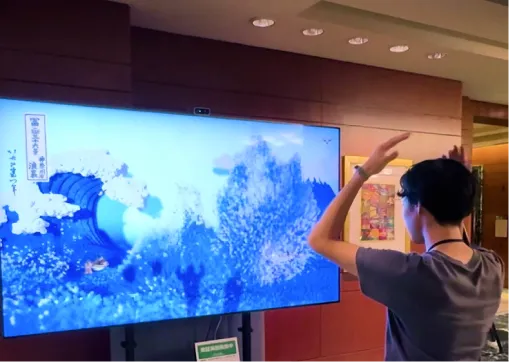
- Interactive installations: Physical-digital experiences that combine 3D technology with spatial design
- Immersive websites: Scroll-driven narratives, WebGL/WebGPU experiences, and brand storytelling—including scroll-driven splat landing pages that mix photoreal capture with interactive 3D, physics, and lighting
We've been building with Three.js since its early days and have integrated Gaussian Splatting into our toolkit as the technology matured. Our viewer is built for production: optimized loading, WebGPU acceleration, and seamless integration with existing websites.
Get Started with 3D Gaussian Splatting
Whether you're exploring 3DGS for the first time or ready to integrate it into production, we're here to help.
Book a 30-minute project discussion to talk through what you're building, the technical approach that fits, and whether we're the right partner to help you execute.
- Book a call:cal.com/utsubo/30min


 Technology-First Creative Studio