Your team has a Unity codebase. Your next project needs to live in a browser. The CTO asks: "Can't we just export to WebGL?"
Maybe. But the answer depends on bundle size (168 kB vs 30+ MB), licensing costs ($0 vs $2,310/yr per seat), mobile performance, SEO requirements, and your team's existing skills. This guide gives you the data to make the right call.
Who this is for: CTOs, technical leads, and project managers deciding between Three.js and Unity WebGL export for web-based 3D projects—configurators, marketing experiences, browser games, or training platforms.
Key Takeaways
- Bundle size gap is massive. Three.js core tree-shakes to ~500 kB–1 MB; Unity WebGL exports start at 5–15 MB and routinely hit 25–50 MB for real projects.
- Load times differ by 3–10x. Three.js experiences load in 2–6 seconds; Unity WebGL commonly takes 8–30 seconds before interaction.
- Three.js costs $0 forever. MIT license, no seats, no revenue caps. Unity Pro runs $2,310/seat/year once you pass $200K revenue.
- SEO favors Three.js. DOM integration means crawlable text, semantic HTML, and better Core Web Vitals. Unity renders to an opaque canvas.
- Unity wins on authoring speed. Built-in physics, animation state machines, and visual scripting make complex game logic faster to prototype.
- WebGPU widens the gap. Three.js supports WebGPU natively since r171. Unity WebGL exports do not.
- The decision is project-shaped, not technology-shaped. Start from your requirements, not your team's comfort zone.
1. Quick Comparison Table
| Factor | Three.js | Unity WebGL |
|---|---|---|
| Type | JavaScript 3D library | Game engine → WebAssembly export |
| Bundle Size (core) | 500 kB–1 MB gzipped | 5–25 MB compressed |
| Typical Load Time | 2–6 seconds | 8–30 seconds |
| License | MIT (free forever) | Free <$200K rev; Pro $2,310/seat/yr |
| WebGPU Support | Native (r171+) | Not available |
| SEO / DOM Access | Full DOM integration | Canvas only |
| Mobile Performance | Strong (low overhead) | Constrained (WASM overhead) |
| React/Vue/Svelte | Excellent (R3F, TresJS) | Requires JS bridging |
| Built-in Physics | No (add Rapier, Cannon) | Yes (built-in) |
| Visual Editor | None (code-first) | Full Unity Editor |
| Animation Tools | Basic (extend with libraries) | State machines, timeline, blend trees |
| Hiring Pool | Large (5M weekly npm downloads) | Large (but Unity-for-web is niche) |
2. What Each Technology Actually Is
2-1. Three.js: A Web-Native 3D Library
Three.js is a JavaScript library that renders 3D graphics directly in the browser using WebGL or WebGPU. It's not a game engine—it's a rendering foundation.
You get a scene graph, cameras, lights, materials, loaders, and a renderer. Everything else—physics, audio, game loops, UI—you add from the ecosystem or build yourself.
The ecosystem is massive. React Three Fiber turns Three.js into declarative React components. Rapier adds physics. Drei provides dozens of ready-made helpers. With 5 million weekly npm downloads, every problem has been solved before.
For a deeper look at how Three.js compares to other web-native 3D libraries, see our Three.js vs Babylon.js vs PlayCanvas comparison. And for what's changed recently in the Three.js ecosystem, see What's New in Three.js (2026).
Best for: Teams that want full control, React-based applications, lightweight web experiences, product configurators, and anything where performance and bundle size matter.
2-2. Unity WebGL Export: A Game Engine in the Browser
Unity is a full game engine—editor, physics, animation, particles, audio, visual scripting—that can export projects to run in browsers via WebAssembly and WebGL.
The export compiles your C# code and engine runtime into WASM. The result is a self-contained application that runs inside a <canvas> element. It brings Unity's power to the browser, but also Unity's weight.
An empty Unity URP project compiles to 2–4 MB of WASM alone. Add materials, shaders, and a few models, and you're at 10–25 MB compressed. Unity's own documentation recommends aggressive optimization to keep builds under 15–25 MB.
Best for: Teams with existing Unity expertise who need complex game logic, physics simulations, or cross-platform deployment (web + native apps).
3. Performance: The Numbers
3-1. Bundle Size and Load Time
This is where the gap is widest and most impactful for web projects.
| Metric | Three.js | Unity WebGL |
|---|---|---|
| Core engine | 500 kB–1 MB gzipped | 5–15 MB compressed (WASM + framework) |
| Typical full project | 2–5 MB (core + models) | 15–50 MB (engine + data + assets) |
| First meaningful paint | 2–6 seconds | 8–30 seconds |
| Time to interactive | <10 seconds | 15–45 seconds |
Three.js loads like a regular website—progressive, streamable, with assets fetched on demand. Unity WebGL requires downloading and decompiling the entire WASM engine before anything renders.
According to Needle Tools' comparison, equivalent Three.js implementations achieve 3–10x smaller payloads than Unity WebGL exports for the same visual quality.
Why this matters: Every additional second of load time reduces conversions. For marketing sites and product configurators, a 20-second load is a dealbreaker. For internal training platforms where users expect wait times, it's more tolerable.
3-2. Runtime Performance
Once loaded, both technologies can deliver smooth 60 FPS on desktop hardware. The differences show up under stress and on weaker devices:
- Desktop (modern GPU): Both achieve 60 FPS for moderate scenes. Unity's built-in optimizations (LOD, occlusion culling) help with complex scenes out of the box.
- Mid-range mobile: Three.js maintains higher sustained FPS with lower CPU overhead—no Emscripten translation layer. Unity WebGL shows 10–30% higher draw-call cost and memory pressure.
- Compute-heavy workloads: Three.js + WebGPU compute shaders deliver 2–3x improvements over equivalent WebGL implementations. Unity WebGL has no WebGPU path.
3-3. WebGPU: The Widening Gap
Three.js shipped production-ready WebGPU support in r171 (September 2025). Zero configuration needed—import WebGPURenderer and go. All major browsers support it as of early 2026.
Unity WebGL exports target WebGL 2.0 only. There is no WebGPU export path, and none has been announced. This means:
- Three.js projects can access compute shaders for GPU-accelerated physics, particles, and data processing
- Three.js projects get automatic performance improvements as browsers optimize WebGPU drivers
- The performance gap will widen over time, not narrow
For teams planning projects with 2–3 year lifespans, this matters. See our WebGPU + Three.js Migration Guide for technical details on WebGPU adoption.
4. Development Cost and Timeline
4-1. Project Cost Ranges by Type
Based on 2025–2026 agency and freelance rates (US/Europe $80–150/hr):
| Project Type | Three.js | Unity WebGL | Key Trade-off |
|---|---|---|---|
| Product configurator | $15K–60K, 4–12 weeks | $20K–80K, 2–8 weeks | Unity faster prototyping; Three.js cheaper long-term |
| Marketing / brand site | $10K–40K, 3–8 weeks | $25K–70K, 4–10 weeks | Three.js lighter, more web-native |
| Browser game (mid-scope) | $20K–100K+, 8–20 weeks | $30K–150K+, 6–16 weeks | Unity reuses editor assets; Three.js needs custom systems |
| E-learning / training | $25K–80K, 6–14 weeks | $30K–120K, 4–12 weeks | Unity for complex simulations; Three.js for web-integrated courses |
4-2. Development Speed
Unity's Editor is genuinely fast for certain workflows. If you need physics, animation state machines, particle systems, and collision detection, Unity gives you all of that out of the box. A Unity team can have a working prototype in days.
Three.js requires assembling those pieces—but the ecosystem is mature. React Three Fiber, Rapier physics, and GSAP animation cover most needs. For web-native experiences (scroll-driven animations, DOM interaction, React state management), Three.js is faster because you're working with the web platform, not bridging to it.
4-3. Ongoing Maintenance
| Factor | Three.js | Unity WebGL |
|---|---|---|
| Updates | npm update, semantic versioning | Unity version upgrades (can break builds) |
| Hosting | Static files, any CDN | Static files, any CDN |
| Licensing | $0 forever | $2,310/seat/year at Pro tier |
| Team skills | JavaScript/TypeScript developers | Unity/C# developers (smaller web pool) |
| Dependencies | npm ecosystem | Unity Package Manager |
Three.js maintenance is web maintenance—familiar to any frontend team. Unity WebGL maintenance requires Unity-specific expertise and careful version management.
5. Licensing and Hidden Costs
5-1. Three.js: MIT License (Free Forever)
Three.js is MIT-licensed. No seats, no revenue caps, no runtime fees, no strings attached. You can build a billion-dollar product and owe nothing to the library.
The ecosystem follows suit: React Three Fiber (MIT), Drei (MIT), Rapier (Apache 2.0). Your total framework cost is $0.
5-2. Unity: Subscription + Revenue Thresholds
Unity's pricing changed significantly in 2024–2025. The controversial Runtime Fee was canceled. Current 2026 pricing:
| Tier | Cost | Revenue/Funding Cap |
|---|---|---|
| Personal | Free | $200K annual revenue |
| Pro | $2,310/seat/year (prepaid) | $200K+ |
| Enterprise | Custom pricing | Custom |
For a team of 5 developers, that's $11,550/year in Unity licensing alone—before you write a line of code. The gap compounds over multi-year projects.
Important: The Runtime Fee cancellation applies to gaming customers. Non-gaming industry customers retain their prior model. Confirm your category with Unity sales.
6. SEO and Discoverability
6-1. Three.js: DOM Integration and Crawlability
Three.js renders to <canvas>, but it lives inside a normal web page. You can layer semantic HTML over, around, and alongside the 3D content:
- Text content in the DOM is crawlable by Google and AI search engines
- Core Web Vitals (LCP, CLS, FID) score better with smaller bundles
- Fallback content for no-JavaScript contexts
- CSS3D renderer for 2D UI elements that are fully accessible
<meta>descriptions, Open Graph tags, and structured data work normally- Integration with immersive storytelling patterns where 3D enhances content rather than replacing it
6-2. Unity WebGL: The Black Box Problem
Unity WebGL renders everything inside a single <canvas>. From a search engine's perspective, the page contains:
- One canvas element
- No crawlable text
- No semantic HTML structure
- No accessible landmarks
You can add HTML around the Unity embed, but the 3D experience itself is invisible to crawlers. Building hybrid pages with Unity requires explicit JavaScript bridging via SendMessage()—complex, fragile, and maintenance-heavy.
The impact: If your 3D content needs to be discovered through search (product pages, marketing experiences, educational content), Three.js gives you a structural advantage that Unity cannot match.
7. Mobile and Browser Compatibility
WebGL 2.0 has >92% global support on mobile browsers in 2026. Both technologies can target it. But the experience differs:
| Factor | Three.js | Unity WebGL |
|---|---|---|
| iOS Safari | Full support, low memory footprint | Works, but WASM memory limits constrain scene complexity |
| Android Chrome | Strong performance on mid-range devices | Higher memory usage, slower on budget devices |
| Progressive enhancement | Easy (show 2D fallback, load 3D on demand) | Difficult (all-or-nothing WASM load) |
| Offline / PWA | Standard service worker caching | Possible but complex with large WASM bundles |
| Network sensitivity | 2–5 MB loads handle 3G gracefully | 15–50 MB loads fail or timeout on slow connections |
Three.js applications can progressively enhance—show content immediately, load 3D when ready, degrade gracefully on weak devices. Unity WebGL is binary: either the entire engine loads, or nothing renders.
8. When Unity Wins
Unity is the right choice in specific, well-defined scenarios. Being fair about this matters.
8-1. Complex Game Logic and Physics
If your project requires physics simulations, ragdoll systems, complex AI, collision detection, and animation state machines, Unity ships all of this. Building equivalent systems in Three.js takes weeks or months of custom development.
For browser games with significant gameplay complexity, see our game studio immersive website guide for how studios approach this decision.
8-2. Existing Unity Codebase and Team
If your organization has 10 Unity/C# developers and zero JavaScript experts, retraining is expensive. Leveraging existing Unity expertise for a web export can be pragmatic—especially for one-off projects where long-term web maintenance isn't the priority.
8-3. Cross-Platform Parity
Unity exports to iOS, Android, Windows, macOS, consoles, VR headsets, and web from a single codebase. If your project genuinely needs to ship on 3+ platforms with consistent behavior, Unity's "build once, deploy everywhere" model has real value.
8-4. Visual Scripting and Non-Coder Workflows
Unity's Visual Scripting (Bolt) and Timeline tools let designers and non-programmers create complex behaviors. If your team includes artists and designers who need to iterate without writing code, Unity's Editor is a genuine productivity multiplier.
For 3D e-learning and training experiences, Unity's authoring tools can significantly accelerate content creation when the development team includes instructional designers.
9. When Three.js Wins
9-1. Lightweight Web Experiences and Marketing Sites
If your 3D content is part of a website—not the entire website—Three.js is the clear winner. A hero animation, an interactive product shot, a scroll-driven 3D sequence: these need to load fast, render smoothly, and not fight the rest of your web stack.
9-2. Product Configurators and E-Commerce
E-commerce product viewers built with Three.js routinely achieve <5 MB total payload with DRACO-compressed glTF models, loading in 2–6 seconds. The same configurator in Unity WebGL would ship at 15–25 MB with 8–20 second loads.
For conversion-critical pages, that load time gap translates directly to revenue.
9-3. SEO-Critical Content
Any page where organic search traffic matters should use Three.js. The DOM integration, smaller bundles, and better Core Web Vitals scores give you structural advantages that no amount of Unity optimization can replicate.
9-4. React/Vue/Svelte Integration
React Three Fiber is the industry standard for declarative 3D in React applications. Vue has TresJS. Svelte has Threlte. The JavaScript framework ecosystem treats Three.js as a first-class citizen.
Unity WebGL sits outside your framework entirely. Communication between Unity and your web app requires SendMessage() bridges—brittle, untyped, and hard to debug.
9-5. WebGPU Performance Targets
If your project needs compute shaders, GPU-driven particle systems, or advanced post-processing, Three.js + WebGPU is the only browser-native path. Unity WebGL cannot access WebGPU.
For performance optimization techniques, see our 100 Three.js Tips That Actually Improve Performance.
10. Decision Framework
Start here. Answer honestly:
1. Does your project need complex game logic (physics, AI, state machines)?
- Yes → Unity has a significant head start. Continue to #2.
- No → Three.js. Stop here.
2. Does your existing team have Unity/C# expertise?
- Yes → Unity export is viable. Continue to #3.
- No → Three.js. The hiring and ramp-up cost for Unity-for-web outweighs the benefits.
3. Is load time critical (marketing site, e-commerce, SEO)?
- Yes → Three.js. Unity's 15–30 second loads kill conversions.
- No → Continue to #4.
4. Do you need cross-platform parity (web + native apps)?
- Yes → Unity. Single codebase for multiple platforms.
- No → Continue to #5.
5. Is your budget constrained?
- Yes → Three.js. $0 licensing, smaller team needed.
- No → Either works. Choose based on team strength.
Context:
- Project type: [product configurator / marketing experience / browser game / training sim / other]
- Target audience: [B2B / B2C / internal]
- SEO importance: [critical / nice-to-have / irrelevant]
- Existing team skills: [Unity experts / web developers / mixed / hiring new]
- Target devices: [desktop only / desktop + mobile / mobile-first]
- Budget range: [under $50K / $50K-$150K / $150K+]
- Timeline: [under 3 months / 3-6 months / 6+ months]
- Must integrate with: [React / Vue / existing CMS / standalone]
Please help me:
- Score each technology (1-10) against my specific requirements
- Identify the top 3 risks for each option
- Estimate rough timeline and cost differences
- Recommend which technology to prototype first
11. About Utsubo
Utsubo is a creative studio specializing in Three.js development, interactive installations, and immersive web experiences.
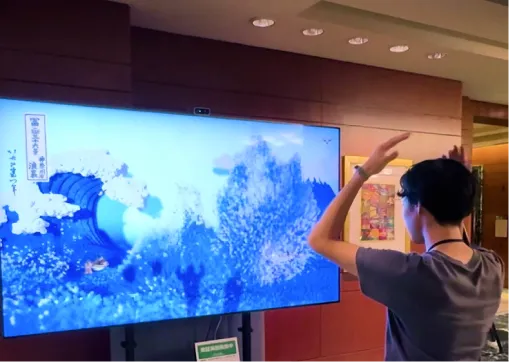
We've deployed installations at Expo 2025 Osaka, built product configurators for e-commerce brands, and helped platforms achieve 100x performance improvements through WebGPU migration.
We're transparent about our perspective: we build with Three.js daily and believe it's the right choice for most web 3D projects. But we've also recommended Unity WebGL when the project warranted it—especially for game-heavy experiences with existing Unity pipelines.
12. Let's Talk
Deciding between Three.js and Unity for your next web project? We work with teams on interactive experiences, product configurators, and immersive brand projects.
If you're exploring a partnership, let's discuss your project:
- What you're building and the constraints you're working with
- Which technical approach makes sense for your goals
- Whether we're the right fit to help you execute
Decision-Maker Checklist
- Identified primary use case (configurator, marketing, game, training)
- Assessed team's existing skills (JavaScript vs Unity/C#)
- Estimated total bundle size and acceptable load time
- Checked if SEO/organic search is a requirement
- Evaluated licensing costs over project lifetime
- Confirmed mobile device support requirements
- Tested a prototype on target devices
- Considered WebGPU as a long-term performance strategy
- Reviewed cross-platform needs (web-only vs multi-platform)
- Compared 2-3 vendor quotes for each approach
Project details:
- What we're building: [describe the experience]
- Technology decision: [Three.js / Unity WebGL / still deciding]
- Performance requirements: [target FPS, max load time, max bundle size]
- Browser/device support: [list target browsers and devices]
- Integration needs: [CMS, e-commerce, analytics, etc.]
Please help me create:
- A technical requirements checklist (performance, compatibility, accessibility)
- Evaluation criteria for comparing vendor proposals
- Questions to ask Three.js studios vs Unity studios
- A risk assessment section with mitigation strategies
Sources & References
- Needle Tools: Three.js vs Unity WebGL Comparison
- Unity: Runtime Fee Cancellation and Pricing Changes
- Unity Documentation: WebGL Performance
- Can I Use: WebGL 2.0 Browser Support
- Ravespace: Pixel Streaming vs WebGL/Three.js
- NPM Trends: Three.js Downloads
FAQs
Is Unity WebGL good enough for production web experiences?
Yes, for specific use cases. Unity WebGL powers production browser games, training simulations, and internal tools where users accept longer load times. It's less suitable for public-facing marketing sites, product pages, or any context where first impressions depend on fast loading. Expect 8–30 second initial loads for real projects, and plan for aggressive optimization (Brotli compression, asset streaming, code stripping) to reach the 15–25 MB target that Unity recommends.
How much does a Three.js web project cost compared to Unity WebGL?
Three.js projects typically cost 20–40% less for equivalent web experiences. A product configurator: $15K–60K (Three.js) vs $20K–80K (Unity). A marketing site: $10K–40K vs $25K–70K. Three.js also saves on licensing—$0 forever vs $2,310/seat/year for Unity Pro. The gap narrows for complex game-like experiences where Unity's built-in tools accelerate development.
Can Unity WebGL content rank in Google search results?
The Unity WebGL canvas itself is invisible to search crawlers—no text, no links, no semantic HTML. You can build HTML content around the Unity embed, but the 3D experience contributes nothing to SEO. Three.js applications can layer crawlable DOM content over the canvas, achieving better Core Web Vitals scores and providing text for indexing. For any page where organic search matters, this is a decisive advantage.
Does Unity WebGL work on iPhone and iPad?
Yes, but with constraints. iOS Safari has WASM memory limits that restrict scene complexity. Audio autoplay rules are stricter. Large bundles (20+ MB) may fail on slower cellular connections or hit Safari's memory ceiling. Three.js applications face none of these issues because their footprint is 5–10x smaller. Both technologies support WebGL 2.0 on all modern iOS browsers.
Should I use Unity WebGL if my team already knows Unity?
It depends on the project type. If you're building a browser game with complex physics and your team has years of Unity experience, leveraging that expertise makes sense. But if the project is web-first (marketing site, product configurator, SEO-critical content), the web-native approach often wins despite retraining cost. Unity-for-web expertise is a specialized niche—your C# game developers may still face a learning curve with WebGL export optimization, JavaScript interop, and web deployment.
How does WebGPU change the Three.js vs Unity comparison?
Significantly. Three.js supports WebGPU natively since r171 (September 2025), unlocking compute shaders, better draw-call batching, and 2–3x performance improvements for heavy workloads. Unity WebGL exports target WebGL 2.0 only—no WebGPU support exists or has been announced. For projects with 2–3 year lifespans, this means Three.js will have access to progressively better GPU performance while Unity WebGL stays on the older API.
Can I migrate from Unity WebGL to Three.js later?
Partially. 3D assets (models, textures) can be exported from Unity as glTF/GLB and reused in Three.js. But all C# logic, animation state machines, physics configurations, and shaders must be rewritten in JavaScript/TypeScript. In practice, migration is closer to a rebuild than a port—budget 60–80% of the original project cost. Starting with the right technology saves you from this scenario.


 Technology-First Creative Studio