The web platform shipped more genuinely new capability in 2024–2026 than in the entire decade before it.
WebGPU crossed Baseline in January 2026. WebTransport followed in March. WebCodecs is one Safari point release away. View Transitions made cross-document animation a tag, not a framework. And a quieter set — Speculation Rules, Document Picture-in-Picture, Compute Pressure — already ships measurable wins for the Chromium half of your users.
For CTOs and engineering leads, the question is no longer "is the web powerful enough?" — it's "which of these frontier APIs do I bet on this quarter, and where am I still stuck waiting for a holdout vendor?"
This guide is the 2026 buyer's map. Each API gets a status check, a real production deployment, an honest "use today / wait" verdict, and a decision framework you can use without re-reading every quarter.
Who this is for: CTOs, VP-Engineering, technical product managers, and senior engineers picking the next 12-month roadmap for browser-side capability — and anyone evaluating WebGPU, WebTransport, WebCodecs, or WebXR for production.
Key Takeaways
- WebGPU is Baseline as of January 2026 — Chrome, Edge, Firefox (Windows + macOS Tahoe), and Safari 26+ all ship it stable. The fallback to WebGL2 still matters for older Safari and Linux Firefox users, but the wait is over.
- WebTransport joined Baseline in March 2026 when Safari 26.4 shipped support. Low-latency bidirectional transport without WebRTC's signaling complexity is now a real tool, not a Chrome-only experiment.
- WebCodecs is near-Baseline — Safari 26 ships full support, Firefox desktop has decode + most encode paths. Production tools like Zoom Web, Loom, and Adobe Premiere Web already depend on it.
- WebNN is not production-ready in 2026. Chrome 147–149 Origin Trial only. WebGPU + transformers.js / ONNX Runtime Web is the current path for in-browser ML.
- View Transitions same-document is Baseline; cross-document still misses Firefox. Astro 4 and Nuxt 3 ship first-class support — use as progressive enhancement, not a hard dependency.
- WebXR on Vision Pro is VR-only. AR sessions still fail on visionOS and iOS Safari. Quest 3 remains the only mainstream device with full AR session support in browser.
- WebUSB, WebHID, WebSerial, Speculation Rules, and Document PiP are Chromium-only by design. Mozilla and WebKit have public negative positions on the hardware APIs. Treat these as permanent single-vendor — not as bets that "might land."
1. The 2026 Browser Landscape: What Actually Changed
The big shift wasn't a single API. It was the end of Apple's holdout pattern.
For most of the 2010s and early 2020s, the web platform's pace was set by whichever feature WebKit refused to ship. WebGPU, WebTransport, WebCodecs, View Transitions cross-document — each waited on Cupertino. Between Safari 17 (September 2023) and Safari 26 (September 2025), that pattern broke. Apple shipped WebGPU, View Transitions (both same- and cross-document), Document Picture-in-Picture, and full WebCodecs in roughly 24 months.
The result, in concrete terms:
| Capability | 2024 reality | April 2026 reality |
|---|---|---|
| GPU compute in browser | Chrome-only | Baseline (all major browsers) |
| Low-latency bidirectional transport | Chrome + Firefox | Baseline (March 2026) |
| In-browser hardware video encode/decode | Chrome stable, Safari decode-only | Near-Baseline (Safari 26 full, Firefox decode complete) |
| Same-document view transitions | Chrome + Safari | Baseline (Firefox 133+) |
| Cross-document view transitions | Chrome only | Chrome + Safari (Firefox in progress) |
| Browser-based ML inference | WebGPU + transformers.js | WebGPU + transformers.js (WebNN still Origin Trial) |
What this means for planning: capabilities you previously had to polyfill, fall back, or skip entirely now warrant first-class implementation. The category of "Chromium-only frontier" has shrunk, but it hasn't disappeared — and a small set of APIs (WebUSB, WebHID, Speculation Rules) will remain Chromium-only indefinitely because Mozilla and WebKit have publicly opposed them.
2. WebGPU: Baseline in 2026 — Now What?
Status
WebGPU achieved Baseline in January 2026. Concrete shipping state:
- Chrome / Edge: stable since v113 (May 2023), Linux unflagged in 2024.
- Safari: stable in Safari 26.0 (September 2025) on macOS Tahoe 26, iOS 26, iPadOS 26, and visionOS 26.
- Firefox: stable on Windows since v141 (July 2025); macOS Tahoe 26 ARM64 since v145; Linux, Android, and Intel-Mac support tracking through 2026.
The two real holes: Linux Firefox and consumer iPhones older than the A12 generation. For most B2B and prosumer audiences in 2026, you can ship WebGPU as the primary path with a WebGL2 fallback for the ~5–10% tail.
Production deployments
- Figma began production rollout of WebGPU in September 2025, monitoring metrics by GPU type, OS, and browser as they ramped percentage. The motivation: WebGL's bug-prone global state and limited compute access. WebGPU compute lets them move work off CPU and onto the GPU's parallel pipelines.
- Three.js ships
WebGPURendereras the recommended renderer since r171 (September 2025) — zero-config import, automatic WebGL2 fallback. - transformers.js v3 (Hugging Face, October 2024) added a WebGPU backend; Whisper-base runs roughly 5x faster than the WebAssembly-SIMD path.
- WebLLM (MLC AI) runs Llama-3-class models in browser at 15–25 tokens/second on Apple Silicon laptops — entirely on WebGPU compute.
When to use, when to wait
Use WebGPU as primary today for:
- New Three.js / Babylon.js projects (the WebGPU renderer is the recommended default)
- In-browser ML inference (transformers.js, ONNX Runtime Web with WebGPU EP)
- GPGPU compute — particle simulations, fluid sims, image processing pipelines
- Any rendering scenario where draw-call-heavy WebGL2 already hits frame budget
Keep a WebGL2 fallback for:
- Linux Firefox users (until the macOS / Linux backend stabilizes mid-2026)
- iOS devices below the A12 SoC (iPhone XS / 2018 and older)
- Enterprise customers with locked-down browser policies
- In-app browsers (Instagram, X, LINE, Facebook WebViews) — these embedded WebViews frequently fail
navigator.gpuadapter requests or silently drop GPU extensions even on hardware that supports WebGPU in the system browser. If a meaningful share of your traffic arrives from social links, treat the WebView as a WebGL2-fallback (or static-image) target, not a WebGPU one.
Test before you ship. WebGPU/WebGL behaves very differently inside in-app browsers than in desktop Chrome. Before any production launch, manually verify the full path (context init → shader compile → interaction → fallback) on Instagram and X/Twitter WebViews on both iOS and Android — desktop results don't predict them.
Latency caveat: WebGPU shader compilation is asynchronous. First-frame compile cost can exceed 200ms on cold load. Cache GPUShaderModule and pipeline state objects aggressively, and warm critical pipelines during idle time, not on first user interaction.
3. WebTransport: Baseline as of March 2026
Status
WebTransport went Baseline in March 2026 when Safari 26.4 shipped support out of the box. The full picture:
- Chrome / Edge: stable since M97 (January 2022), no flag.
- Firefox: stable since v114 (June 2023).
- Safari: stable in 26.4 (March 2026).
WebTransport runs over HTTP/3 / QUIC and gives you bidirectional reliable streams plus unreliable datagrams in a single API. It replaces the awkward stack of WebSocket-for-control + WebRTC-DataChannel-for-low-latency that real-time apps assembled by hand for the last decade.
Production deployments
- Cloudflare ships WebTransport endpoints across its edge as part of Workers + Durable Objects realtime infra, including fanout patterns for chat, gaming, and observability.
- Live media platforms are migrating low-latency video distribution off LL-HLS toward WebTransport for sub-500ms glass-to-glass.
- Cloud gaming and remote desktop scenarios use the datagram path for input and frame ack, with reliable streams for control plane.
Performance gain
For lossy networks, the QUIC path beats WebSocket-over-TCP by approximately one round trip thanks to 0-RTT resumption, plus avoids head-of-line blocking on packet loss. Real-world reports cluster around 30–50% latency-jitter reduction versus WebSocket on residential mobile networks.
When to use, when to wait
Use today if:
- You control both client and server (B2B, internal tools, dedicated apps)
- Your CDN supports HTTP/3 (Cloudflare, Fastly, Akamai do; many origin servers do not)
- Your audience can tolerate fallback to WebSocket on corporate networks that block UDP
Wait if:
- Your traffic mix is dominated by enterprise networks with strict UDP policies — fallback complexity may eat the gains
- Your existing WebSocket stack already meets latency budgets — migrating for its own sake is a poor use of engineering time
Caveat: WebTransport requires HTTP/3 on the server. Legacy origin servers behind ALBs, classic load balancers, or HTTP/2-only reverse proxies need infrastructure work first.
4. WebCodecs: Near-Baseline, Production-Proven
Status
WebCodecs gives you VideoEncoder, VideoDecoder, AudioEncoder, and AudioDecoder — direct access to the platform's hardware codec pipeline. It bypasses MediaRecorder and <video> element abstractions entirely.
- Chrome / Edge: stable since M94 (September 2021).
- Safari:VideoEncoder/Decoder shipped in Safari 16.4 (March 2023); audio + remaining surface complete in Safari 26 (September 2025).
- Firefox: Desktop largely complete (decode + most encode) since 2024; Android still missing.
For the EN-USA-CA market mix, treat WebCodecs as Baseline-with-asterisk: confirm hardware codec availability via VideoEncoder.isConfigSupported() at runtime; AV1 encode is Chrome-only as of 2026; HEVC encode requires platform license + hardware support.
Production deployments
- Zoom Web Client rebuilt on WebCodecs + WebAssembly + WebTransport, eliminating the desktop SDK shim and unblocking browser-only meetings.
- Loom uses WebCodecs for in-browser video encoding and trim, reporting roughly 10x speedups on edit operations versus the previous
MediaRecorderpath. - Twitch's low-latency player uses
VideoDecoderfor sub-second pipelines that LL-HLS+ couldn't reach with stock HTML video. - Discord uses WebCodecs for hardware-accelerated H.264 encode in screen-share and stage features.
- Adobe Premiere Web (beta) uses WebCodecs for client-side preview encode.
When to use, when to wait
Use today for any in-browser video tooling: screen recorders, video chat, low-latency players, web-based NLEs, real-time effects pipelines.
Caveats:
- Codec availability varies by platform — always feature-detect.
- AV1 encode is Chrome-only in 2026; ship dual-codec (AV1 + H.264) if you need universal coverage.
- Firefox Android still misses WebCodecs entirely; mobile-Firefox audiences need a fallback.
5. View Transitions: Same-Document Is Free, Cross-Document Is Polish
Status
There are two View Transition surfaces:
- Same-document (
document.startViewTransition): Chrome 111, Safari 18, Firefox 133+. Baseline now. - Cross-document (Multi-Page App): Chrome 126, Safari 18.2. Firefox: not shipped, in progress for 2026.
For SPAs, treat same-document View Transitions as a reach-everyone enhancement. For MPA / static-site setups (Astro, Eleventy, plain HTML with form-driven nav), cross-document transitions are still Chrome + Safari only.
Production deployments
- Astro 4.0 (December 2023) shipped first-class
<ViewTransitions />using the cross-document API; default in many starter templates. - Nuxt 3.10+ integrates View Transitions via page transition config.
- Linear, GitHub (in select review flows), and Chrome.com itself use same-document transitions for in-app navigation polish.
When to use, when to wait
Use as progressive enhancement today, gated by if (!document.startViewTransition) return; for SPAs. The fallback (instant snap) is acceptable UX, so the cost is near-zero.
For MPA setups, ship cross-document transitions for Chrome + Safari users; treat Firefox as the no-transition fallback. Most users won't notice; the ones who do will get a polished experience.
Accessibility note: Always wrap with prefers-reduced-motion: reduce checks. Test focus order during transitions — screen readers can fire announcements mid-animation, which is jarring.
6. WebNN: Not Yet — Use WebGPU + ONNX Runtime Web
Status
The Web Neural Network API would give browsers direct access to platform NPUs (Apple Neural Engine, Intel/Qualcomm/AMD AI accelerators) for low-power inference.
- Chrome: Origin Trial in M147–M149; Android excluded; not yet stable as of April 2026.
- Edge: matches Chrome OT timeline.
- Safari, Firefox: not shipped.
The W3C spec reached Candidate Recommendation in January 2026 with active work on generative AI use cases. Production timeline for WebNN as a default path is best estimated at 2027.
What to use instead
For in-browser ML in 2026, the working production stack is:
- WebGPU compute as the inference backend
- transformers.js v3 for Hugging Face models (text, vision, speech)
- ONNX Runtime Web with the WebGPU execution provider for general ONNX graphs
- MLC WebLLM for LLM workloads up to ~8B parameters
This stack already runs Whisper, Llama-3-8B, Stable Diffusion-Turbo derivatives, BERT-class classifiers, and most vision transformers at usable speeds on consumer hardware.
When to revisit
WebNN's edge over WebGPU is access to dedicated NPUs, which matter most on Copilot+ PCs, M-series Macs with active Neural Engines, and Snapdragon X laptops. Revisit late 2026 if your workload is INT8-quantized transformer inference and you need to extract the last 2–4x perf on NPU-equipped hardware. Otherwise, WebGPU is the durable bet.
7. WebXR: Vision Pro Lands, but AR Is Still VR-Only on Apple
Status
- Chrome (desktop + Android): stable since M79 (December 2019); AR module since M81 on Android with ARCore.
- Meta Quest Browser: full WebXR including hand tracking; immersive-ar passthrough since 2023.
- Apple Vision Pro Safari (visionOS 2.0+): WebXR enabled by default since visionOS 2 (September 2024). VR sessions only — no immersive-ar module.
- iOS Safari, macOS Safari, Firefox: no WebXR.
The biggest 2025 development was Vision Pro's WebXR enablement by default. Combined with WebKit's "Natural Input for WebXR" work (gaze + pinch as a select event), Vision Pro is the second mainstream device after Quest 3 with a real WebXR story.
The asterisk: visionOS still does not support immersive-ar. Mixed-reality content has to ship as a native app. For browser-based AR, mobile Chrome with ARCore remains the only option, and consumer reach there is much smaller than Quest's installed base.
Production deployments
- Matterport publishes 3D real estate tours that drop into WebXR on Quest and Vision Pro.
- 8th Wall (Niantic) — predominantly a marker-based AR platform, increasingly used for marketing activations.
- Industrial training vendors (Bosch, Volkswagen) ship browser-based VR training on Babylon.js + WebXR.
When to use, when to wait
Use today if your audience is Quest, Vision Pro, or AR-friendly mobile users — and you accept that desktop / iPhone Safari users will get a 2D fallback.
Wait if you need cross-device immersive AR. visionOS AR support is the gating dependency, and there's no public timeline. For B2C campaigns demanding "AR on iPhone," native AR (USDZ Quick Look, ARKit apps) remains the only viable path.
8. The Single-Vendor Frontier: Chromium-Only APIs Worth Knowing
These APIs ship in Chrome and Edge, won't ship in Firefox or Safari, and are still high-value for Chromium-majority audiences.
Speculation Rules API
Status: Chrome 122 (February 2024), now mature. Not in Safari, Firefox, or their roadmaps.
What it does: declarative prefetch and prerender with same-origin and cross-origin rules. The browser pre-renders likely-next pages, making navigation effectively instant.
Real numbers from production deployments:
- Scalemates.com: P95 LCP roughly 500ms faster on prerendered pages; P75 LCP 537ms (prerendered) vs 714ms (standard); 59% of navigations triggered prerender.
- Ray-Ban: 156% increase in desktop conversion attributed to speculative preloading.
When to use: any content site or commerce flow where 50%+ of traffic is Chromium. ROI is high even when half your audience sees no benefit. Add via a single <script type="speculationrules"> block; framework support exists in Astro, Next.js, and Nuxt.
Document Picture-in-Picture
Status: Chrome 116 (August 2023), Edge 116. Safari shipped in 18.4 (March 2025). Firefox not shipped.
What it does: lets you put arbitrary HTML — not just <video> — into a floating, always-on-top window. Google Meet, Slack huddles, and YouTube Music use it.
When to use: any in-browser meeting, calling, or media app that benefits from a "follow me around" mode. With Safari support landed in 2025, this is now usable for ~95% of consumer audiences.
WebUSB / WebHID / WebSerial
Status: Chrome / Edge stable (WebUSB since 2017, WebHID and WebSerial since 2021). Firefox and WebKit have public "harmful" positions — these will not ship cross-browser.
When to use: kiosks, point-of-sale, hardware programming tools, and B2B internal apps where you control browser deployment. Square, Stripe Terminal browser SDKs, Espruino IDE, and the Arduino IDE Web rely on these.
When to skip: any consumer cross-browser product. Treat the vendor concentration risk as permanent.
Compute Pressure API
Status: Chrome 125 (May 2024) on desktop, mobile shortly after. Not in Safari or Firefox.
What it does: surfaces nominal | fair | serious | critical CPU pressure states. Apps adapt — drop video resolution, disable effects, throttle physics.
Used by Google Meet to downgrade video layout under thermal pressure. Worth shipping as progressive enhancement for any video, gaming, or graphics-heavy app where the Chromium audience matters.
File System Access vs Origin Private File System
showOpenFilePicker() and friends remain Chrome-only. OPFS — the Origin Private File System — is cross-browser (Chrome, Safari, Firefox) and the right primitive when you want sandboxed local file storage without a permission prompt. VS Code Web, Excalidraw, and Photopea use OPFS for performance-critical file IO.
9. Five Questions Before Betting on a Frontier API
A reusable framework you can apply to anything new on the platform — including APIs not in this article (Web Locks, Background Fetch, Storage Buckets, Sanitizer API, fenced frames, etc.).
1. What is the real browser-support reality for your user base?
Pull 30 days of analytics, cross-reference with caniuse.com, and compute the actual percentage of sessions that can use the API. Don't assume "Chromium-based covers everyone" — Chrome on iOS is WebKit underneath. Don't assume Firefox is dead — for many B2B and developer-tool audiences, Firefox is 5–15%.
2. What is the cost of the fallback path?
If 30% of users need a fallback, ask: will you actually build, test, and maintain two implementations? If the answer is "we'll build the primary path well and stub the fallback," the fallback is already broken. Be honest before you commit.
3. What's the user-visible ROI vs the lift?
A 20% faster encode on a tool users hit daily is worth the engineering. A 100ms saved on a flow that runs once per session is not. Measure first; pick APIs second.
4. What's the vendor concentration risk?
Some APIs are Chromium-only by accident of timing (Speculation Rules, Document PiP — both will likely land in Safari and Firefox eventually). Others are Chromium-only by explicit Mozilla and WebKit opposition (WebUSB, WebHID, WebSerial). Treat the second category as permanently single-vendor and price the risk accordingly.
Mozilla publishes its standards positions and WebKit publishes its standards positions — read them before betting.
5. Can you feature-detect and degrade cleanly?
Some APIs degrade with one line: if ('startViewTransition' in document). Others require a real fallback implementation: if (await navigator.gpu?.requestAdapter()) means you still need a WebGL2 renderer. Plan the no-API path first — it forces honesty about Question 2.
10. About Utsubo
Utsubo is an interactive creative studio based in Osaka. We work on:
- WebGPU and Three.js development — production-grade web graphics, real-time visualization, and in-browser ML pipelines
- Immersive web experiences — storytelling sites, product configurators, game studio websites
- Interactive installations — museums, retail, public spaces
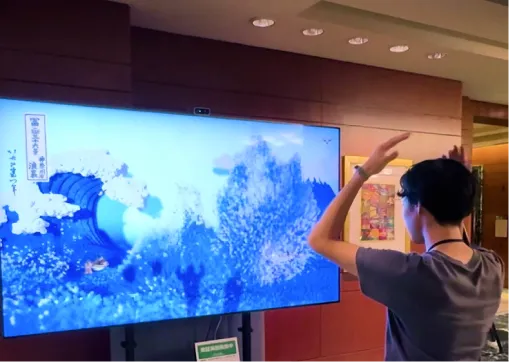
We've shipped WebGPU in production since 2024 across Web and physical installations, including a 1-million-particle real-time installation at Expo 2025 Osaka. Our work has been recognized by Awwwards, FWA, and The Webby Awards.
If you're evaluating WebGPU, WebTransport, WebCodecs, or WebXR for a real project, we can help with architecture, benchmarking, and production rollout — including the boring-but-essential fallback paths.
For deeper technical reading, see our WebGPU + Three.js migration guide, our Three.js 2026 review, and our Three.js best practices reference.
11. Let's Talk
Building something ambitious on the 2026 web platform? We work with engineering teams on WebGPU adoption, real-time transport architecture, in-browser ML, and immersive web experiences.
If you're exploring a partnership, let's discuss your project:
- What you're building and the constraints you're working with
- Which frontier APIs make sense for your audience and timeline
- Whether we're the right fit to help you execute
Frontier API Adoption Checklist
Run this against any frontier API your team is considering shipping in the next 12 months.
- Pulled real browser-support numbers from your own analytics (not generic global stats)
- Confirmed Chrome / Edge / Safari / Firefox stable status on caniuse.com
- Identified the holdout vendor (if any) and read their public standards position
- Estimated the percentage of sessions on a no-fallback path
- Designed the fallback path first — and budgeted to actually build and test it
- Quantified user-visible ROI (latency, conversion, capability) — not just "feels better"
- Feature-detect at runtime (don't sniff user agent)
- Logged adoption metrics so you can tell when the fallback can be deprecated
- Reviewed the API's Origin Trial / candidate-rec / Baseline status — not "shipping in beta"
- Checked accessibility implications (especially View Transitions and WebXR)
Sources & References
- caniuse — WebGPU
- caniuse — WebTransport
- caniuse — WebCodecs
- caniuse — View Transitions
- Figma Rendering: Powered by WebGPU
- WebKit blog — Safari release notes
- Chrome Platform Status
- Mozilla standards positions
- WebKit standards positions
- Chrome — Prerender pages with Speculation Rules
- Hugging Face — transformers.js v3
- visionOS 2 enables WebXR by default
FAQs
Is WebGPU production-ready in 2026?
Yes. WebGPU achieved Baseline status in January 2026 — Chrome 113+, Edge 113+, Safari 26+ (macOS Tahoe, iOS, iPadOS, visionOS), and Firefox 141+ on Windows / 145+ on macOS Tahoe ARM64 all ship it stable. Linux Firefox and pre-A12 iPhones remain on WebGL2 fallback. Three.js, Babylon.js, transformers.js, and Figma all use WebGPU in production today.
Should I use WebTransport instead of WebSocket in 2026?
WebTransport became Baseline in March 2026 with Safari 26.4 support. It's the better tool when you control both client and server, your CDN supports HTTP/3, and your audience tolerates UDP-friendly networks. For low-latency multiplayer, cloud gaming, or real-time observability, WebTransport beats WebSocket on lossy mobile networks by 30–50% in latency jitter. For typical request/response or chat workloads, WebSocket is still simpler and good enough.
Can I use WebNN for in-browser ML in 2026?
Not yet. WebNN is in Chrome Origin Trial M147–M149 with no Safari or Firefox implementation. For production browser ML in 2026, the working stack is WebGPU + transformers.js v3 + ONNX Runtime Web with the WebGPU execution provider. Revisit WebNN late 2026 if your workload specifically benefits from NPU access on Copilot+ PCs or Apple Silicon.
Is WebXR ready for AR on iPhone or Vision Pro?
No. As of April 2026, WebXR on Vision Pro (visionOS 2.0+) supports VR sessions only — immersive-ar is not implemented. iOS Safari has no WebXR at all. For browser-based AR, the only mainstream device is Android Chrome with ARCore. For iPhone AR, native ARKit apps and USDZ Quick Look remain the production path.
Are WebUSB, WebHID, and WebSerial worth using?
Yes, but only in Chromium-controlled environments — kiosks, B2B internal tools, hardware programming apps, and POS systems. Mozilla and WebKit have publicly opposed all three on security grounds; they will not ship cross-browser. Treat them as permanent single-vendor APIs and budget accordingly.
What's the right fallback strategy for Frontier APIs?
Design the fallback path first. If you can't articulate what users without the API see — and budget engineering to actually build it — the API is not safe to ship. Feature-detect at runtime (if ('feature' in window)) rather than sniffing user agents. Log adoption metrics so you can deprecate the fallback when usage drops below threshold. For most APIs, the right pattern is "frontier path for Baseline browsers, polished fallback for the tail, and a single feature-detect at the entry point."
How fast is WebGPU compared to WebGL?
It depends entirely on workload. For draw-call-heavy scenes, WebGPU is typically 2–10x faster because it removes WebGL's per-draw-call validation overhead. For GPGPU compute (particle simulation, ML inference, image processing), WebGPU can be 10–100x faster than WebGL transform-feedback workarounds — and it enables compute scenarios that simply weren't possible in WebGL. For simple scenes, the gain is smaller and shader compile time can dominate first-frame cost.
What's the cost of betting on Speculation Rules if my audience is mixed?
Low. Speculation Rules degrades silently — non-Chromium browsers ignore the <script type="speculationrules"> tag entirely. Even if 50% of your audience sees no benefit, the other 50% gets near-instant navigation. Real production deployments (Scalemates, Ray-Ban) report meaningful LCP and conversion gains. The only risk is over-prerendering — set conservative eagerness values and monitor server load.


 Technology-First Creative Studio