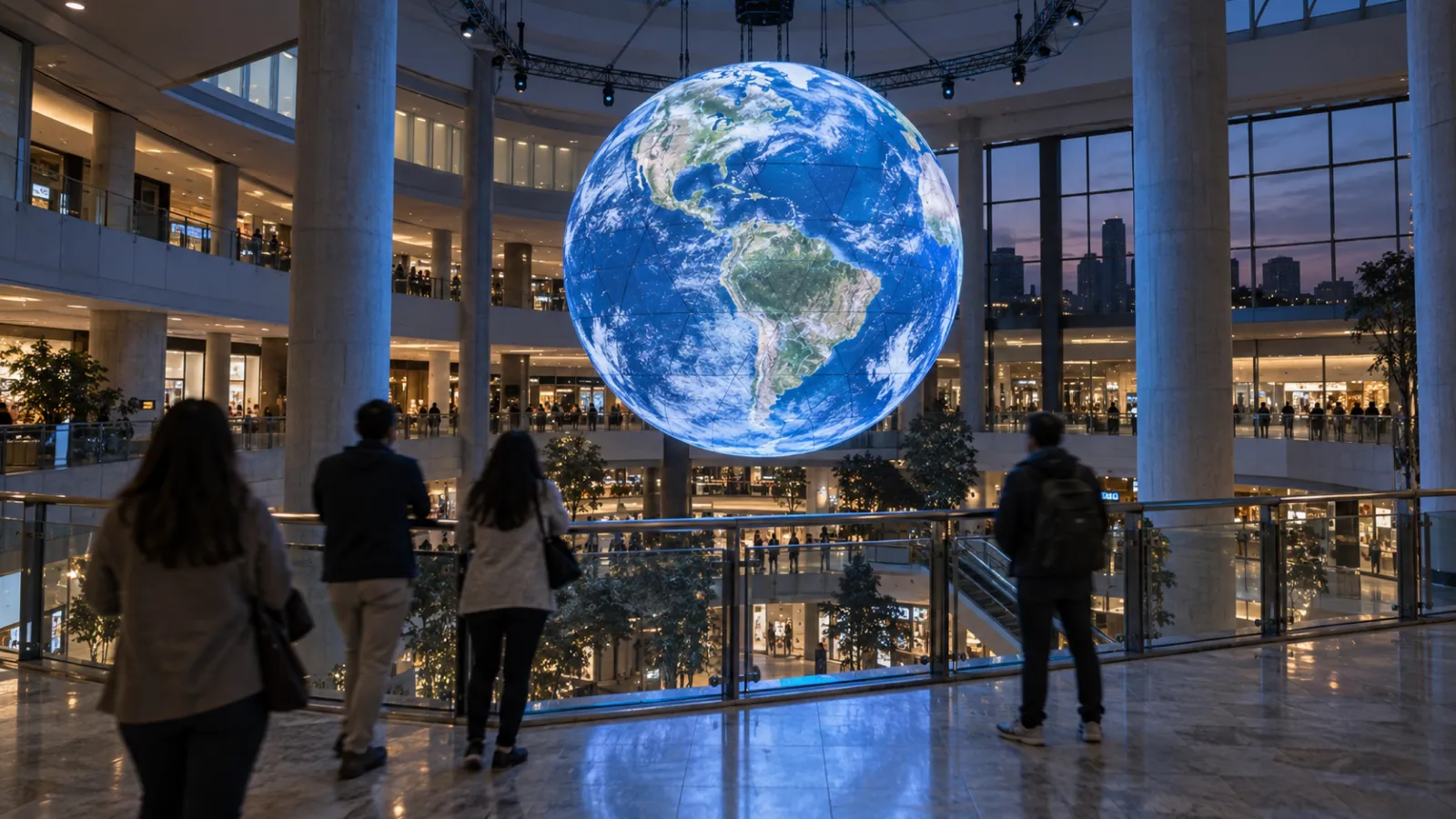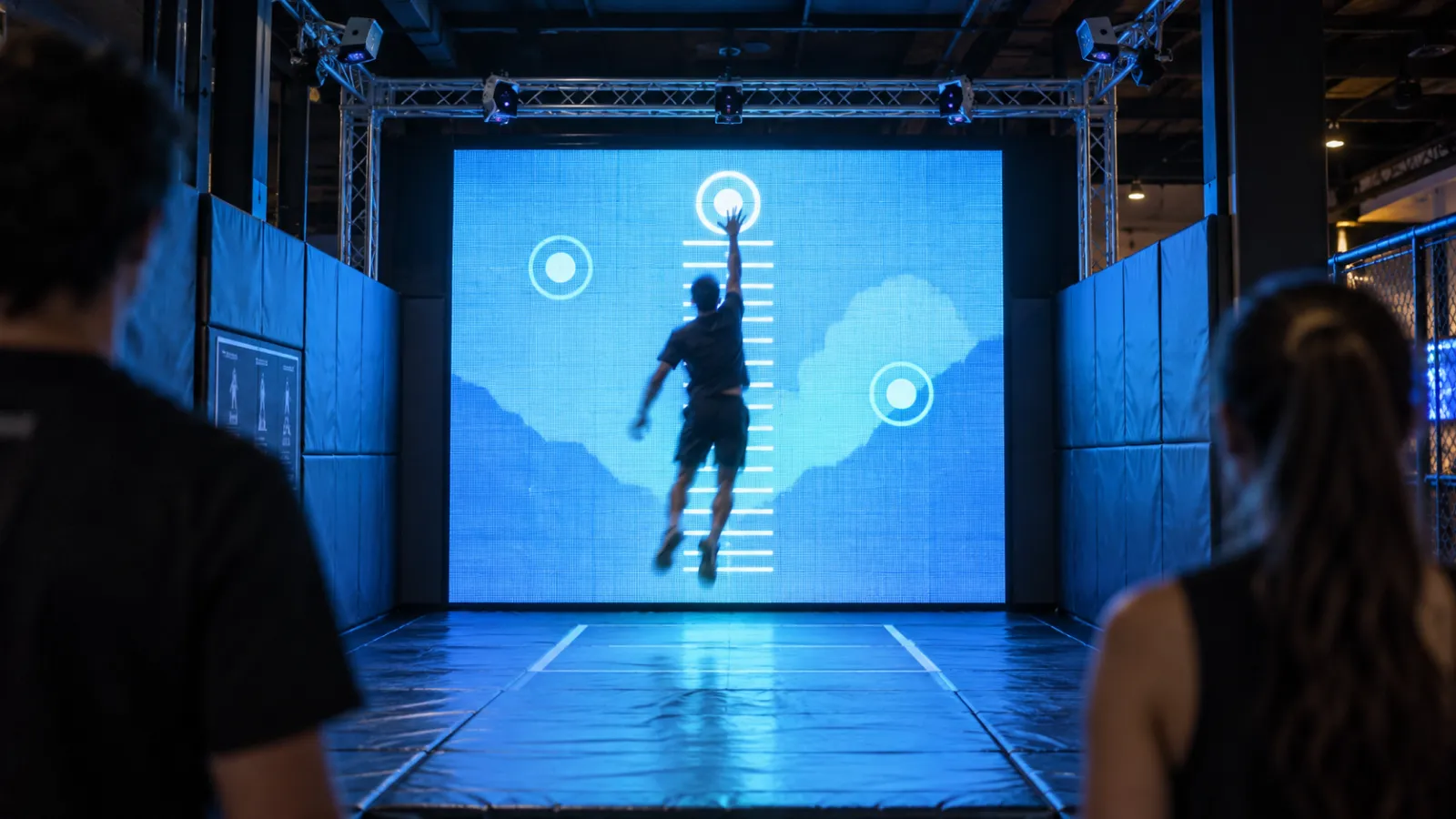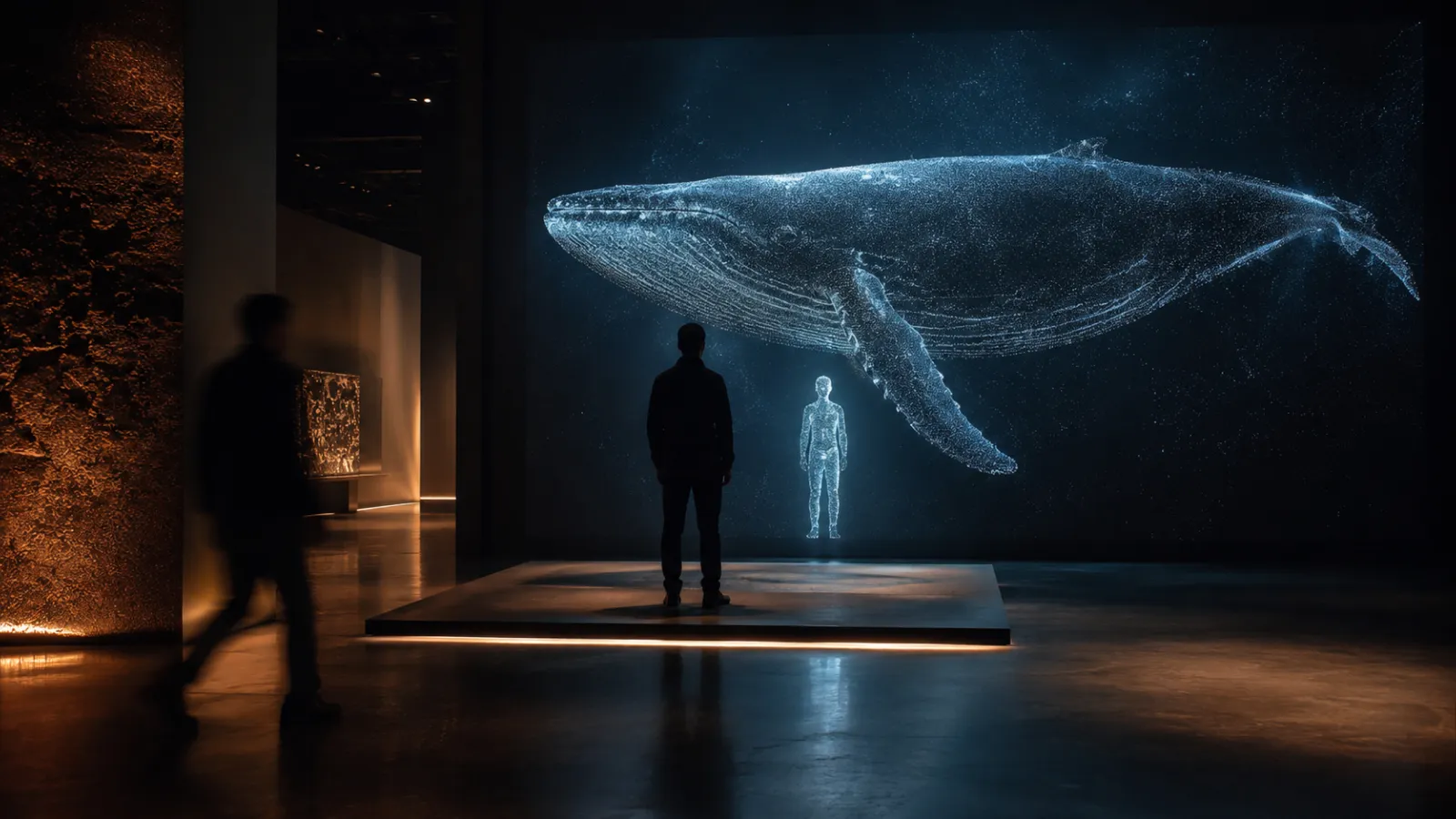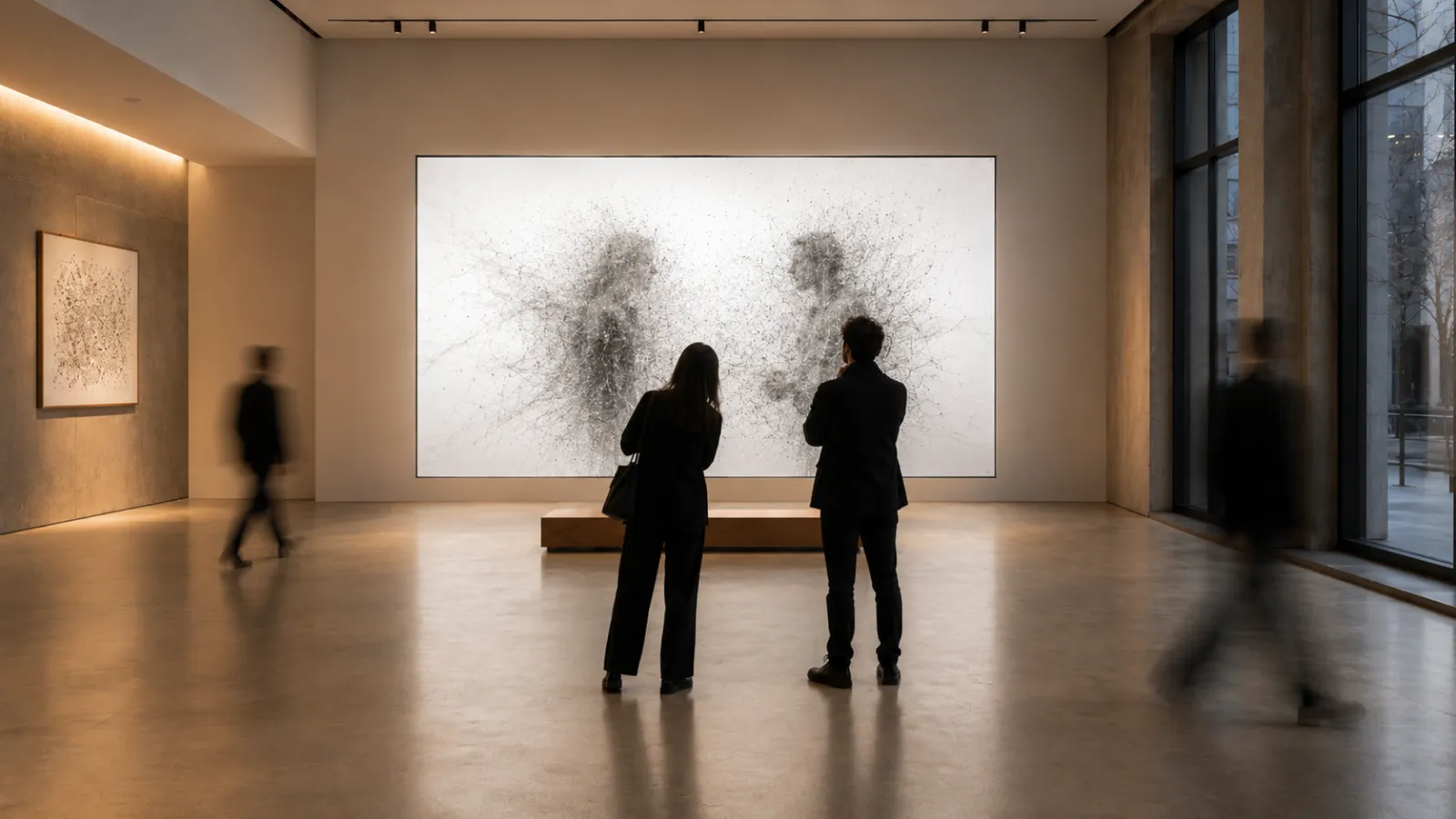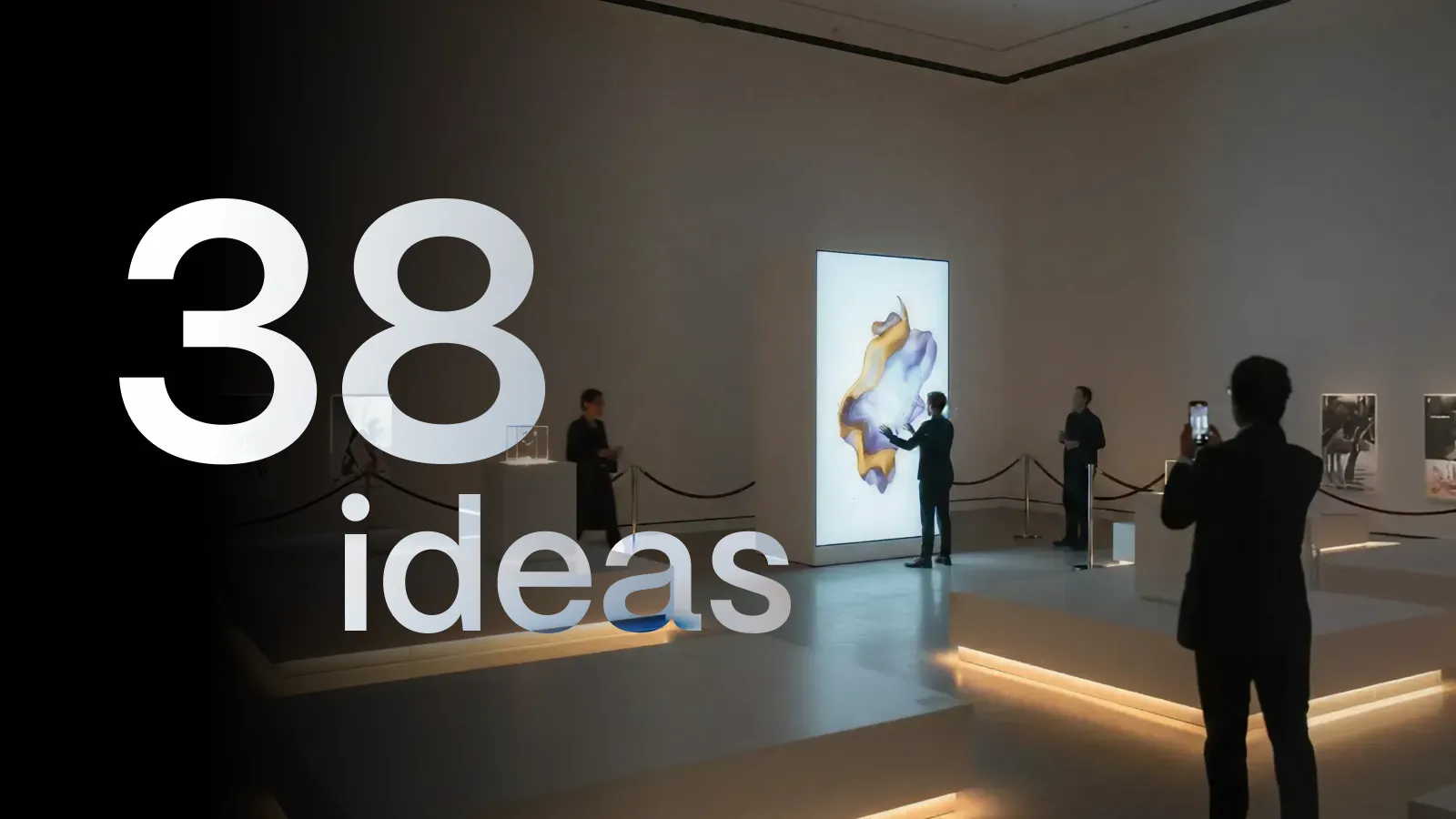
Interactive installations transform museums from passive viewing spaces into active experiences. From responsive light environments to AI-driven artworks, these 38 installations showcase the cutting edge of digital art and visitor engagement.
Who this is for: Museum curators, exhibition designers, creative technologists, and art enthusiasts exploring the intersection of technology and visitor experience.
Key Takeaways
- Interactive installations create memorable, shareable museum experiences
- Technologies range from simple sensors to advanced AI and real-time data visualization
- The best installations balance technical innovation with emotional resonance
- Visitor engagement metrics consistently improve with interactive elements
- Installation costs vary widely but ROI through increased attendance and press coverage is measurable
1. teamLab Borderless
Creator: teamLab | Year: 2018 | Location: Tokyo, Japan
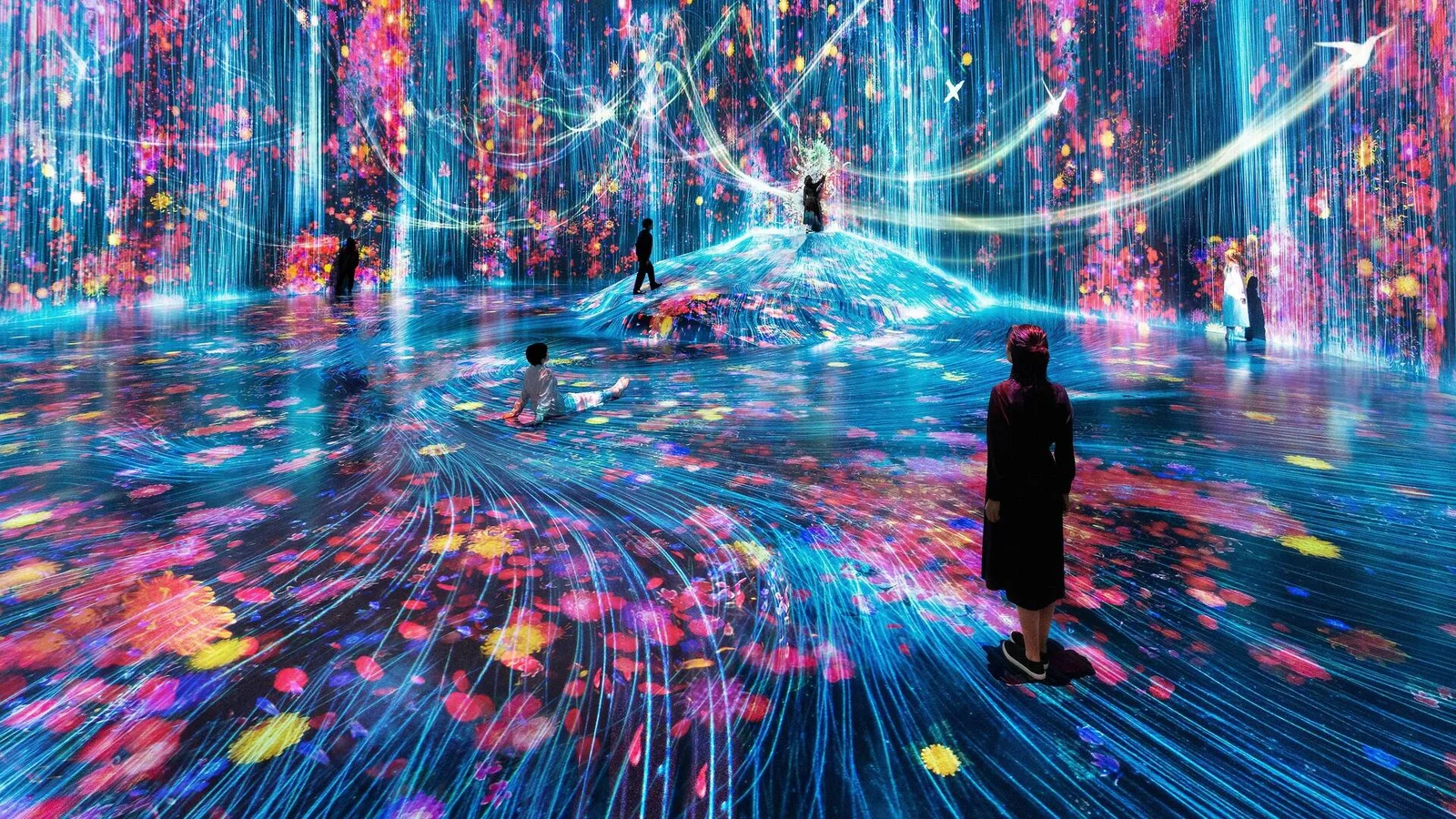
teamLab Borderless redefined what a museum could be by eliminating walls, frames, and fixed pathways. Visitors wander through a 10,000-square-meter space where digital artworks flow freely from room to room, interacting with each other and responding to human presence.
The installation uses over 500 computers and 470 projectors to create a seamless, ever-changing environment. Flowers bloom and scatter beneath your feet, waterfalls cascade across multiple rooms, and digital creatures follow visitors throughout the space. The experience is intentionally disorienting, encouraging exploration without a predetermined route.
With 2.3 million visitors in its first year, Borderless became the world's most-visited single-artist museum. It demonstrated that digital art could create the same wonder and emotional resonance as traditional masterpieces.
 Source: teamlab.art
2. teamLab Planets
Creator: teamLab | Year: 2018 | Location: Tokyo, Japan
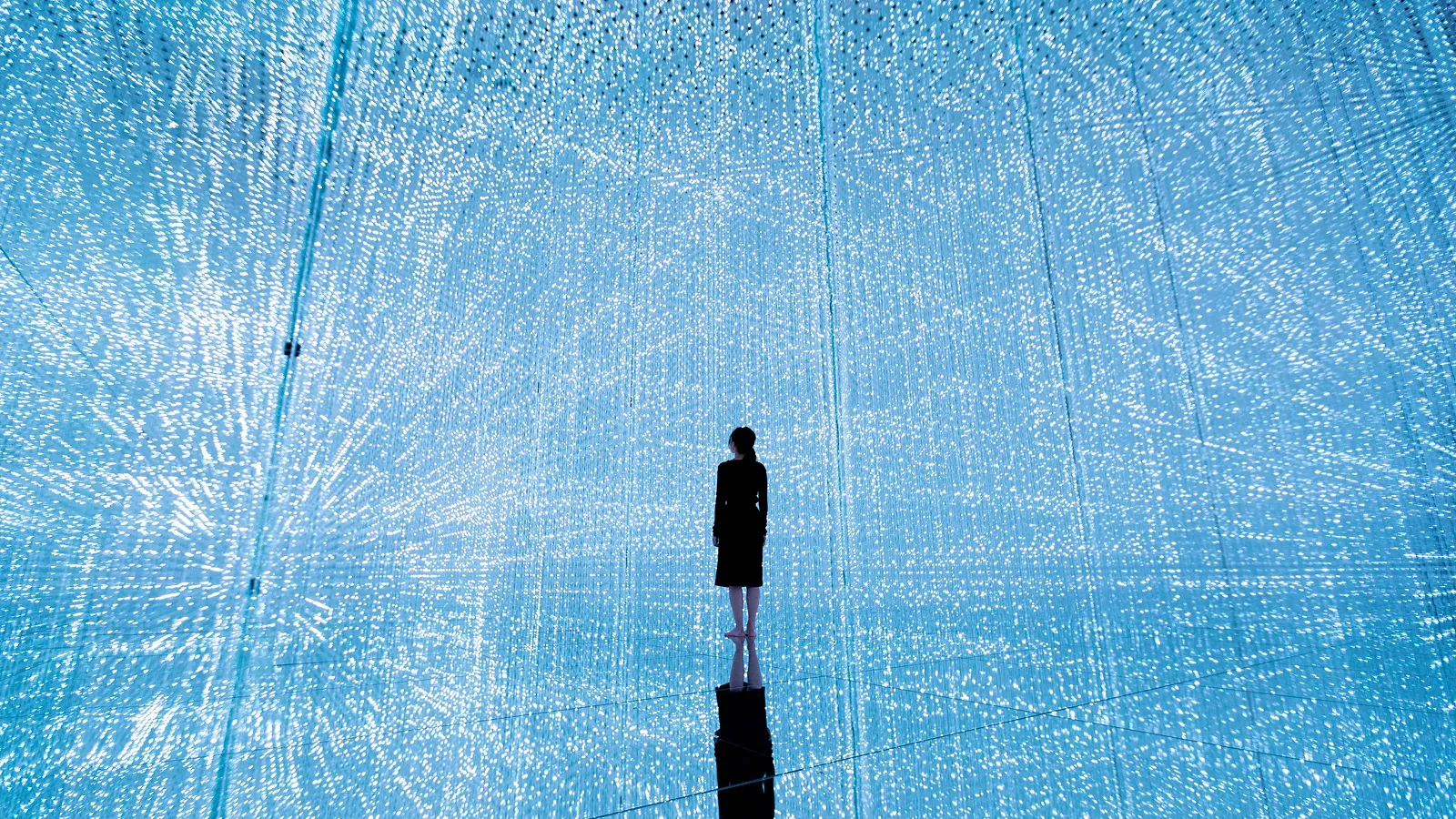
teamLab Planets takes immersion literally, requiring visitors to remove their shoes and wade through water, walk on mirrors, and navigate in near-darkness. The experience engages the entire body, not just the eyes.
The installation features massive koi fish that scatter when you approach, floating orchids you can walk among, and endless reflections that dissolve the boundary between floor and sky. The barefoot experience creates vulnerability and heightened awareness, transforming visitors from observers into participants.
Planets holds the Guinness World Record for the most-visited single-artist museum, attracting 2.5 million visitors in 2023. Its success proved that audiences crave physical, sensory experiences that digital screens alone cannot provide.
 Source: teamlab.art
3. Rain Room
Creator: Random International | Year: 2012 | Location: Various (permanent at Sharjah Art Foundation, UAE)
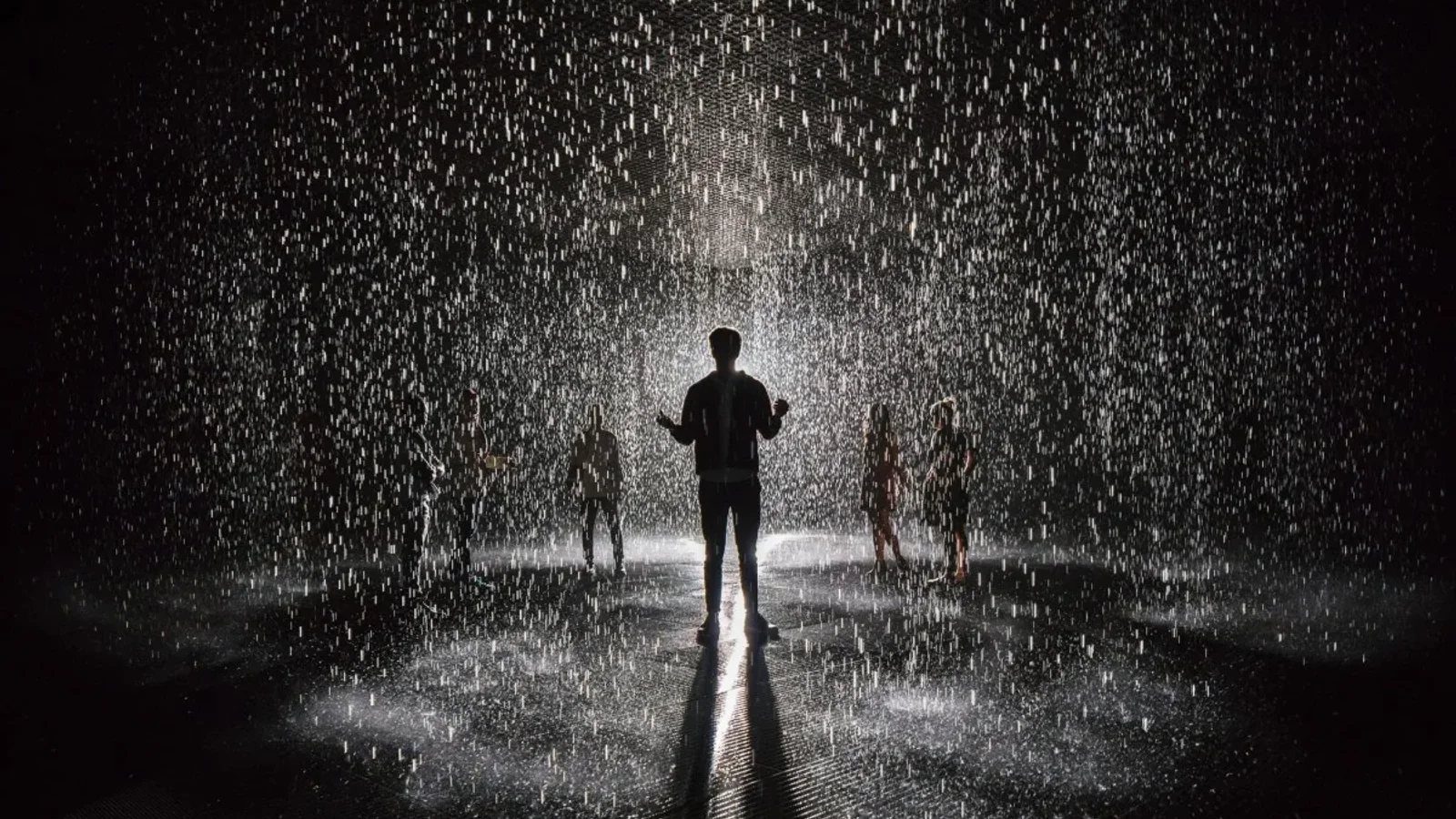
Rain Room creates the impossible experience of walking through rain without getting wet. Motion sensors detect visitors in real-time and pause the rainfall precisely where each person stands, creating invisible umbrellas of dry space.
The installation uses 3D tracking cameras and custom software to manage over 2,500 individually controlled water valves. The effect is uncanny, a meditation on human control over nature and the relationship between bodies and machines.
Since its debut at the Barbican in London, Rain Room has toured to MoMA, LACMA, and Busan, becoming one of the most recognized interactive installations worldwide. Its simple concept, executed with precision, resonates across cultures and ages.
 Source: wikipedia.org
4. Waves of Connection
Creator: Utsubo | Year: 2025 | Location: Expo 2025 Osaka, Japan
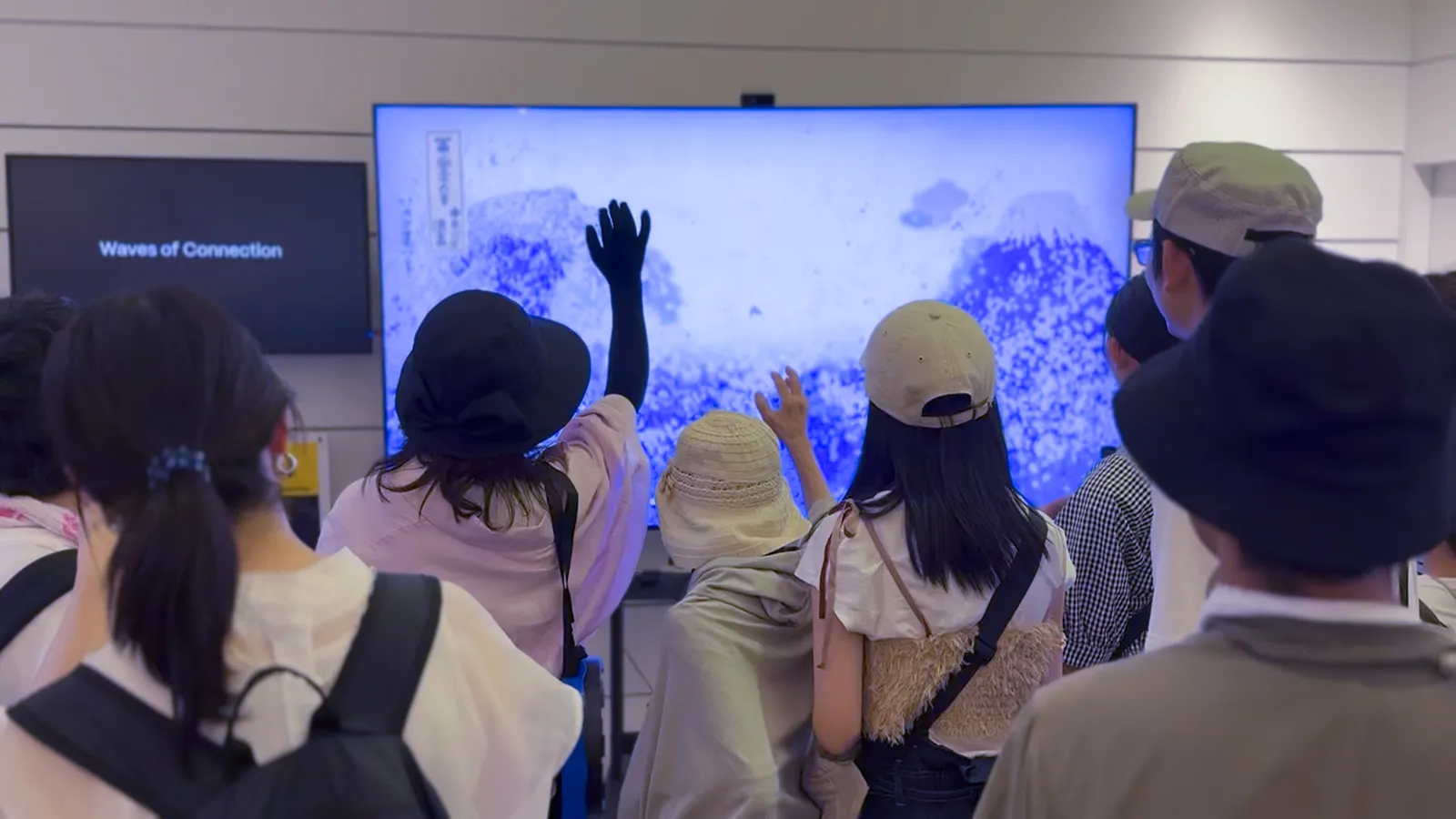
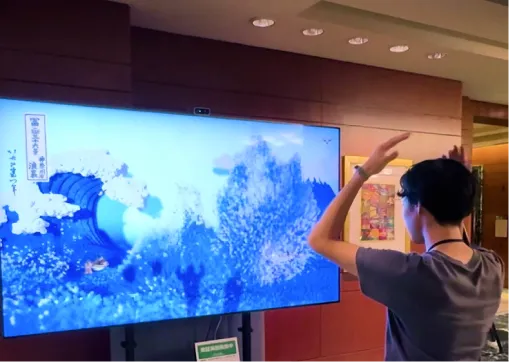
Waves of Connection transforms Hokusai's Great Wave into a living, breathing experience. Visitors control the wave with their bodies—no instructions needed. A Kinect depth camera tracks up to six people simultaneously, translating their movements into forces that disturb and reshape nearly one million particles in real time.
The installation uses WebGPU and Three.js to simulate fluid dynamics at unprecedented scale. Children queue repeatedly to create the biggest waves, while adults discover the joy of interaction through tentative first gestures that grow into sweeping movements. The visual direction draws from department store Christmas windows rather than cold tech demos, with pearl-like particles and warm, drifting colors.
During its 7-day exhibition at Expo 2025, over 10,000 visitors interacted with the piece. Available for rental at museums planning Hokusai or ukiyoe exhibitions.
 Source: utsubo.com
5. Atelier des Lumieres
Creator: Culturespaces | Year: 2018 | Location: Paris, France
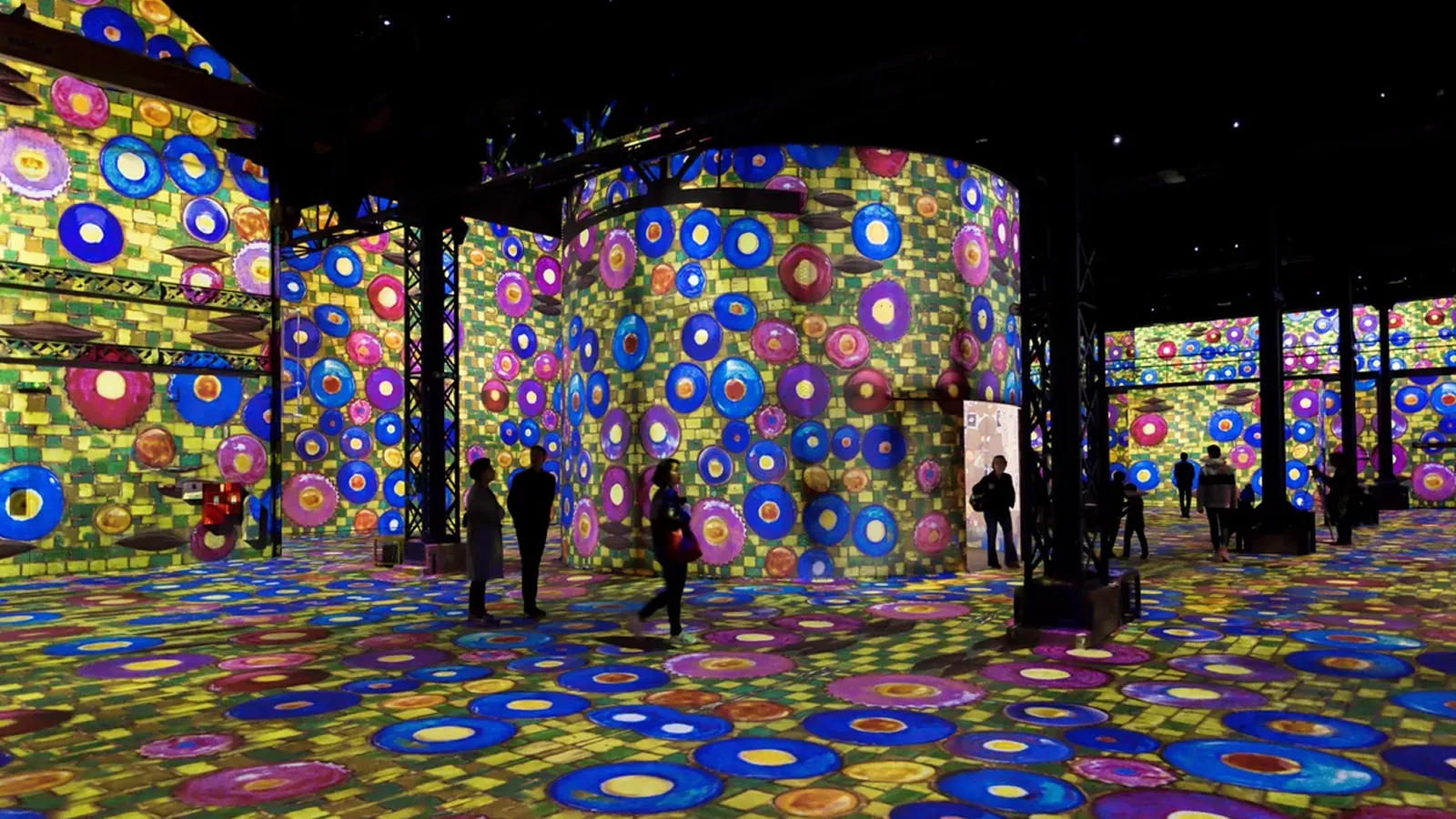
Atelier des Lumieres transforms a 19th-century iron foundry into a canvas for projected masterpieces. Van Gogh's sunflowers bloom on industrial walls, Klimt's gold leaf shimmers across concrete floors, and classical music fills the 2,000-square-meter space.
The installation uses 140 laser projectors to wrap visitors in 360-degree art, making them walk through rather than look at paintings. The scale is theatrical, the experience is intimate. Standing in the center of Starry Night creates emotional impact that museum walls cannot match.
With 1.2 million visitors in its opening year, Atelier des Lumieres sparked a global trend of immersive projection experiences. It proved that classic art could find new audiences through digital reinterpretation.
 Source: atelier-lumieres.com
6. Bunker de Lumieres
Creator: Culturespaces | Year: 2018 | Location: Jeju, South Korea
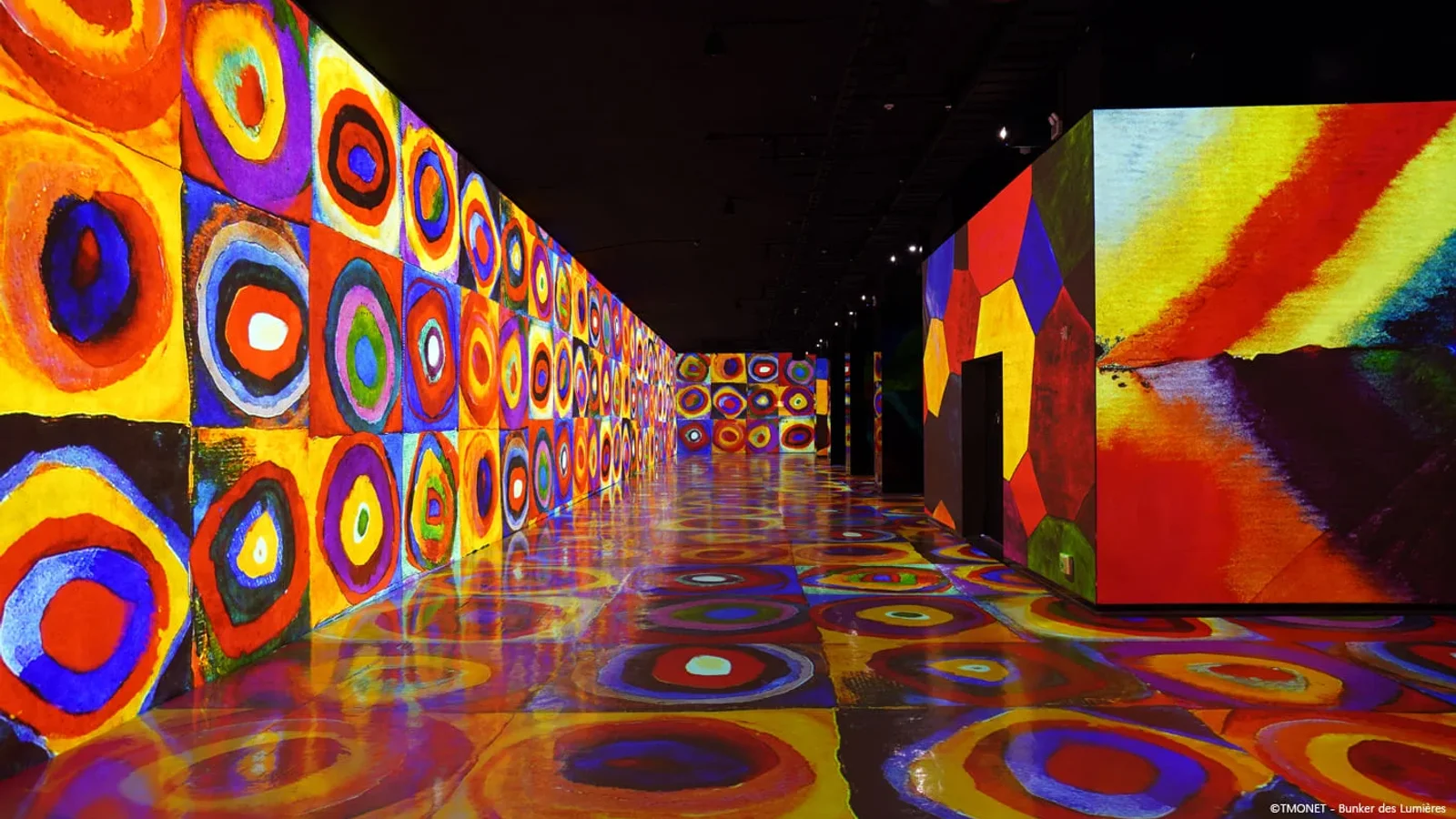
Hidden beneath Jeju Island, this underground bunker hosts immersive projections of Klimt, Monet, and other masters. The unconventional venue, with its raw concrete surfaces and massive scale, adds dramatic tension to the digital artworks.
The bunker's architecture creates natural acoustics and irregular surfaces that projections wrap around unexpectedly. What was once a military space becomes a sanctuary for art, demonstrating how digital installations can breathe new life into abandoned infrastructure.
 Source: deslumieres.co.kr
7. Sensorio Field of Light
Creator: Bruce Munro | Year: 2019 | Location: Paso Robles, USA
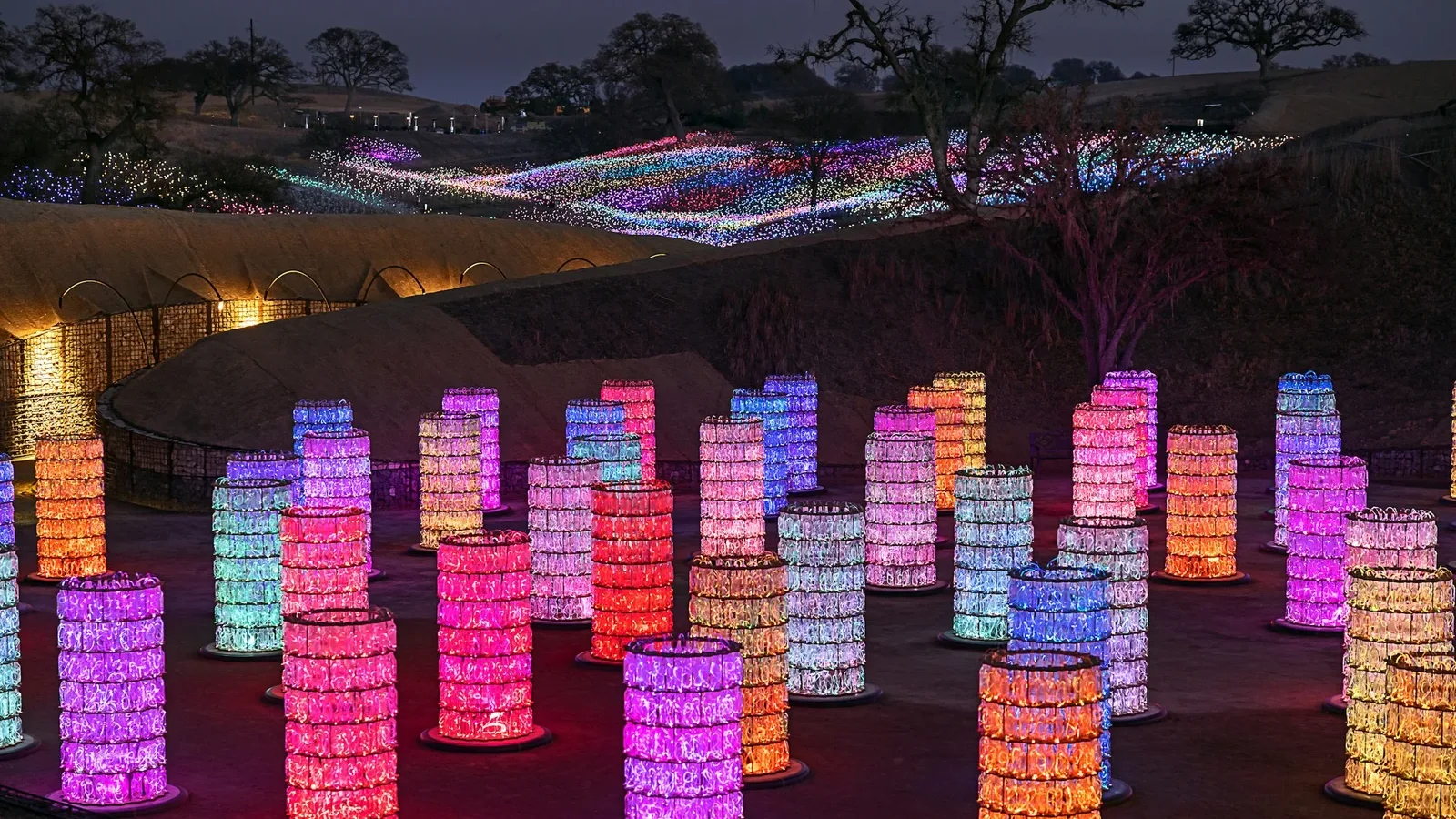
Artist Bruce Munro planted 58,800 fiber optic stems across 15 acres of California wine country, creating a landscape that glows and shifts through the night. Visitors walk among the lights as colors ripple like waves across the hillside.
The installation responds to the environment, weather, and time of night, ensuring no two visits are identical. During the golden hour, natural light blends with artificial illumination. At midnight, the field becomes otherworldly, a bioluminescent ocean on land.
Sensorio demonstrates that interactive art can work at landscape scale, transforming natural environments without permanent alteration.
 Source: sensoriopaso.com
8. teamLab Resonating Life in the Acorn Forest
Creator: teamLab | Year: 2020 | Location: Saitama, Japan
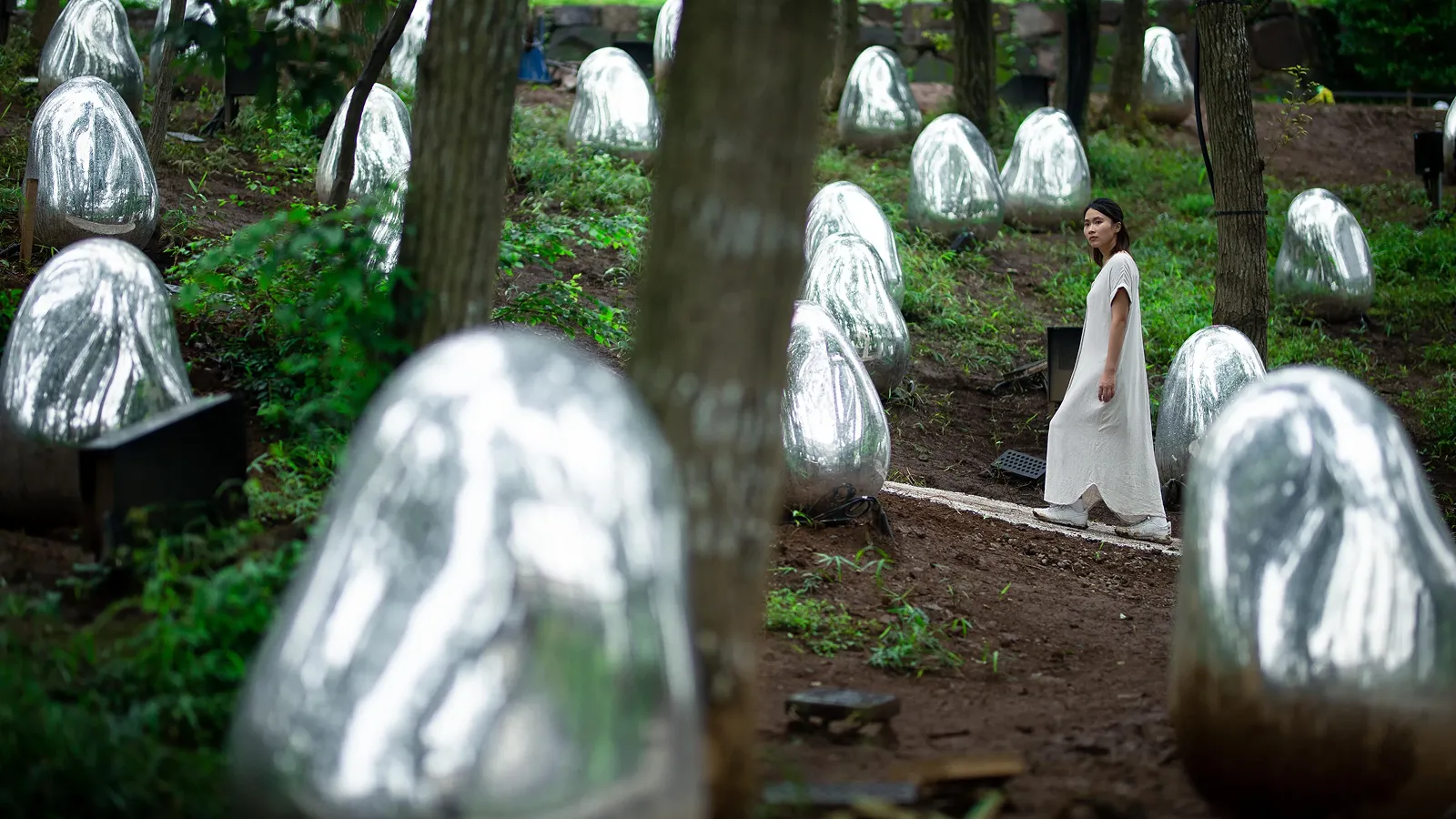
In this outdoor installation, ovoid light sculptures scattered through a forest glow and chime when touched. The effect cascades, as one sculpture responds, it triggers its neighbors, sending waves of light and sound through the trees.
The installation changes with seasons, frost on winter nights, autumn leaves, spring blossoms all interact with the digital elements. This integration of technology and nature challenges the assumption that digital art belongs indoors.
 Source: teamlab.art
9. Bassins des Lumieres
Creator: Culturespaces | Year: 2020 | Location: Bordeaux, France
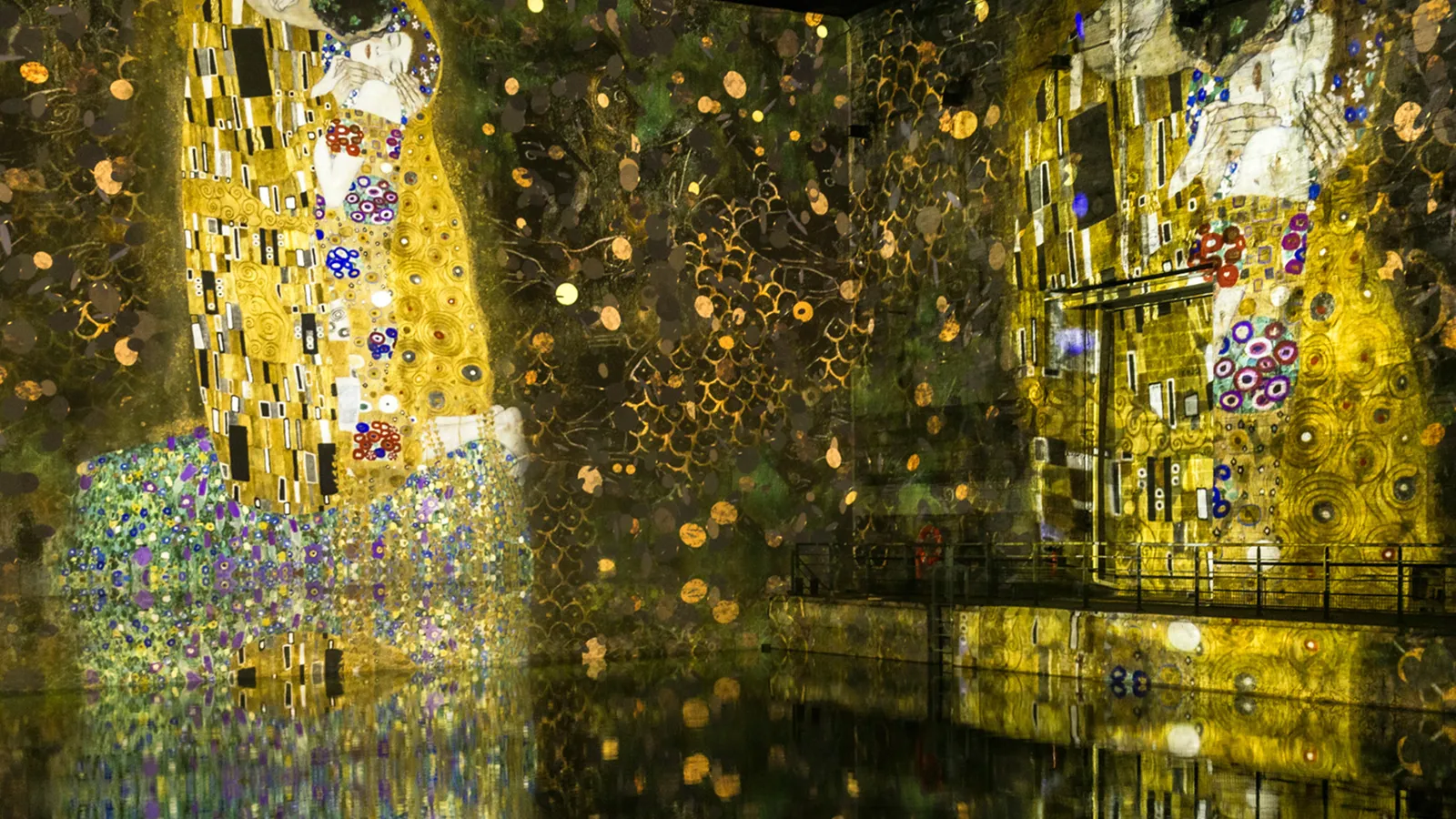
The world's largest digital art center occupies a former WWII submarine base, its massive water basins reflecting projections to create infinite visual depth. The industrial scale, with 13,000 square meters of projection surface, dwarfs visitors.
Klimt's patterns shimmer on the water's surface while projections climb 12-meter walls. The combination of maritime history, monumental architecture, and digital art creates a uniquely contemplative experience.
 Source: bassins-lumieres.com
10. Meow Wolf Convergence Station
Creator: Meow Wolf | Year: 2021 | Location: Denver, USA
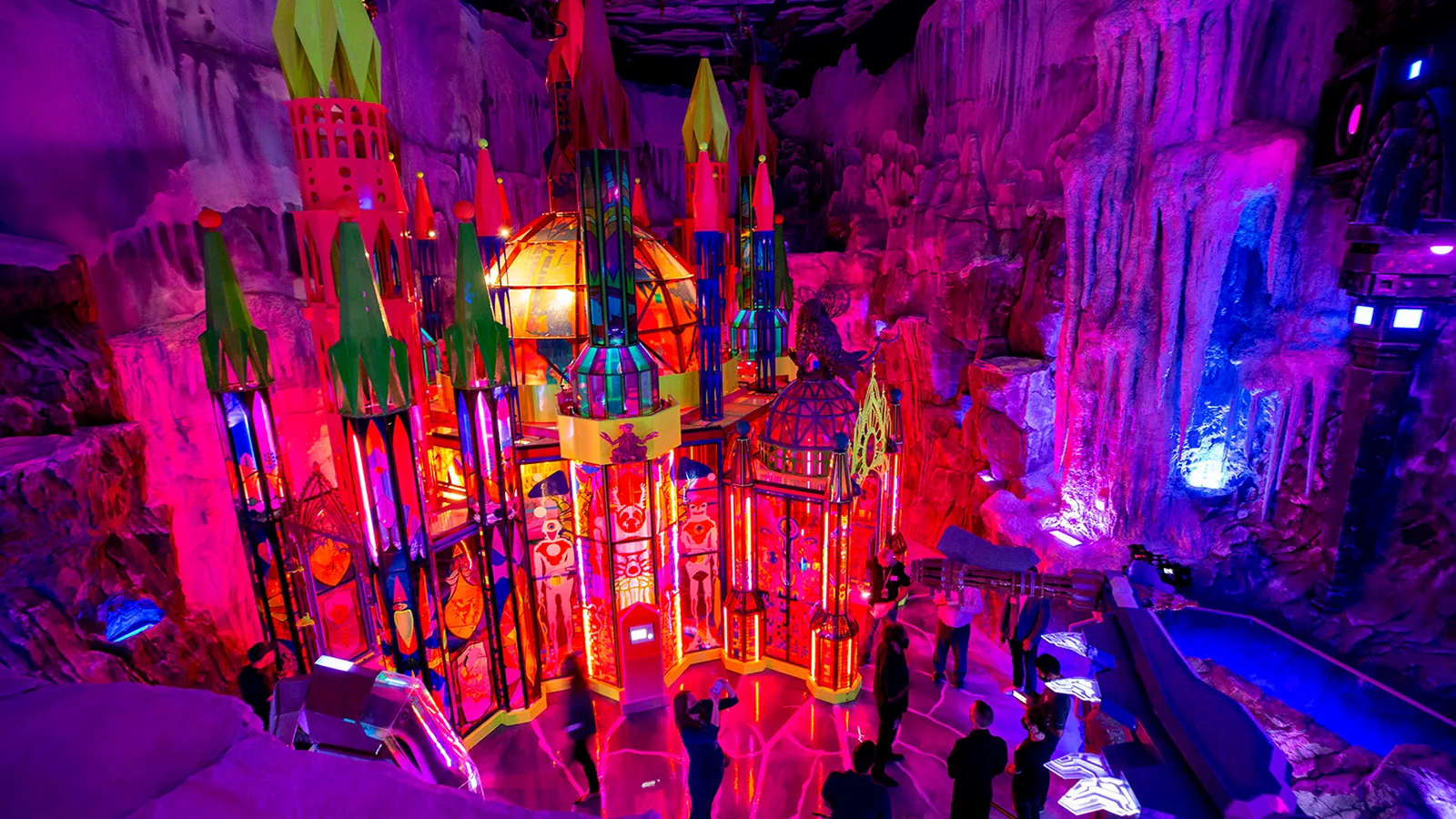
Convergence Station is a 90,000-square-foot multiversal experience built by over 300 artists. Visitors navigate wormholes, discover hidden worlds, and piece together an interconnected narrative spanning four alien civilizations.
Unlike projection-based experiences, Meow Wolf constructs physical environments, elaborate sets filled with interactive triggers, hidden passages, and tactile surprises. Each room offers puzzle-like exploration, rewarding curiosity with secrets.
The collaborative approach, giving individual artists creative autonomy within a shared universe, produces visual diversity impossible in corporate experiences.
 Source: meowwolf.com
11. Superblue Miami
Creator: Superblue | Year: 2021 | Location: Miami, USA
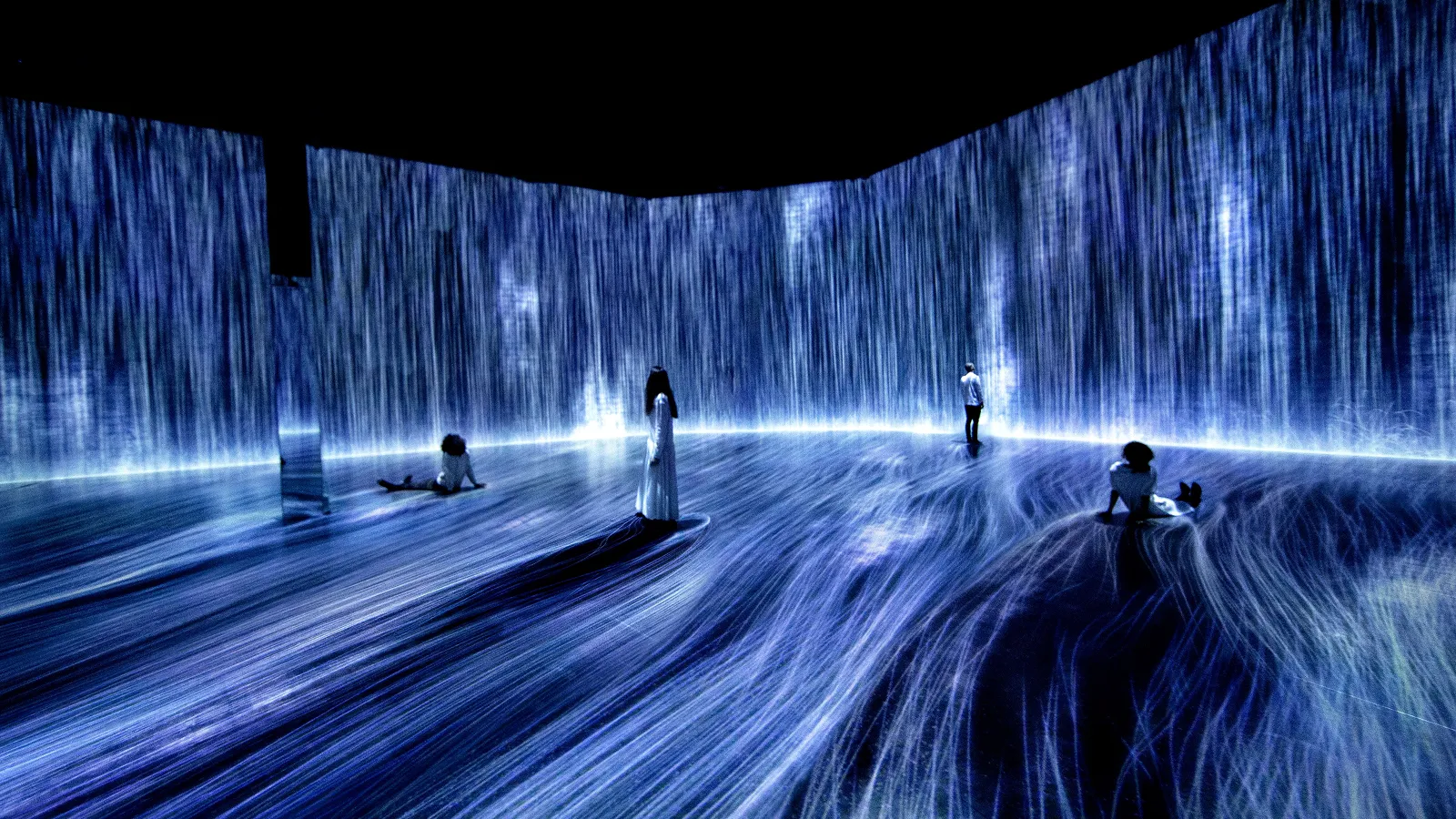
Superblue is a dedicated experiential art center featuring rotating installations from leading immersive artists. The 50,000-square-foot space hosts works that would be impossible in traditional galleries.
The center includes Es Devlin's Forest of Us, a mirrored maze, and teamLab's Massless, which uses fog and light to create volumetric projections. By providing infrastructure specifically designed for experiential art, Superblue enables artists to work at unprecedented scale.
 Source: superblue.com
12. Dark Matter Berlin
Creator: Dark Matter | Year: 2021 | Location: Berlin, Germany
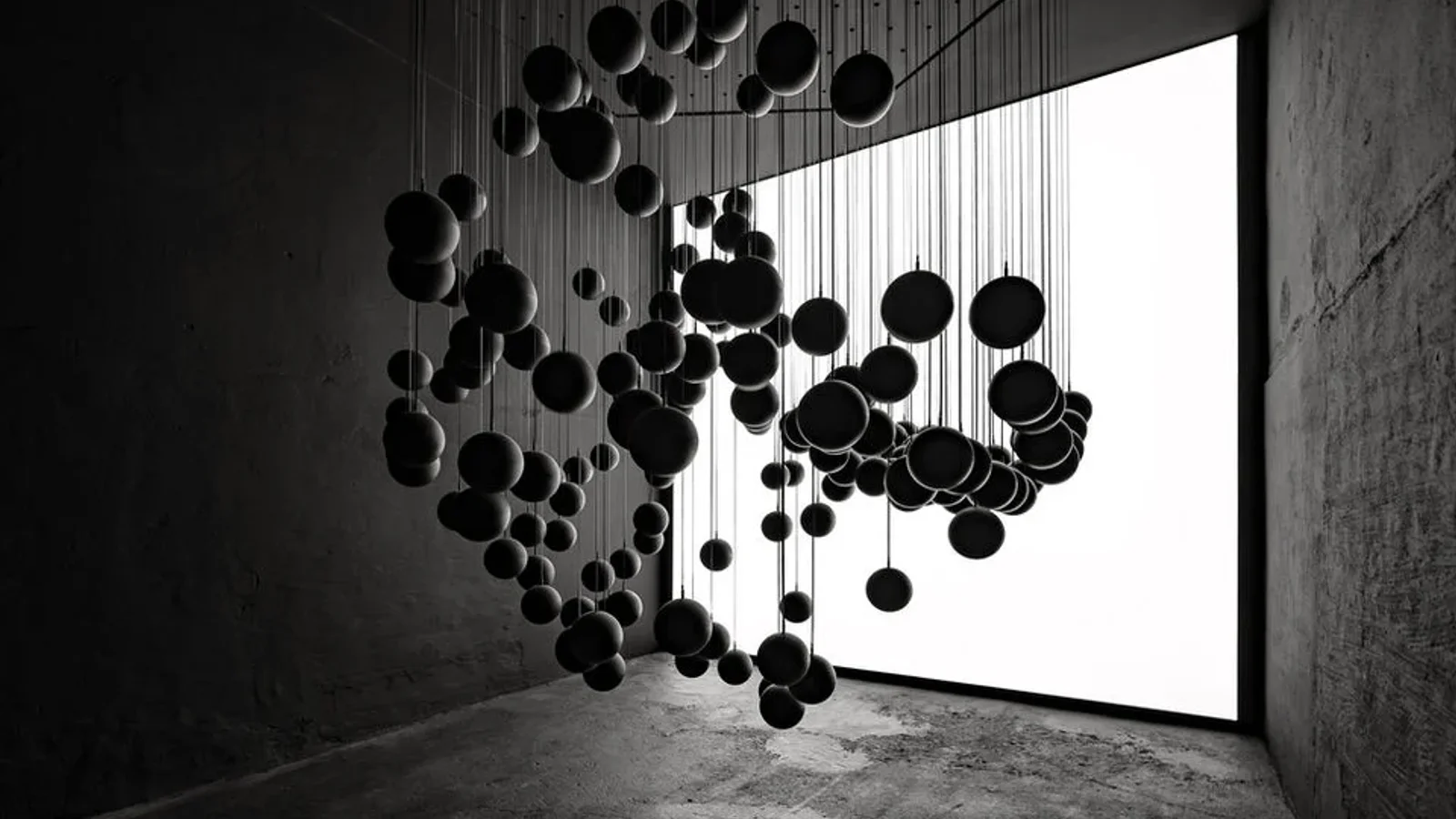
Dark Matter combines kinetic light sculptures, responsive projections, and immersive sound design in a 7,000-square-meter venue. The aesthetic is distinctly science fiction, with clean lines, precise movements, and electronic soundscapes.
The installation uses AI to respond to visitor density and movement patterns, adjusting its behavior throughout the day. The experience feels alive, as if the space itself is aware of your presence.
 Source: darkmatter.berlin
13. The Reel Store
Creator: The Reel Store | Year: 2022 | Location: Coventry, UK
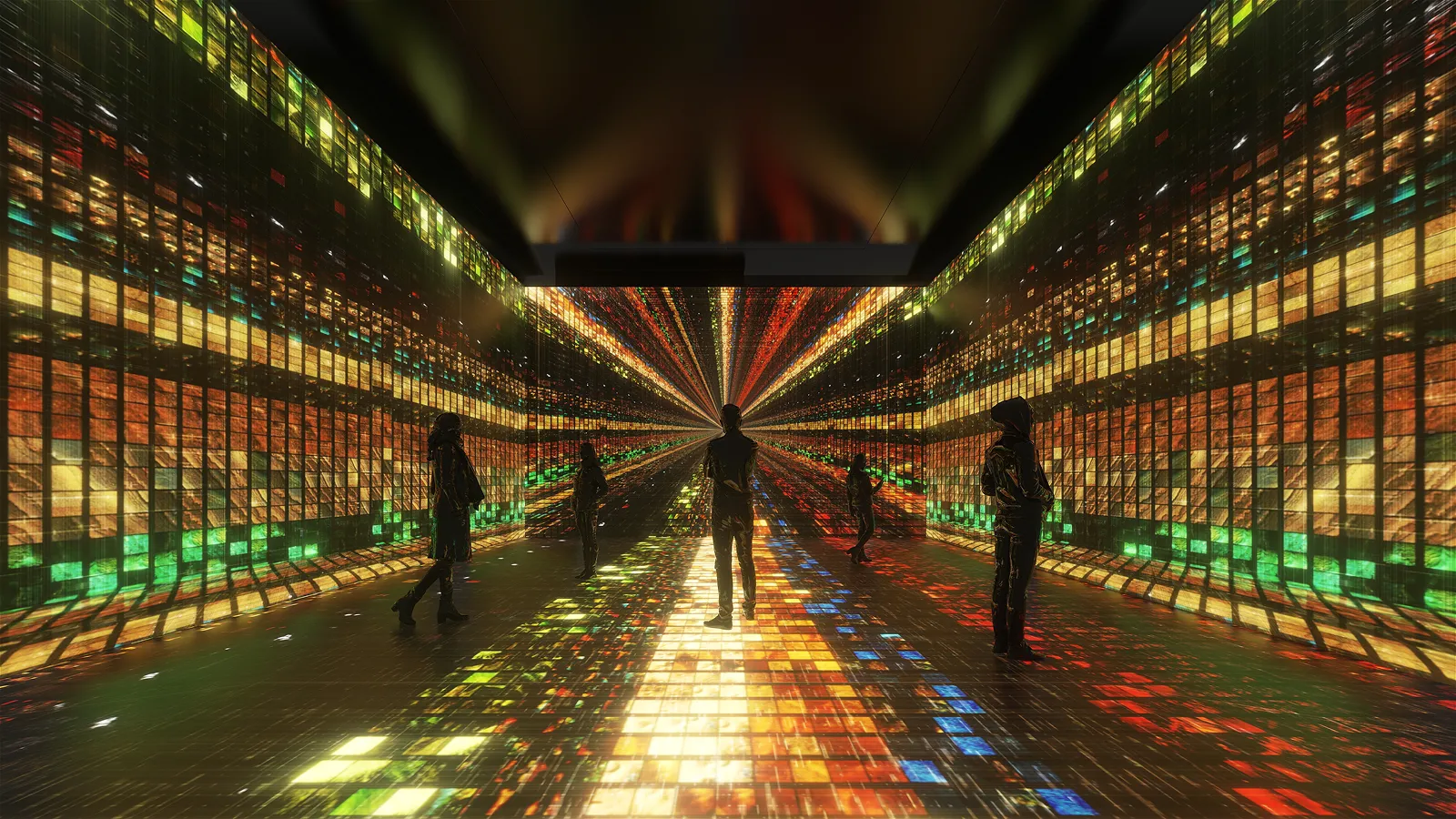
The UK's first permanent digital art gallery attracted 6.25 million visitors in its opening year. Located in a repurposed warehouse, the venue cycles through curated exhibitions featuring both classic art adaptations and commissioned digital works.
The Reel Store demonstrates that immersive art can succeed outside major capitals, bringing cultural experiences to underserved regions.
 Source: Time Out
14. Frameless London
Creator: Frameless | Year: 2022 | Location: London, UK
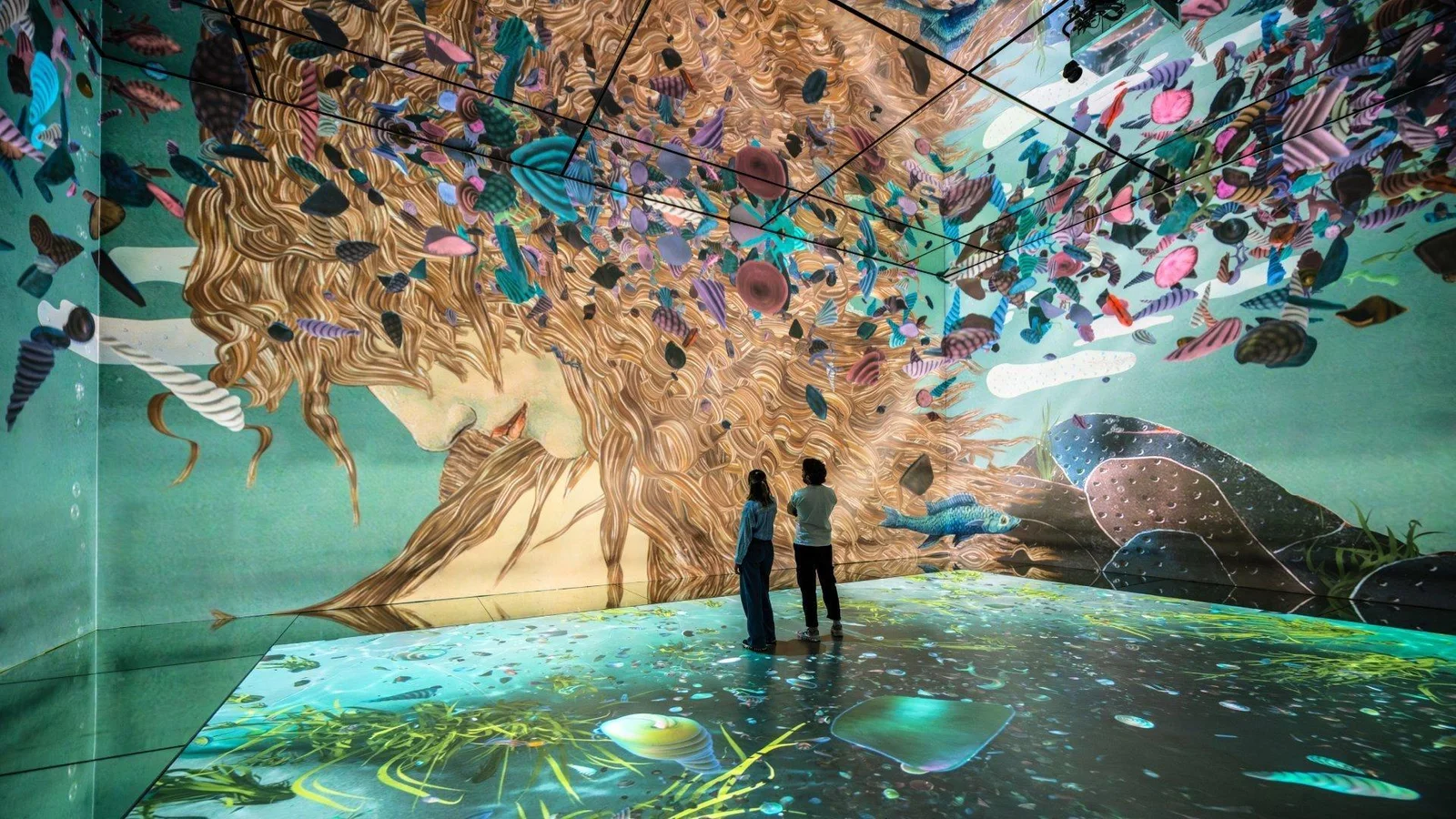
Frameless uses motion-responsive projections that allow visitors to virtually paint brushstrokes onto classic artworks. Step into Monet's garden and flowers ripple away from your feet. Approach a Van Gogh and the paint seems to swirl faster.
The venue spans four galleries, each with distinct themes and interaction modes. It bridges the gap between passive viewing and active participation, offering a middle ground for audiences unfamiliar with digital art.
 Source: frameless.com
15. Outernet London
Creator: Outernet Global | Year: 2022 | Location: London, UK
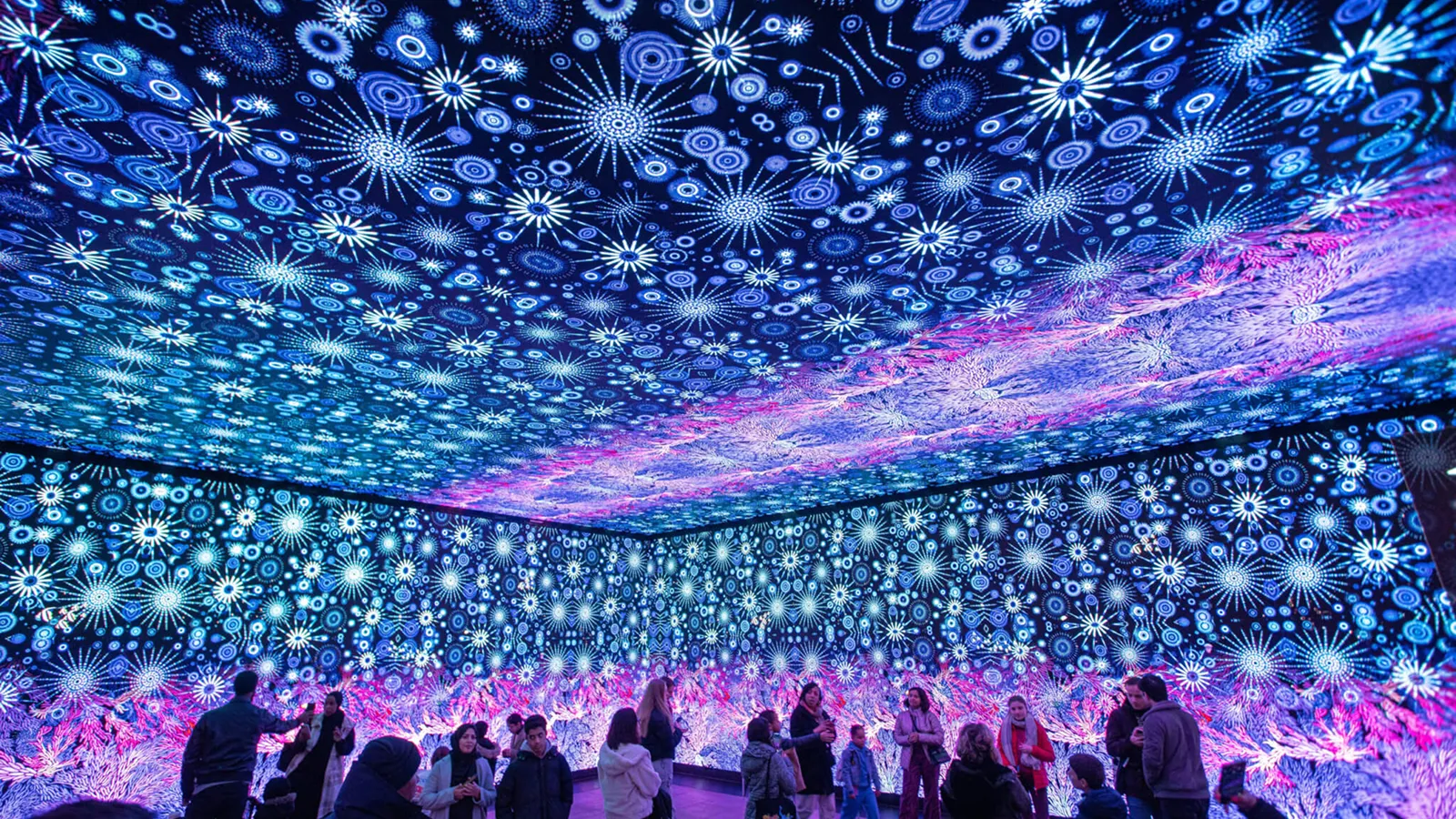
Outernet wraps visitors in 23,000 square feet of floor-to-ceiling LED screens at Tottenham Court Road. The public installation attracts 6.25 million annual visitors who experience live performances, immersive advertising, and commissioned artworks.
The installation demonstrates how immersive technology can transform urban public spaces. Unlike gallery-bound experiences, Outernet exists in the flow of daily life, encountering people who never intended to view art.
 Source: wikipedia.org
16. teamLab Phenomena
Creator: teamLab | Year: 2025 | Location: Abu Dhabi, UAE
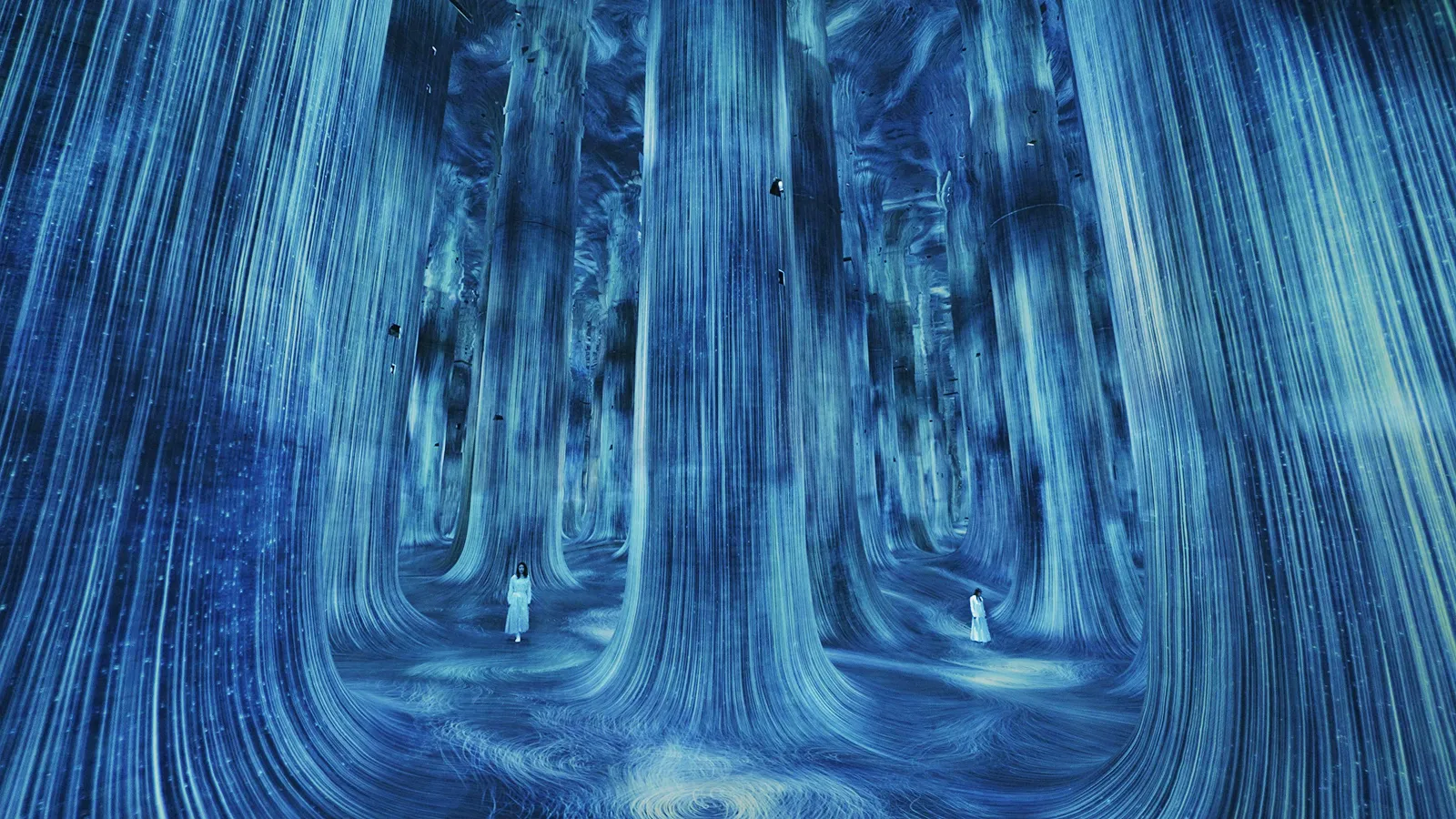
teamLab Phenomena is the collective's largest permanent museum at 17,000 square meters. The installation uses over 700 projectors to create environments that transcend physical material, making light, sound, and digital imagery feel tangible.
The Abu Dhabi venue introduces new works exploring biological and geological phenomena, expanding teamLab's vocabulary beyond flowers and water. It represents the studio's most ambitious technical and conceptual achievement.
 Source: teamlab.art
17. teamLab Biovortex Kyoto
Creator: teamLab | Year: 2025 | Location: Kyoto, Japan
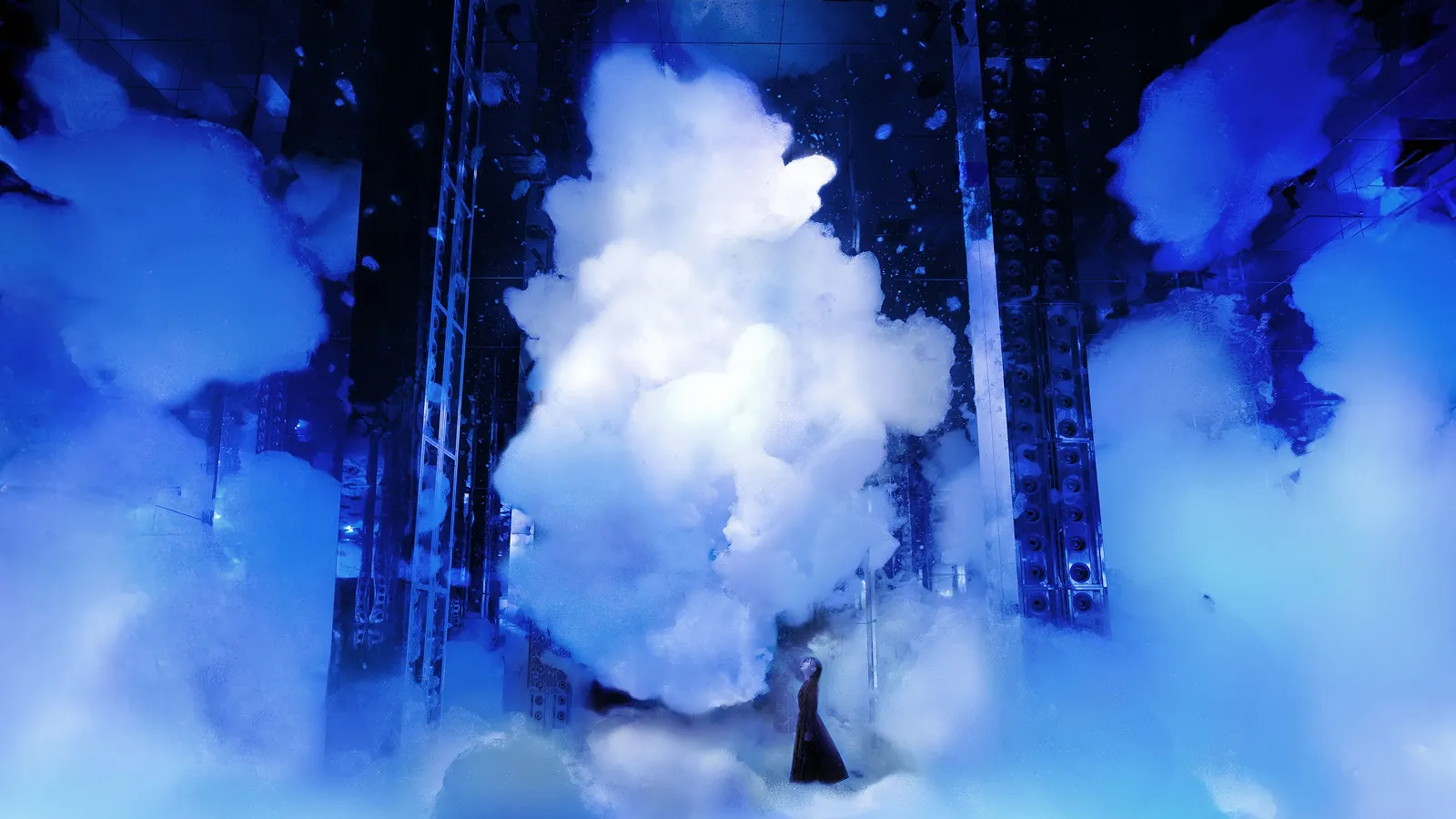
Japan's largest teamLab venue occupies a former industrial complex in Kyoto. Biovortex introduces morphing sculptures and massless suns, pushing beyond the collective's established aesthetic into more abstract territory.
The installations explore biological patterns and natural phenomena at molecular and cosmic scales. Visitors move through environments that suggest cell division, weather systems, and gravitational fields. The experience challenges perception of scale and time.
 Source: teamlab.art
18. Portal to the Deep
Creator: FATHOM | Year: 2024 | Location: Portland, USA
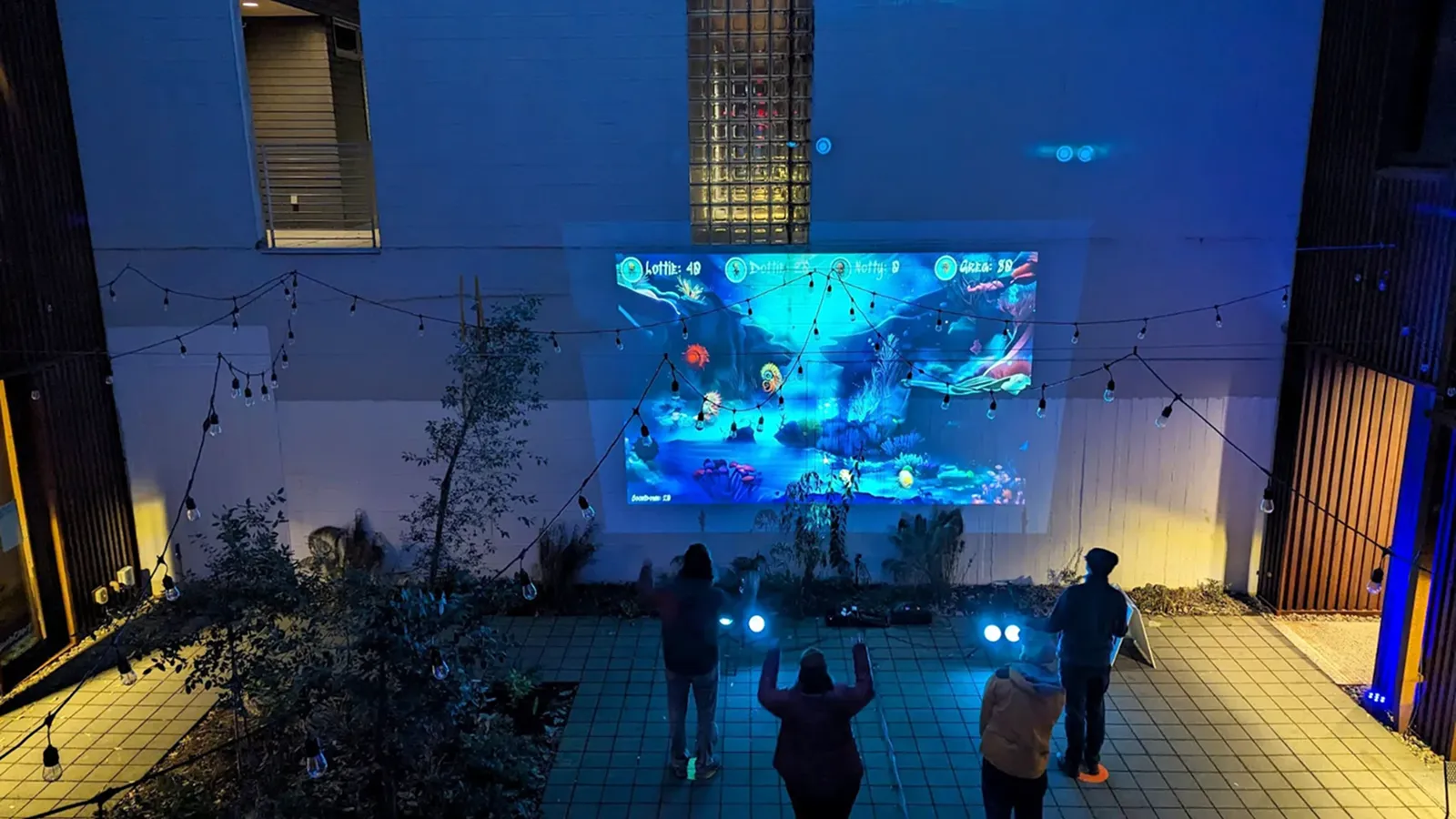
Portal to the Deep transforms visitors into deep-sea explorers using full-body tracking and game mechanics. Visitors swim through projected ocean environments using natural movements, navigating bioluminescent creatures and underwater landscapes.
The installation demonstrates how interactive art can borrow from video games while maintaining artistic intent. The physical engagement creates a workout alongside the wonder.
 Source: FATHOM
19. ARTECHOUSE
Creator: ARTECHOUSE | Year: 2017 | Location: Washington DC, NYC, Miami
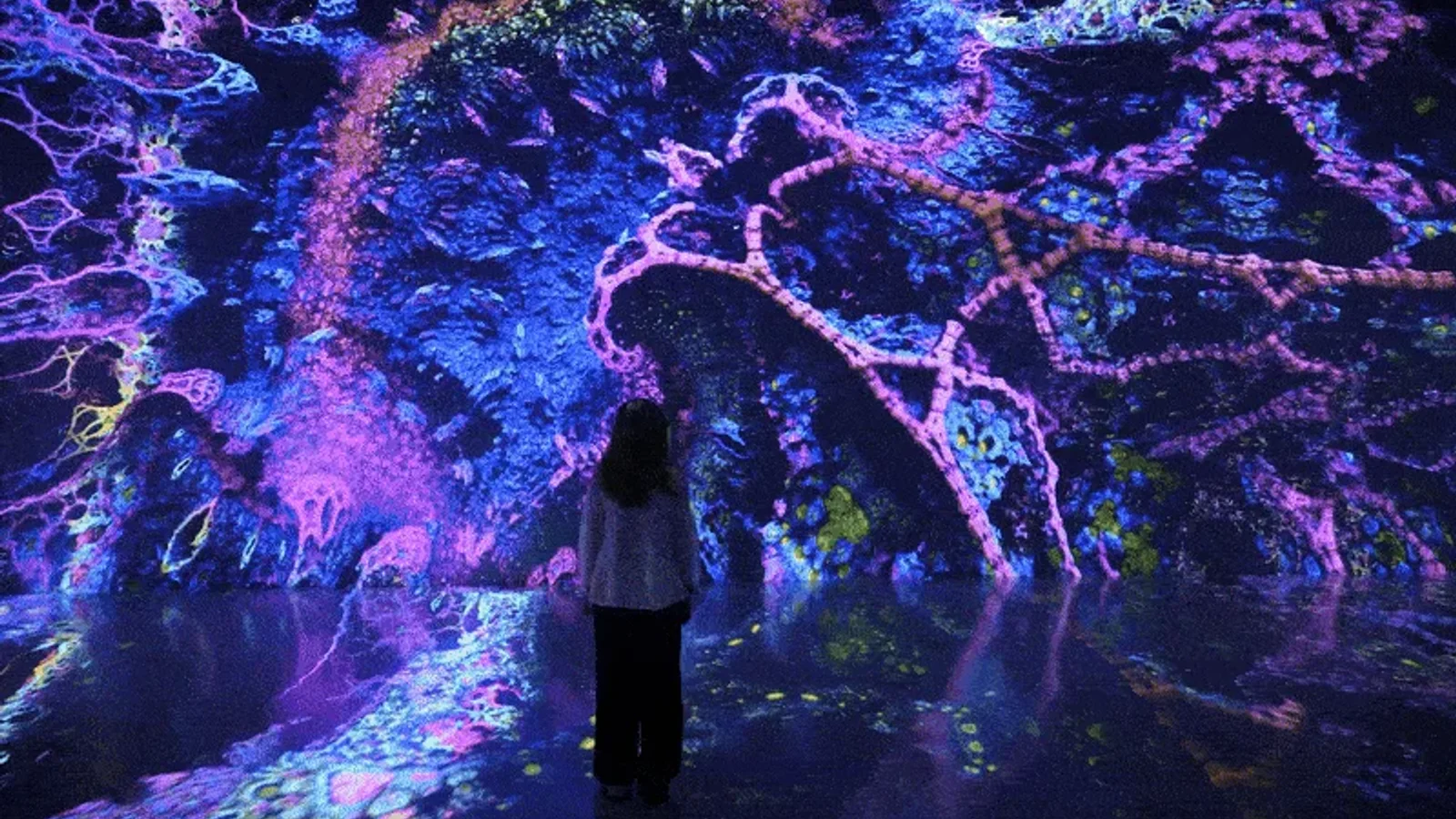
ARTECHOUSE pioneered the dedicated experiential art venue model in the United States. Each location features rotating exhibitions that combine projection, sound, and interactivity in carefully designed spaces.
The venues serve as laboratories for emerging artists working at the intersection of art and technology. By providing technical infrastructure and curatorial support, ARTECHOUSE enables work that would be impossible in traditional galleries or self-funded installations.
 Source: artechouse.com
20. Quantum Bloom
Creator: ARTECHOUSE | Year: 2026 | Location: Various locations
Quantum Bloom reads visitors' heart rates through wearable sensors and translates the data into flowering digital gardens. Each heartbeat triggers a bloom, creating patterns unique to each visitor's physiology and emotional state.
The installation demonstrates how biometric data can create personalized art experiences. The result is simultaneously intimate and shareable, your heart literally creates the art.
Source: artechouse.com
21. Dataland
Creator: Refik Anadol | Year: 2026 | Location: Los Angeles, USA
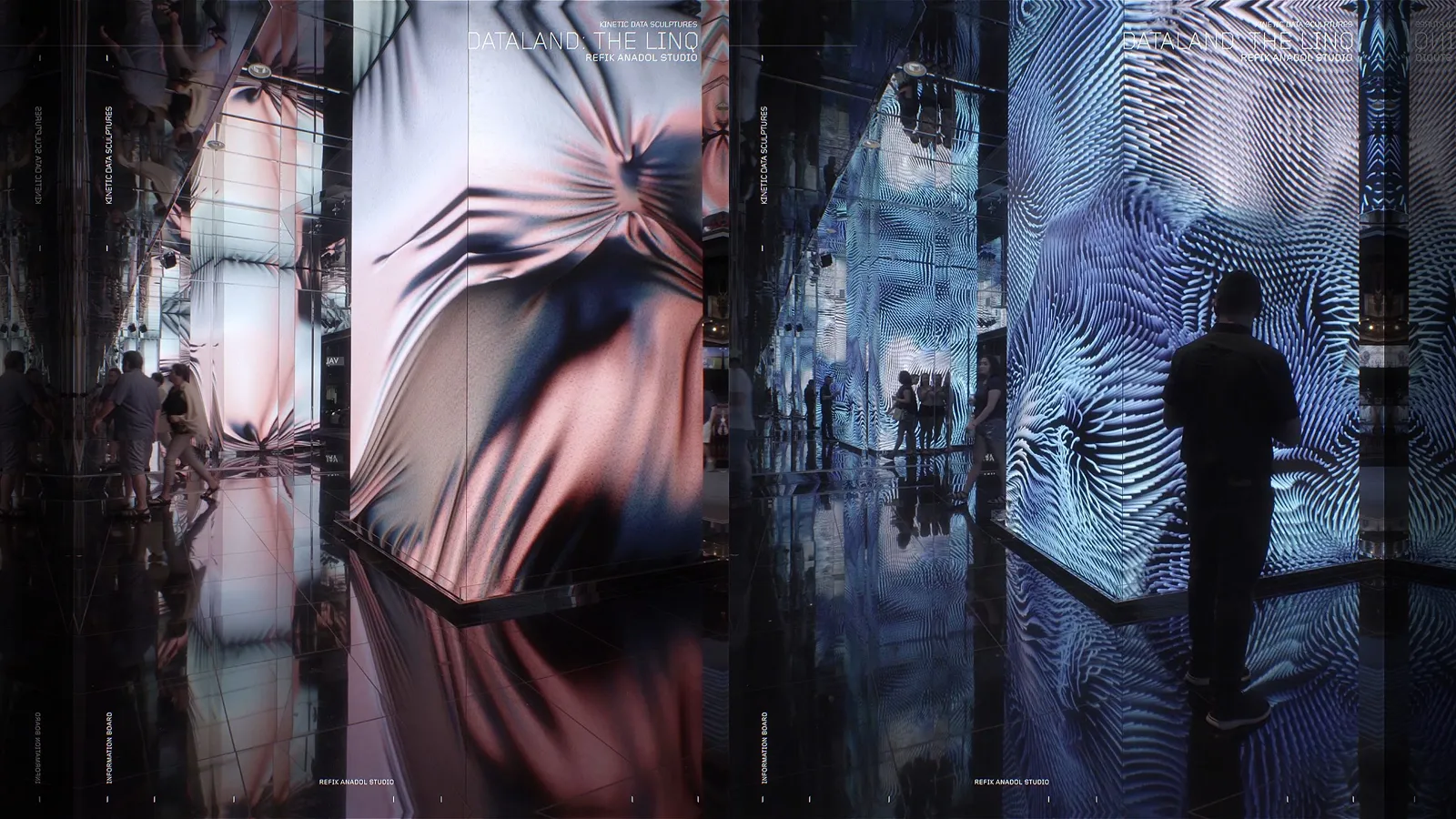
Dataland is the world's first dedicated AI art museum, housed in a Frank Gehry-designed building. Refik Anadol's machine learning visualizations transform massive datasets into mesmerizing, ever-changing sculptures of light.
The museum uses only ethically licensed datasets, addressing concerns about AI training data. Each installation processes terabytes of information, from satellite imagery to public domain archives, creating patterns that reveal hidden structures in data.
 Source: refikanadol.com
22. Future World at ArtScience Museum
Creator: teamLab | Year: 2016 | Location: Singapore
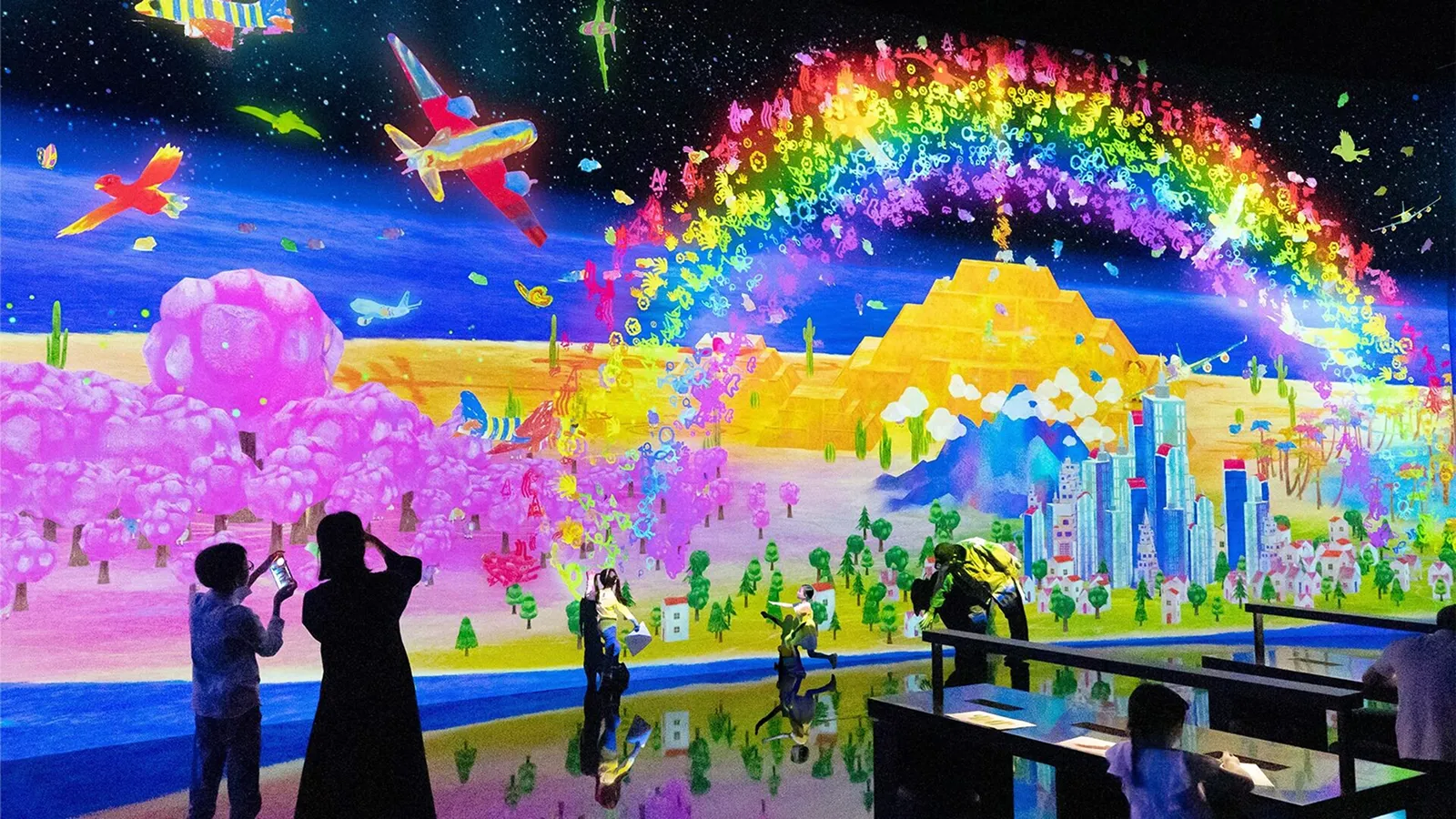
Future World was one of the first permanent teamLab exhibitions outside Japan. The installation fills the ArtScience Museum with interactive zones where visitors can draw sea creatures that come to life, build virtual cities, and create collaborative digital art.
The venue has evolved continuously since opening, adding new works and updating existing installations. It demonstrates how digital art can remain fresh through software updates rather than physical reconstruction.
 Source: marinabaysands.com
23. Theatre of Digital Art (ToDA)
Creator: ToDA | Year: 2020 | Location: Dubai, UAE
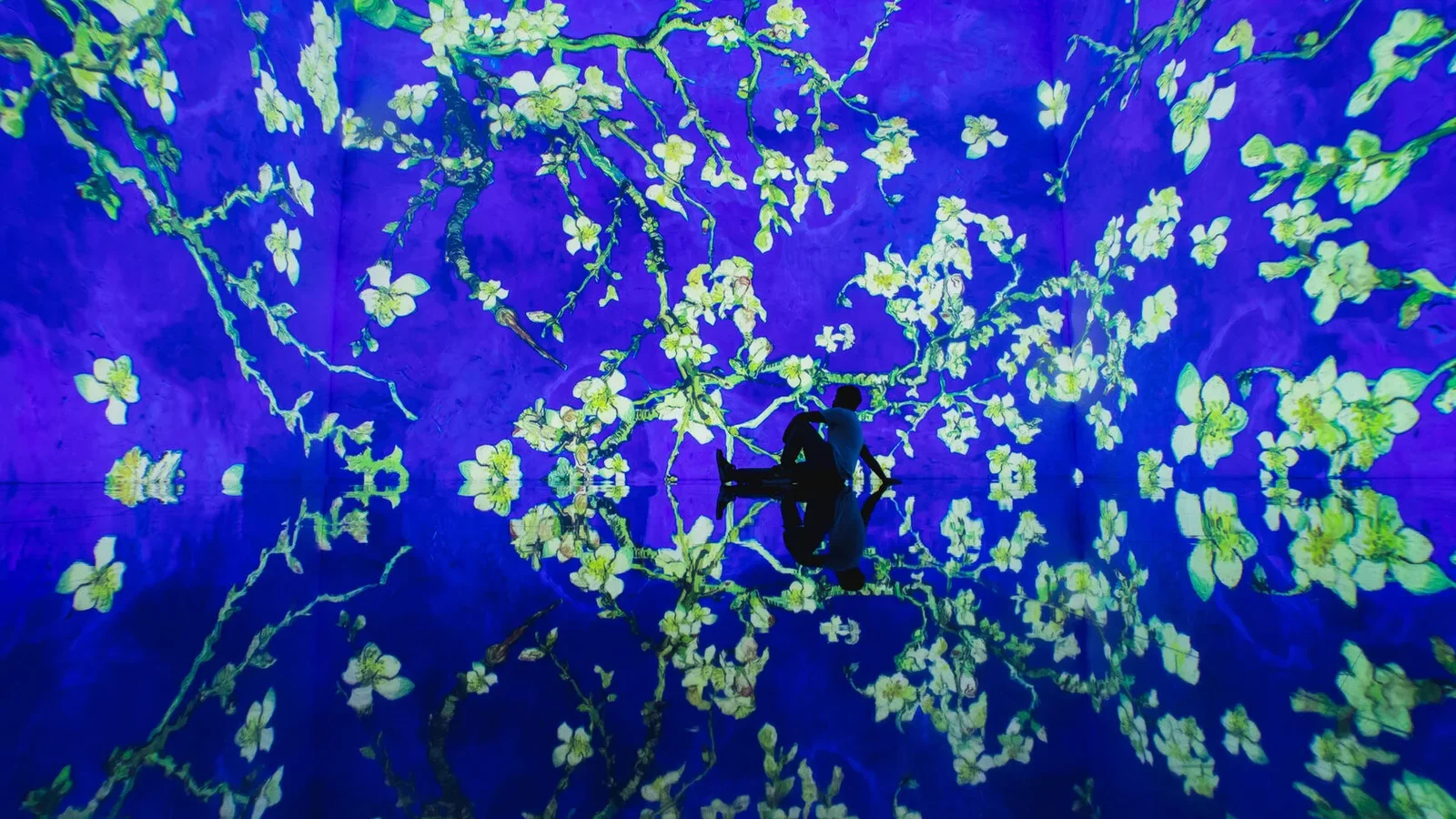
ToDA combines immersive projections with surround sound in Dubai's cultural quarter. The venue presents both classical art interpretations and contemporary digital works, rotating exhibitions every few months.
The Dubai location caters to international tourists and local audiences seeking cultural experiences in air-conditioned comfort. The high production values and broad appeal make digital art accessible to audiences unfamiliar with the medium.
 Source: toda.ae
24. Infinite Crystal Universe
Creator: teamLab | Year: 2018 | Location: Multiple teamLab venues
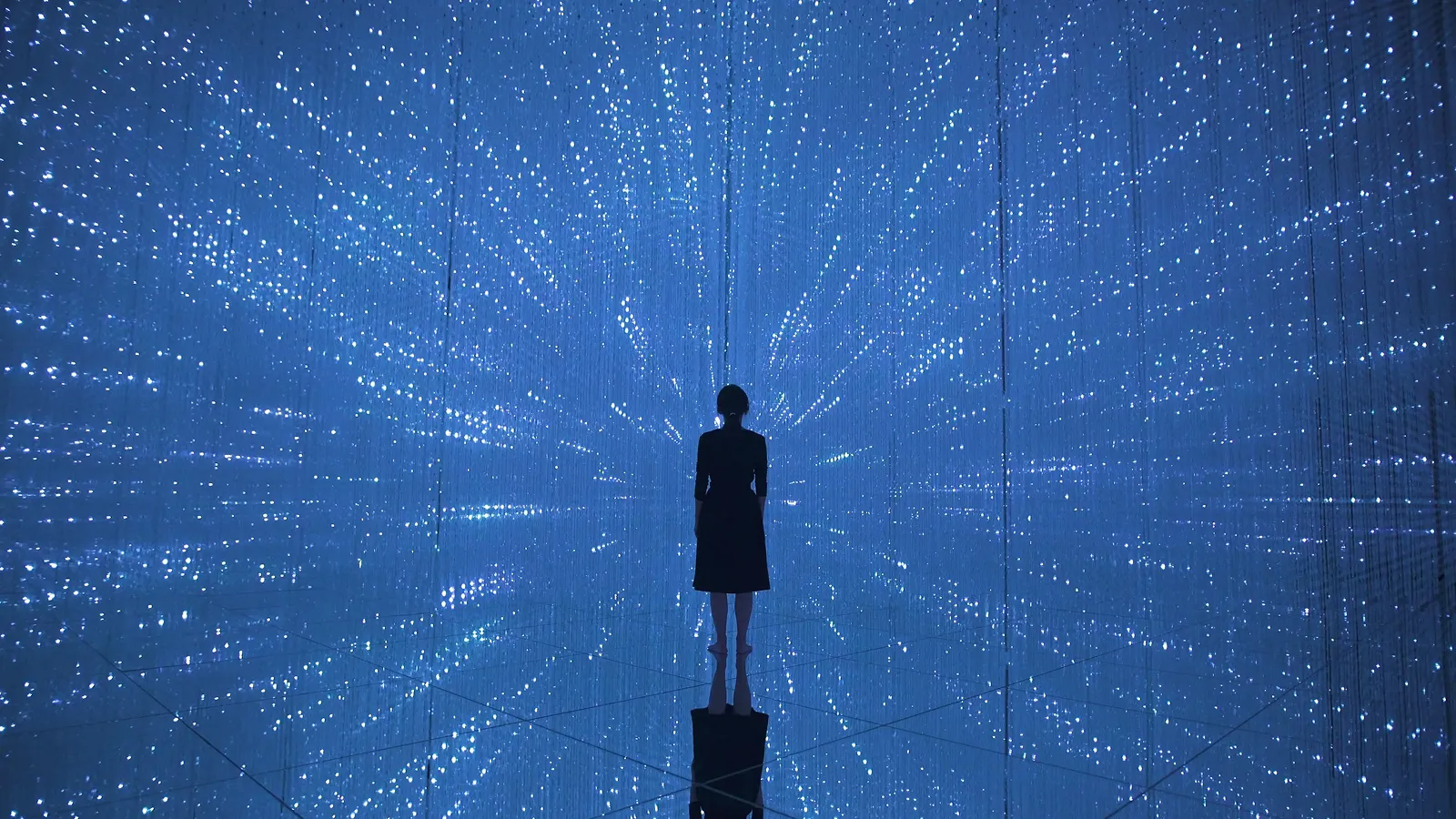
Infinite Crystal Universe creates the illusion of endless space through mirrored walls and LED points of light. Visitors control colors and patterns through smartphone apps, collaborating with strangers to paint the cosmic void.
The installation appears in multiple teamLab venues, each implementation slightly different. Its reproducibility demonstrates how digital art can scale without losing impact.
 Source: teamlab.art
25. Air by Kenzo Digital
Creator: Kenzo Digital | Year: 2021 | Location: Summit One Vanderbilt, NYC
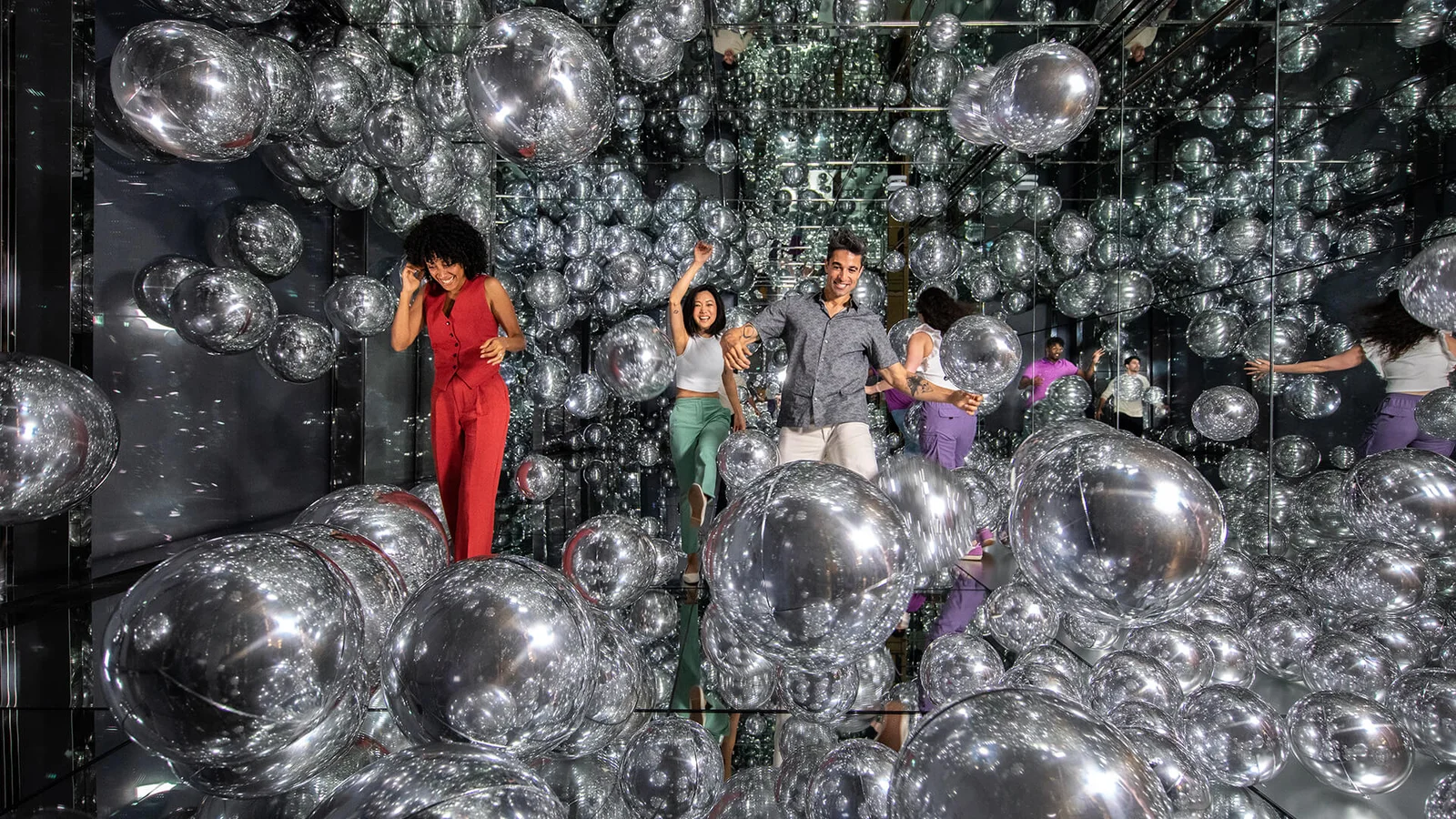
Air transforms the 93rd floor of One Vanderbilt into a multi-sensory experience. Floor-to-ceiling mirrors multiply the Manhattan skyline infinitely while clouds of mist and programmed lighting create an ethereal atmosphere.
The installation leverages its unique location, the cityscape becoming both subject and canvas. Visitors walk on glass floors suspended over the street, adding vertigo to the sensory mix.
 Source: summitov.com
26. Color Factory
Creator: Color Factory | Year: 2017 | Location: NYC, Houston, Chicago
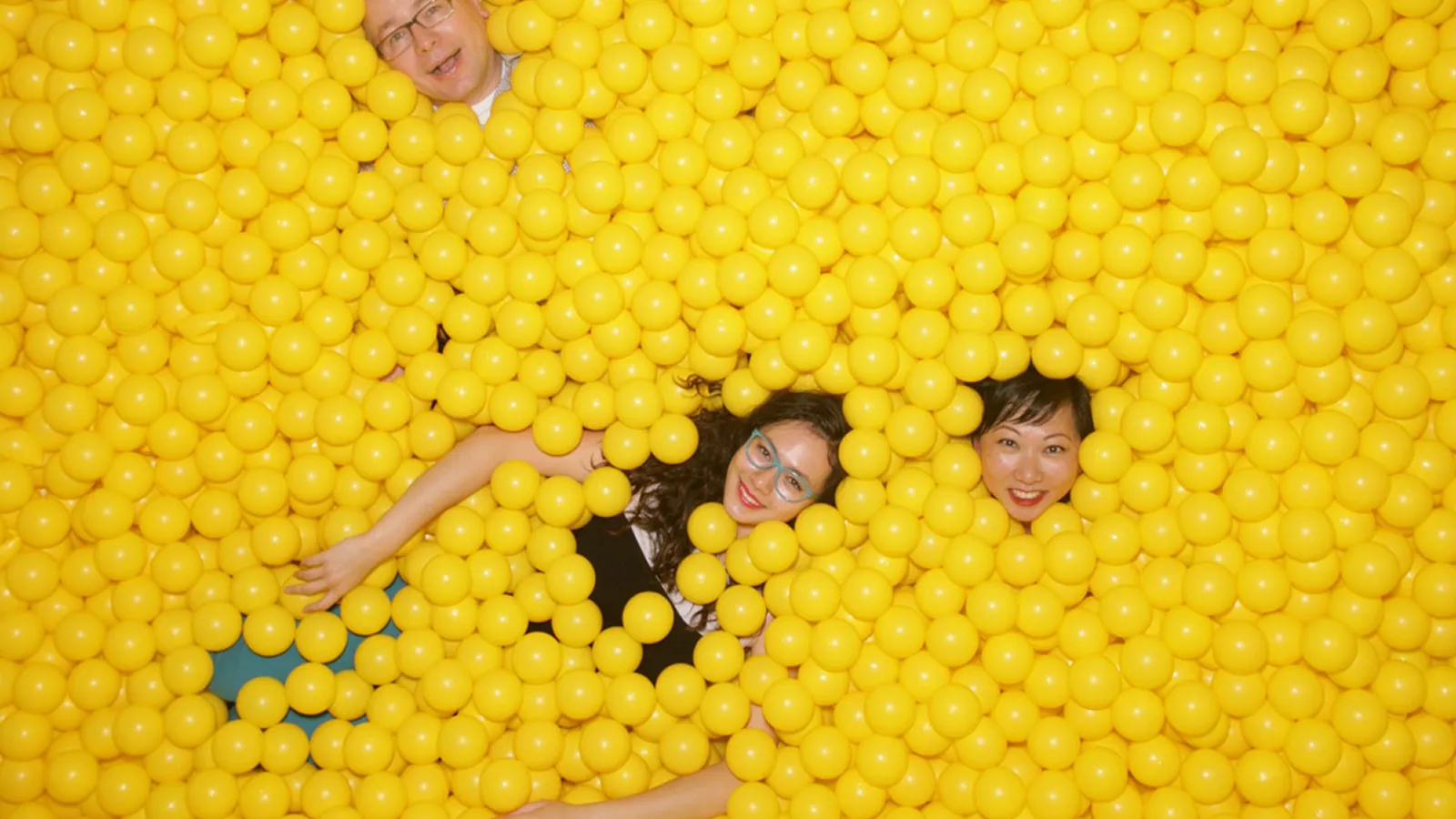
Color Factory creates room-scale installations themed around individual colors. Each room uses a different medium, from ball pits to light installations to tactile surfaces, engaging all senses in explorations of hue.
The venue prioritizes social media shareability, designing each room for photographs. This strategy, while controversial among critics, has brought millions of visitors to interactive art who might never enter a traditional gallery.
 Source: colorfactory.co
27. WNDR Museum
Creator: WNDR Museum | Year: 2018 | Location: Chicago, Boston, San Diego
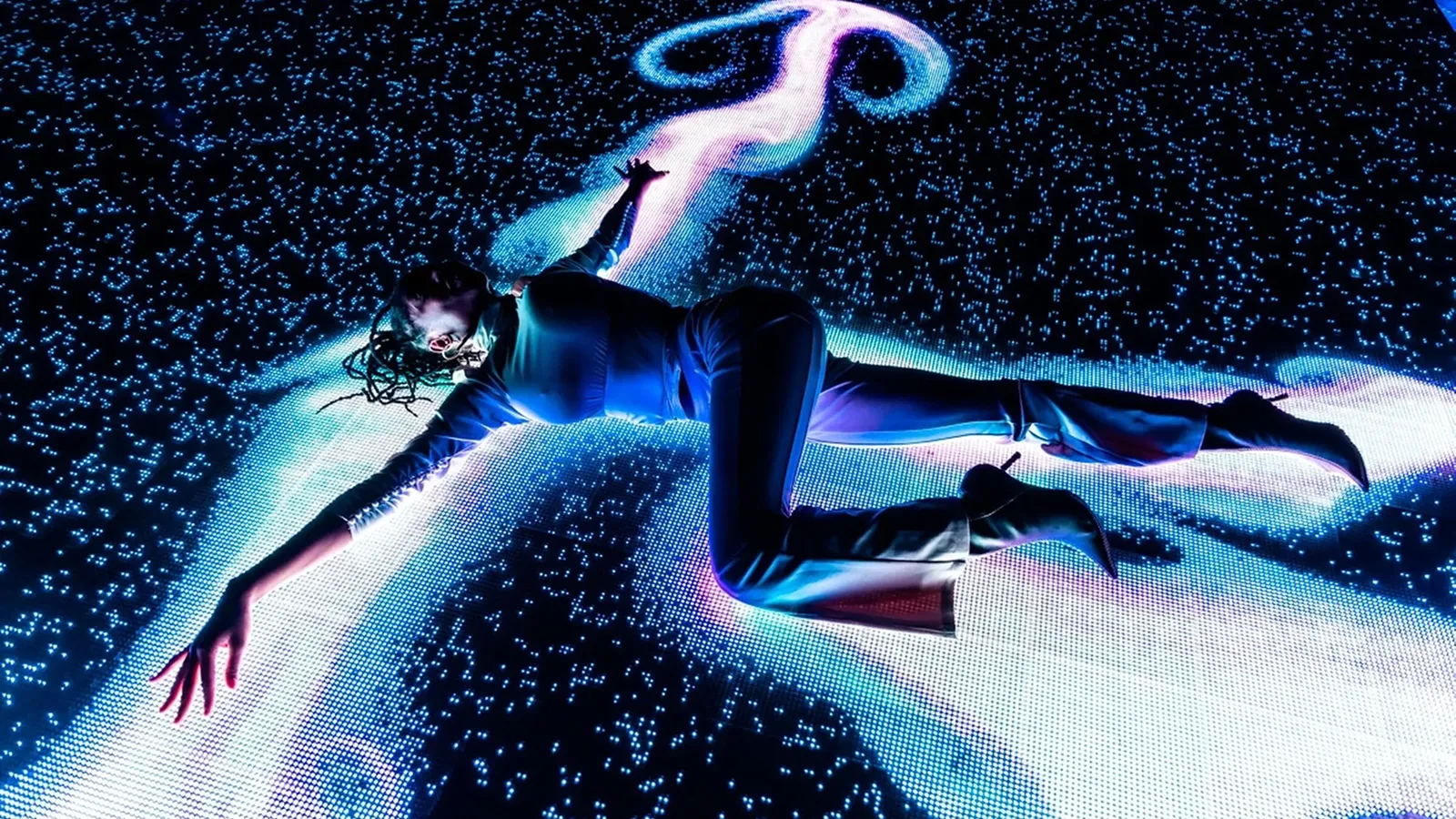
WNDR Museum combines commissioned digital artworks with experiences designed for participation. The venues feature Yayoi Kusama's Infinity Mirror Rooms alongside emerging artists working in light, sound, and interactivity.
The mixed approach introduces visitors to serious art through accessible experiences, building bridges between entertainment and culture.
 Source: wndrmuseum.com
28. ARTE Museum
Creator: d'strict | Year: 2020 | Location: Seoul, South Korea
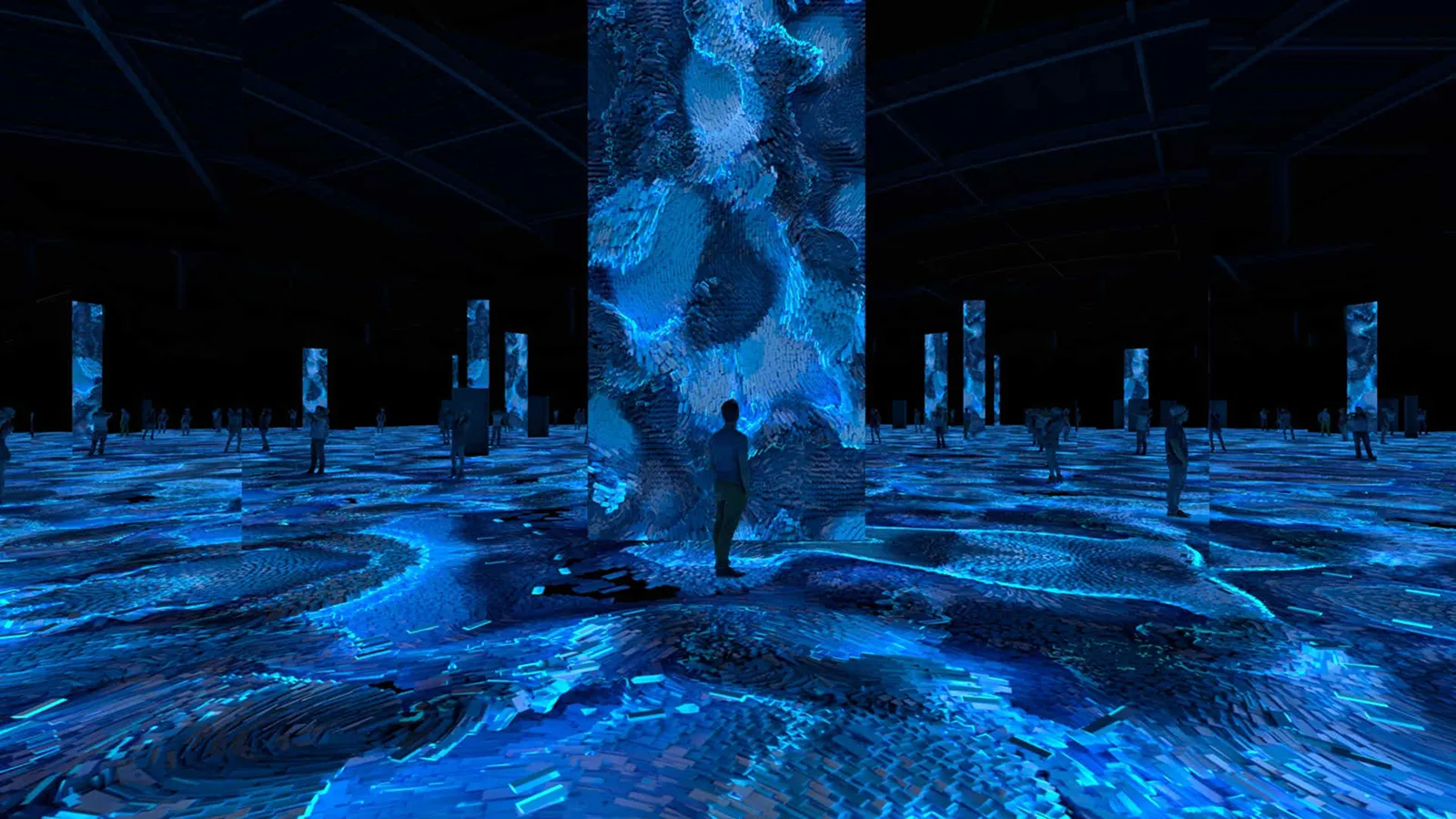
ARTE Museum has earned near-perfect visitor ratings through meticulous attention to experience design. The venue features multiple themed zones, from eternal nature to outer space, each with distinct soundscapes and interaction modes.
Korean studios have become leaders in immersive experience design, and ARTE Museum represents the pinnacle of their craft. The technical execution rivals any global venue.
 Source: artemuseum.com
29. teamLab Massless at Amos Rex
Creator: teamLab | Year: 2018 | Location: Helsinki, Finland
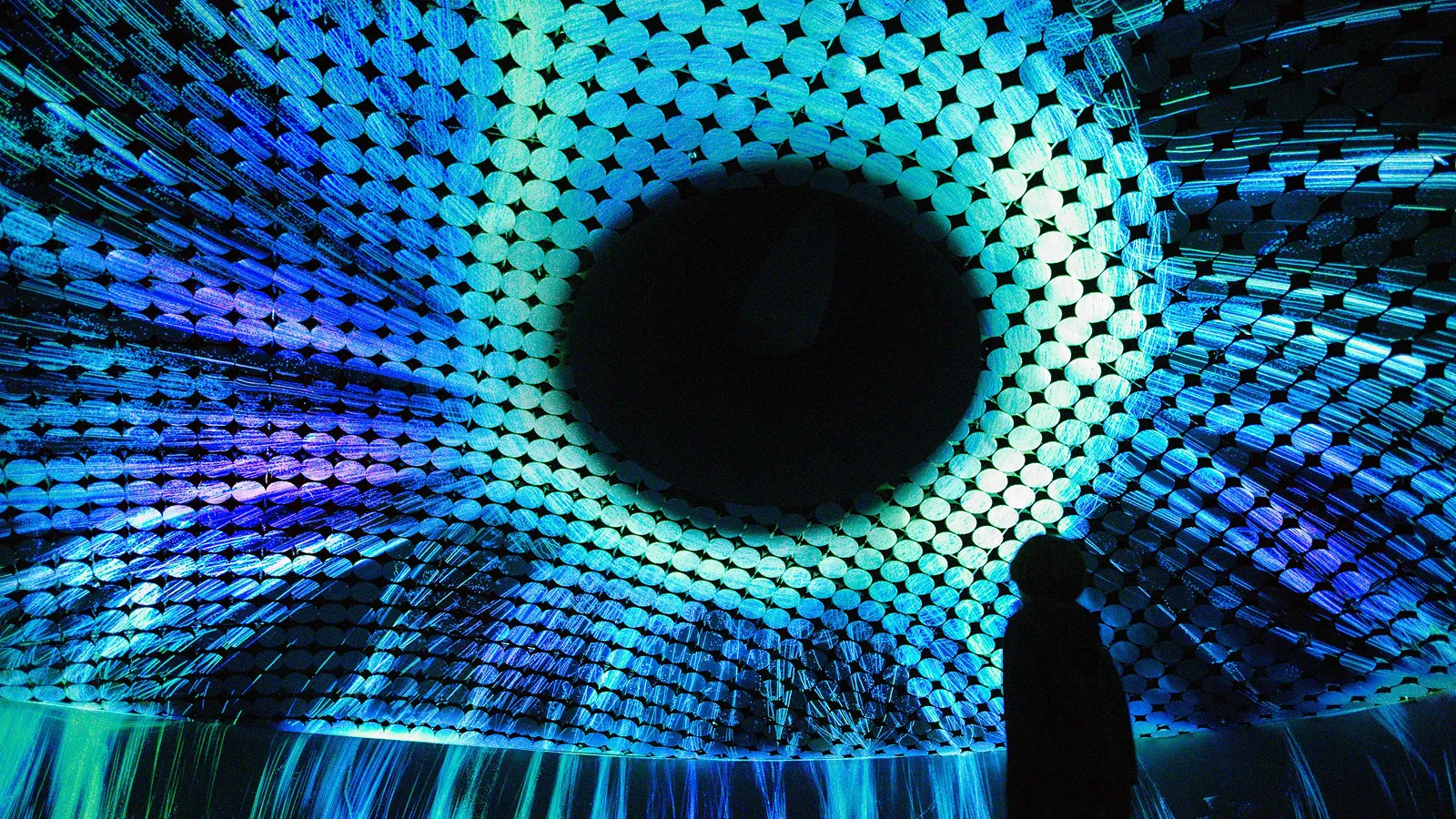
Amos Rex's underground galleries provided an unusual canvas for teamLab's first major European exhibition. The organic, cave-like architecture influenced the artworks, which responded to the curved surfaces in unexpected ways.
The exhibition demonstrated that teamLab's work could adapt to challenging venues, bending to architecture rather than requiring custom spaces.
 Source: amosrex.fi
30. Heart Space at Moco Museum
Creator: Moco Museum | Year: 2024 | Location: London, UK
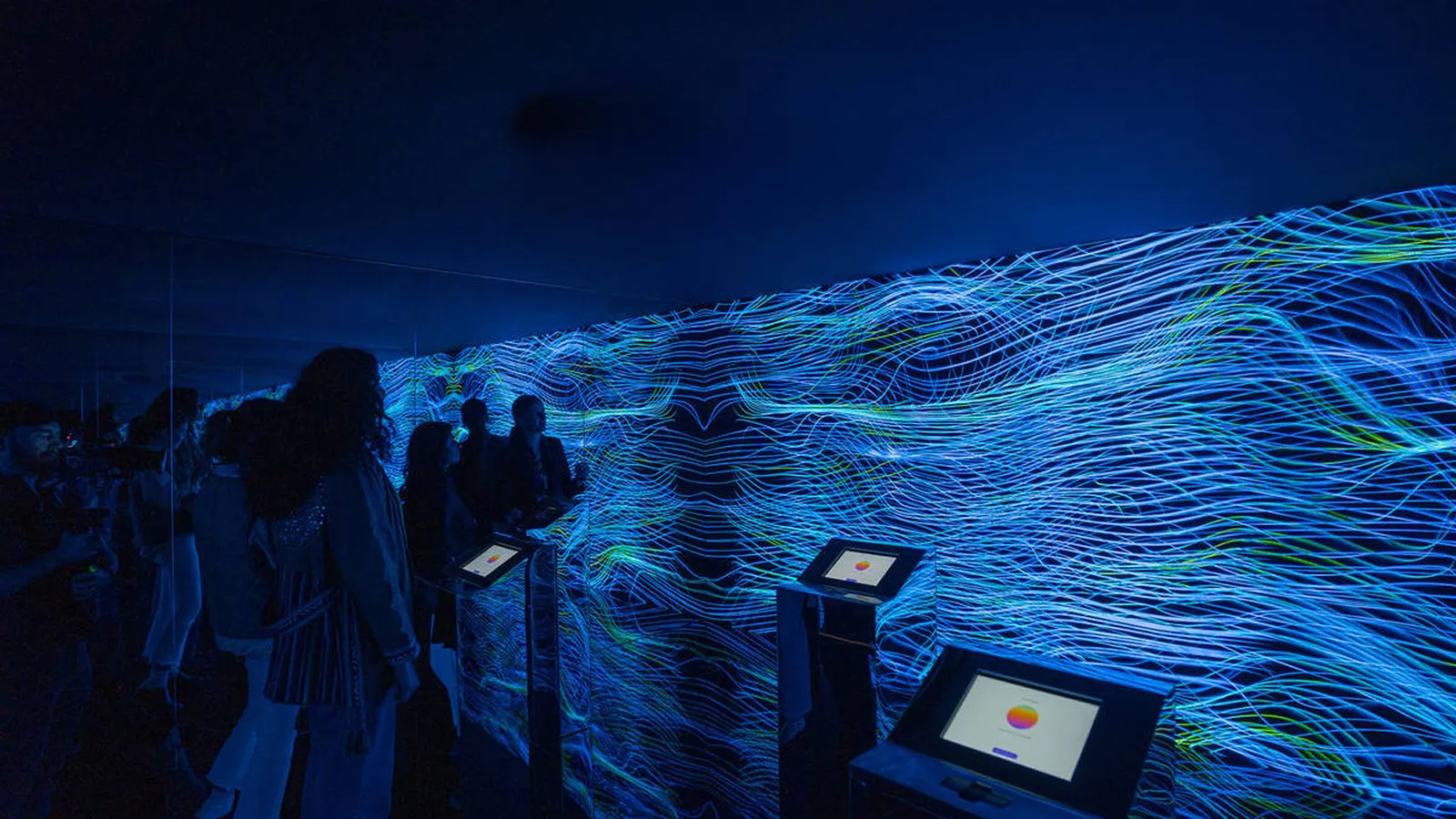
Heart Space translates visitors' heartbeats into AI-generated visual art. Biometric sensors capture pulse and rhythm, feeding data into machine learning systems that produce unique, personalized outputs.
The installation explores the tension between biological individuality and algorithmic processing. Your heartbeat is yours alone, but the AI's interpretation adds another layer of translation.
 Source: mocomuseum.com
31. Area 15
Creator: Fisher Brothers / Various | Year: 2020 | Location: Las Vegas, USA
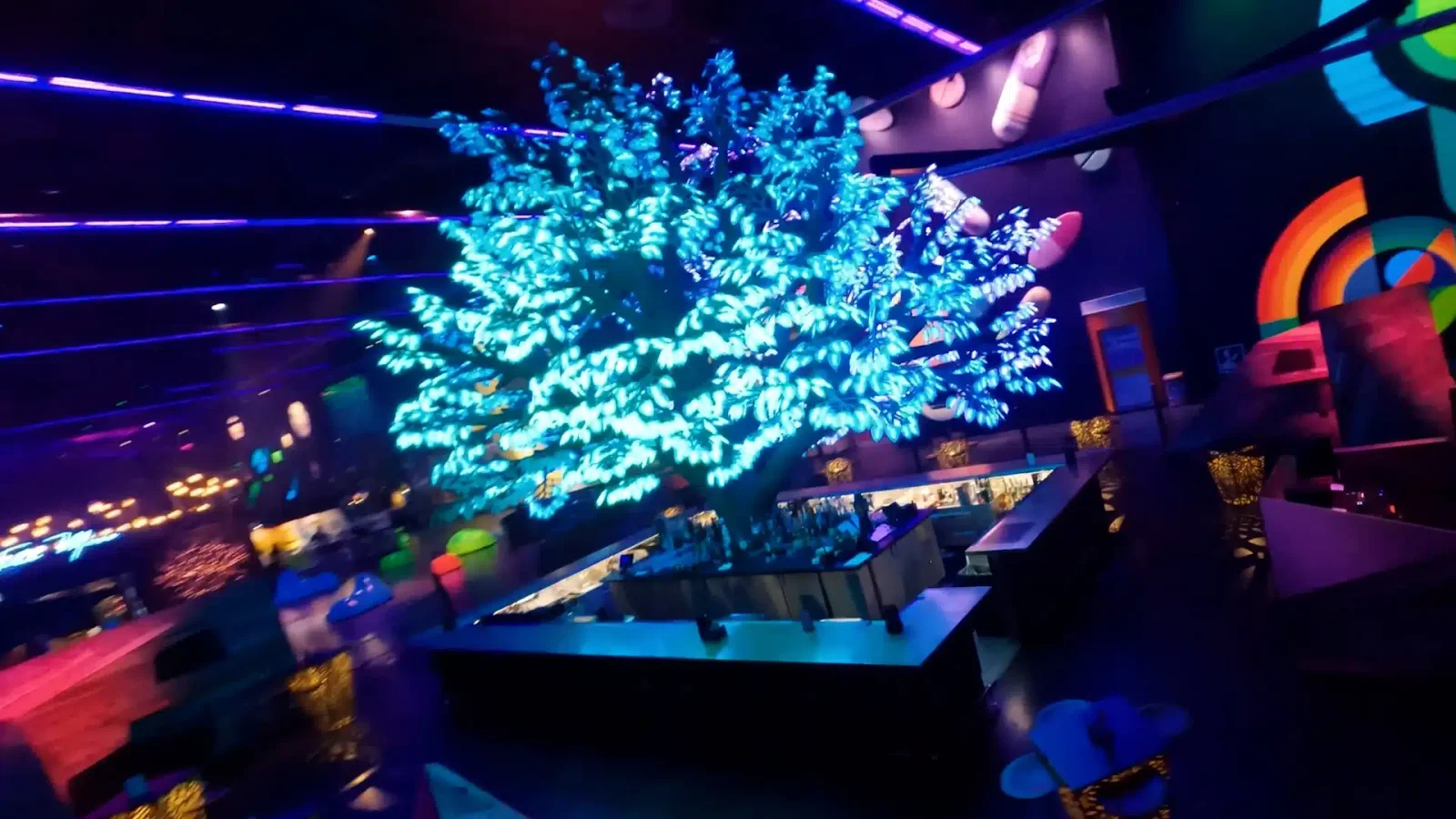
Area 15 is an entertainment complex housing multiple immersive experiences, including Meow Wolf's Omega Mart, Lost Spirits Distillery, and various art installations. The development model treats experiential art as destination entertainment.
The venue demonstrates that immersive art can anchor commercial real estate development. Each tenant offers distinct experiences, creating reasons for repeat visits.
 Source: area15.com
32. Submergence
Creator: Squidsoup | Year: 2013 | Location: Wonderspaces & touring
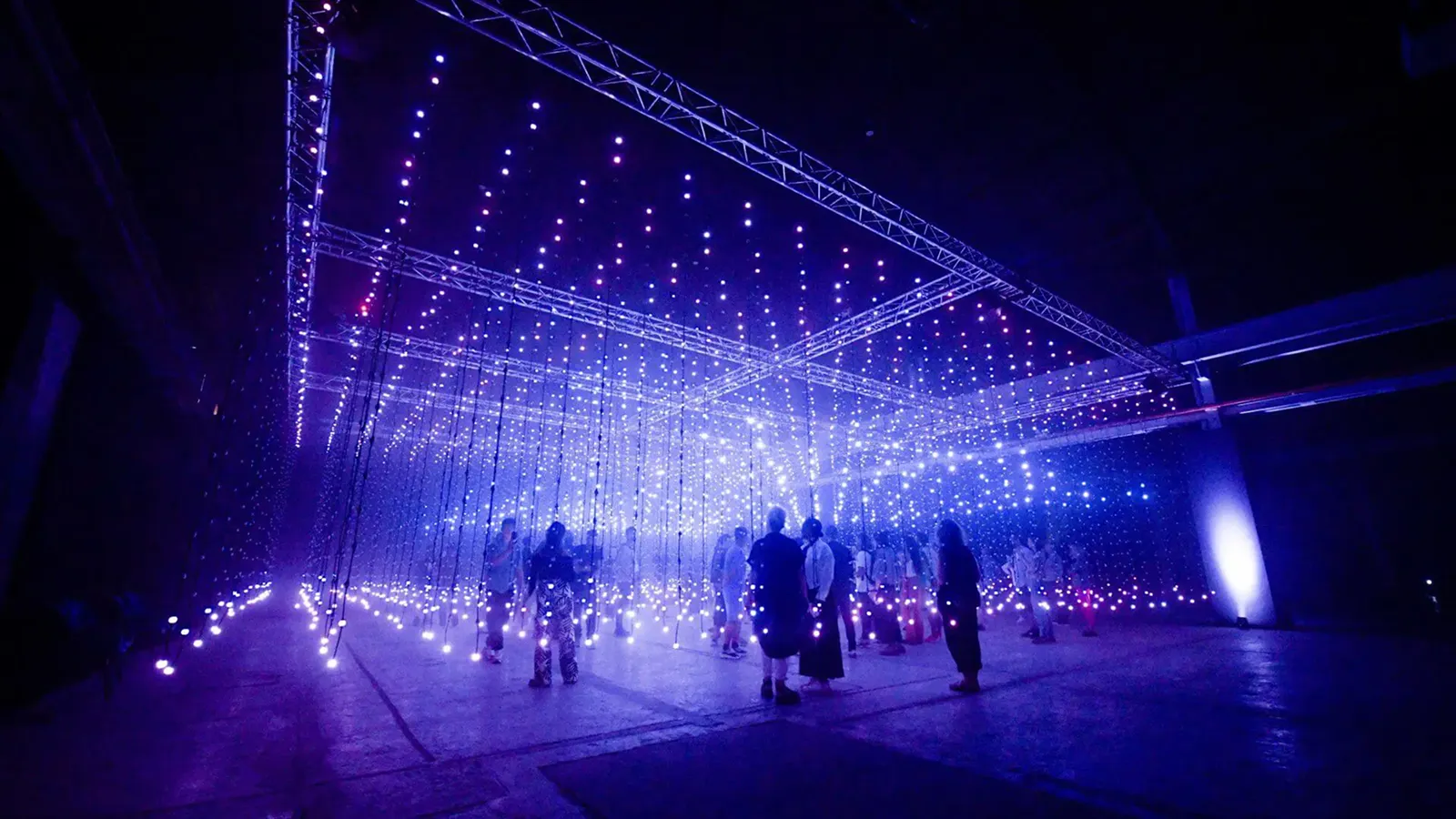
Submergence suspends over 8,000 LED lights from the ceiling, creating a dense field that visitors walk through. The lights respond to movement, creating ripples of color that follow each person through the space.
The installation has toured globally, adapting to venues from warehouses to festivals. Its modular design allows installation in spaces of varying sizes while maintaining the core experience of walking through light.
 Source: squidsoup.org
33. Pixelbloom at ARTECHOUSE
Creator: ARTECHOUSE | Year: 2023 | Location: Washington DC
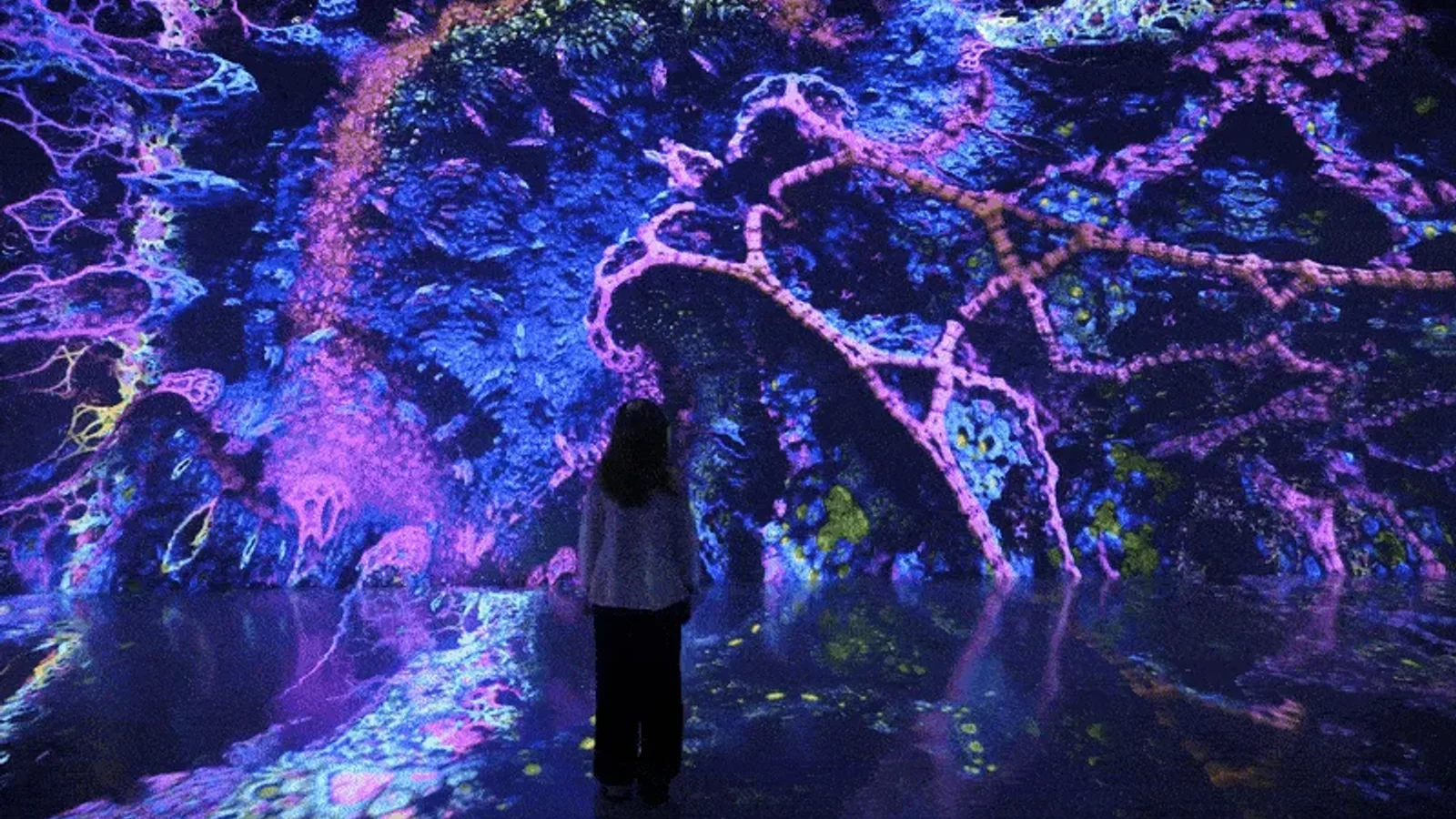
Pixelbloom transforms gallery floors and walls into reactive gardens. Digital flowers bloom where visitors step and fade as they move away, creating dynamic landscapes shaped by crowd movement.
The installation demonstrates how motion tracking can create accessible interactivity without requiring specialized devices or instructions. Walk in, and the space responds.
 Source: artechouse.com
34. Van Gogh Alive
Creator: Grande Experiences | Year: 2018 | Location: Global touring
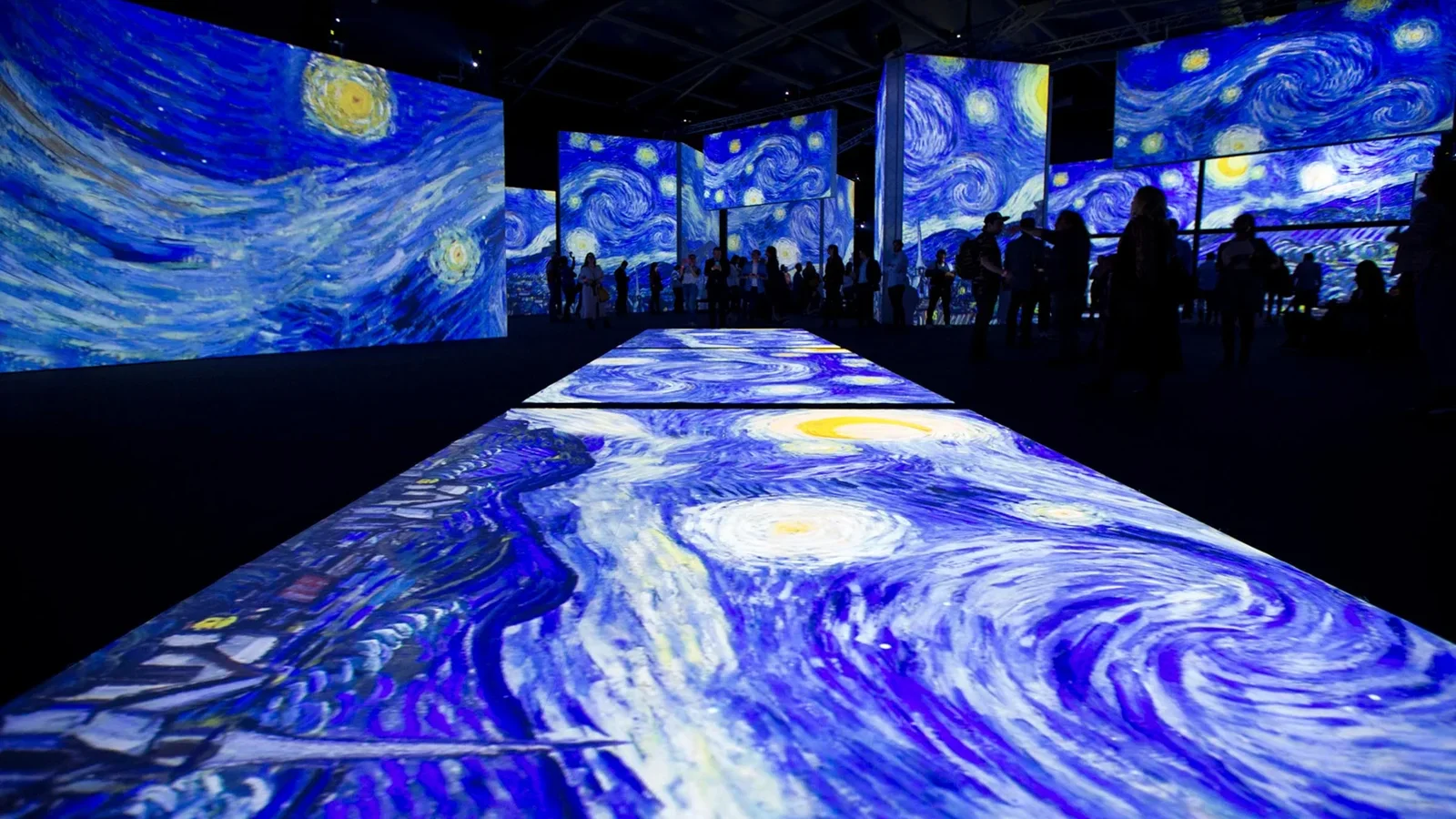
Van Gogh Alive was among the first large-scale immersive exhibitions to achieve global reach. Using multi-channel projection, the experience surrounds visitors with Van Gogh's paintings, transforming static images into flowing, animated environments.
The exhibition has visited over 75 cities, introducing millions to Van Gogh's work in a format that feels contemporary and accessible. Its commercial success sparked the current wave of immersive art experiences.
 Source: grande-experiences.com
35. teamLab Botanical Garden
Creator: teamLab | Year: 2022 | Location: Osaka, Japan
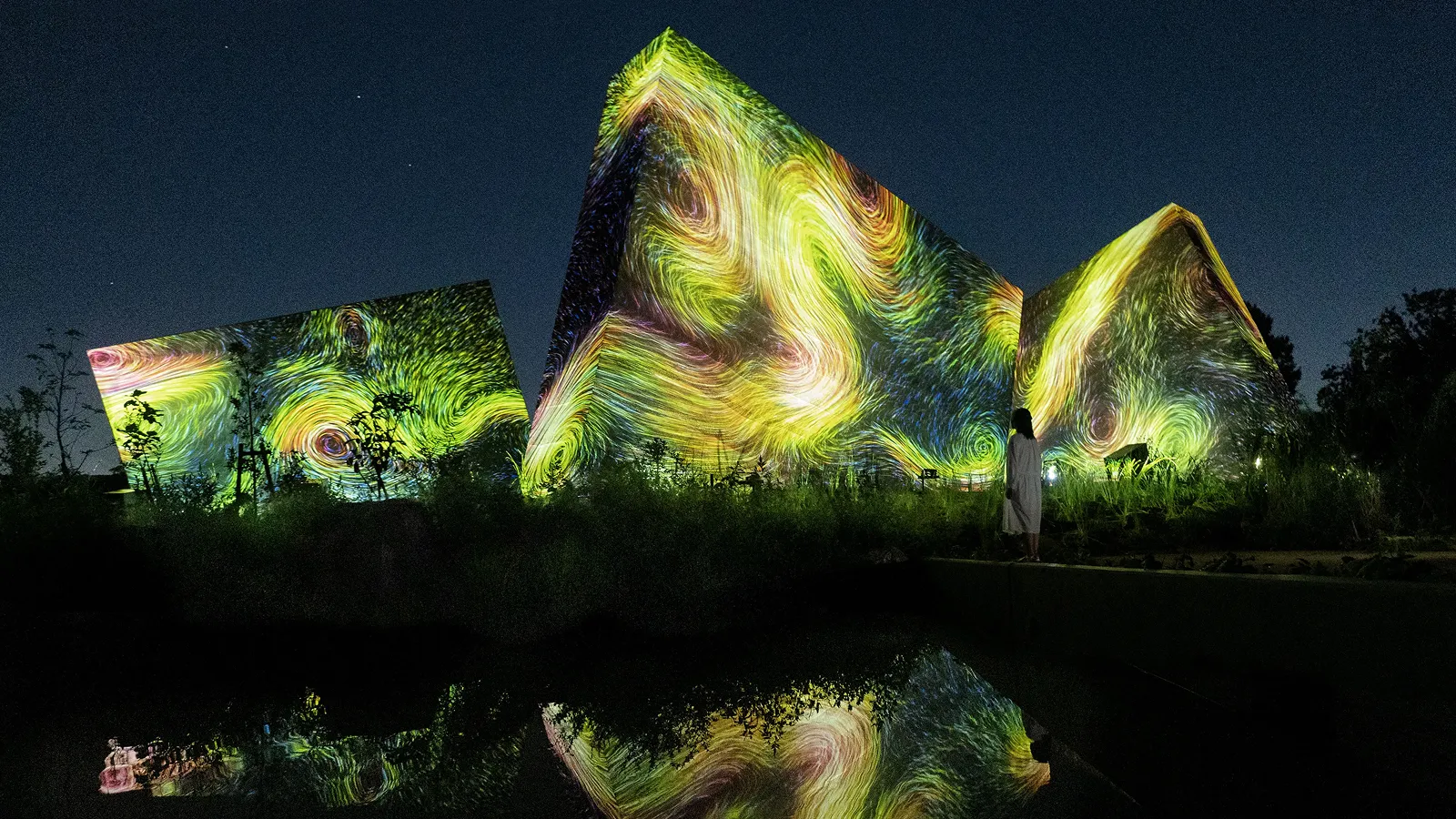
teamLab Botanical Garden transforms Osaka's Nagai Botanical Garden after dark. Digital projections and light installations respond to weather conditions, creating different experiences on windy nights, during rain, or under clear skies.
The installation demonstrates how digital art can enhance rather than replace natural environments. The plants are real, the digital layer amplifies their presence.
 Source: teamlab.art
36. Xpark Digital Ocean
Creator: Yokohama Hakkeijima | Year: 2020 | Location: Taipei, Taiwan
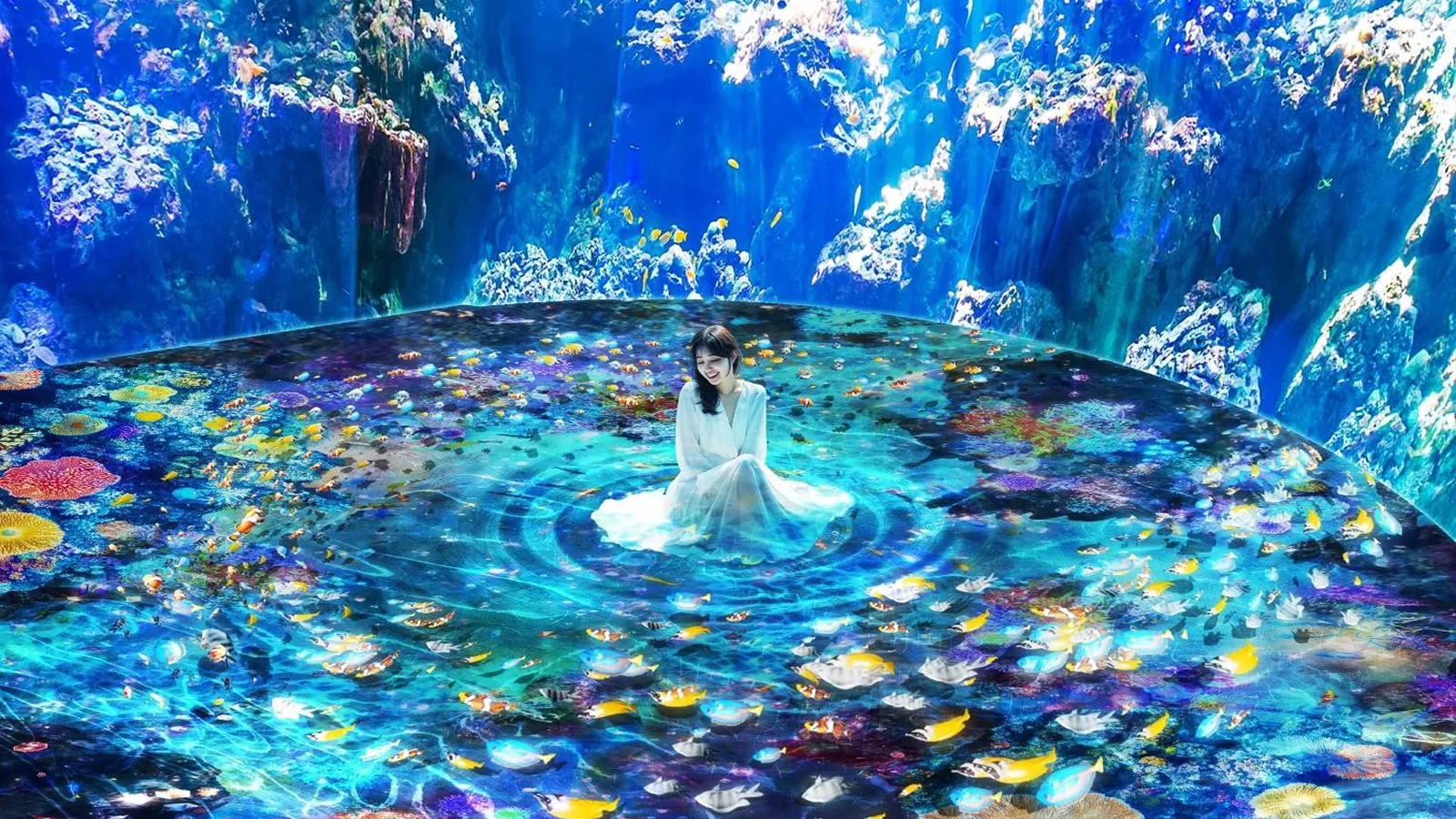
Xpark combines live marine exhibits with projection-mapped environments. Real fish swim through tanks while digital jellyfish float overhead and virtual waves wash across floors.
The installation blurs boundaries between living creatures and digital representations. Educational content is woven into aesthetic experience, making marine biology tangible and emotional.
 Source: xpark.com.tw
37. Balloon Museum Pop Air
Creator: Balloon Museum | Year: 2022 | Location: Paris, NYC, touring
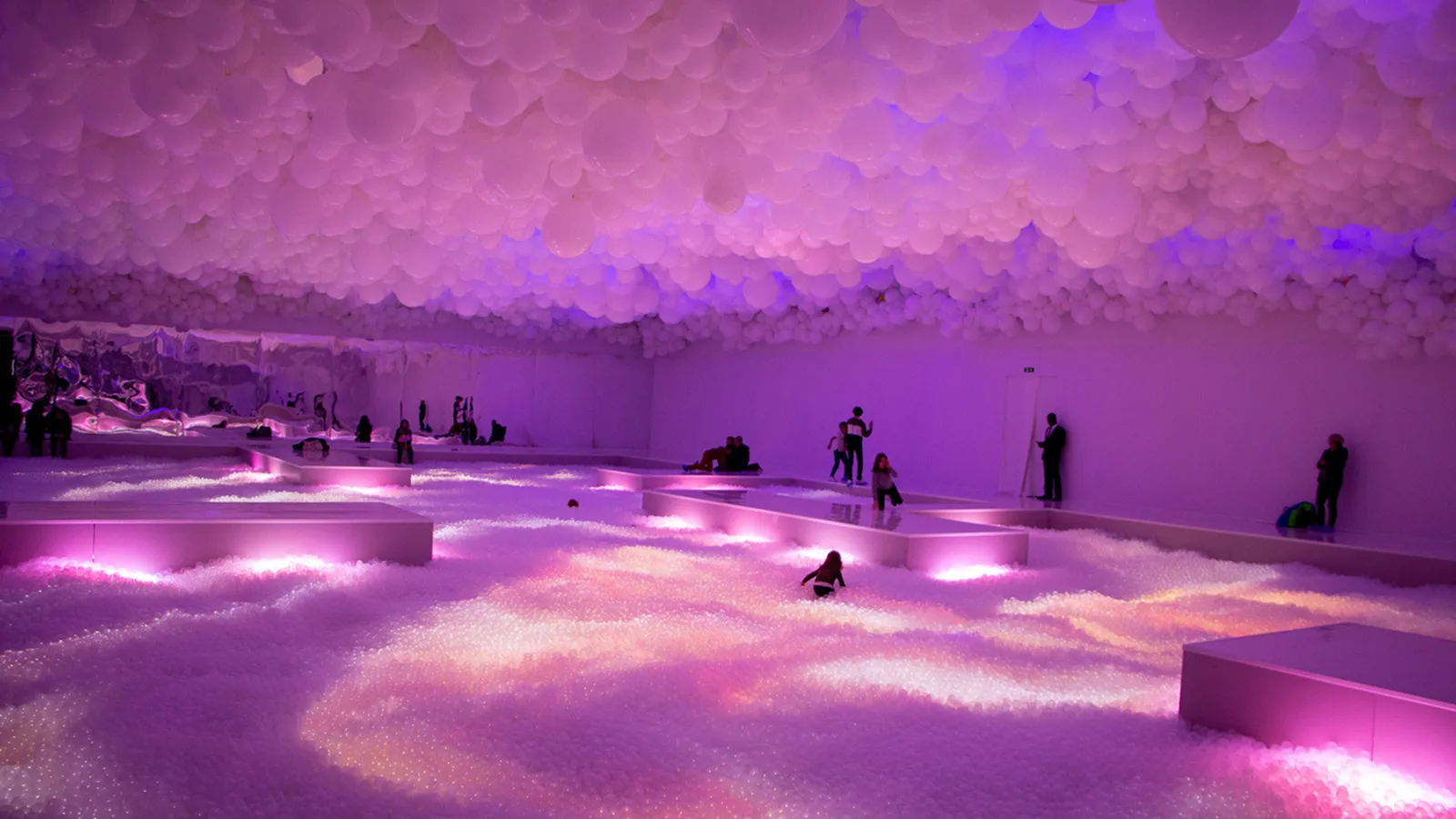
Pop Air celebrates inflatable art through room-scale installations featuring giant balloon sculptures, interactive environments, and works by contemporary artists. The medium creates inherent playfulness, inviting touch and physical interaction.
The museum demonstrates that interactive art doesn't require screens or sensors. Sometimes the simplest technology, air in latex, creates the most joyful experiences.
 Source: balloonmuseum.world
38. Infinity Room by Yayoi Kusama
Creator: Yayoi Kusama | Year: 1965-ongoing | Location: Multiple museums worldwide
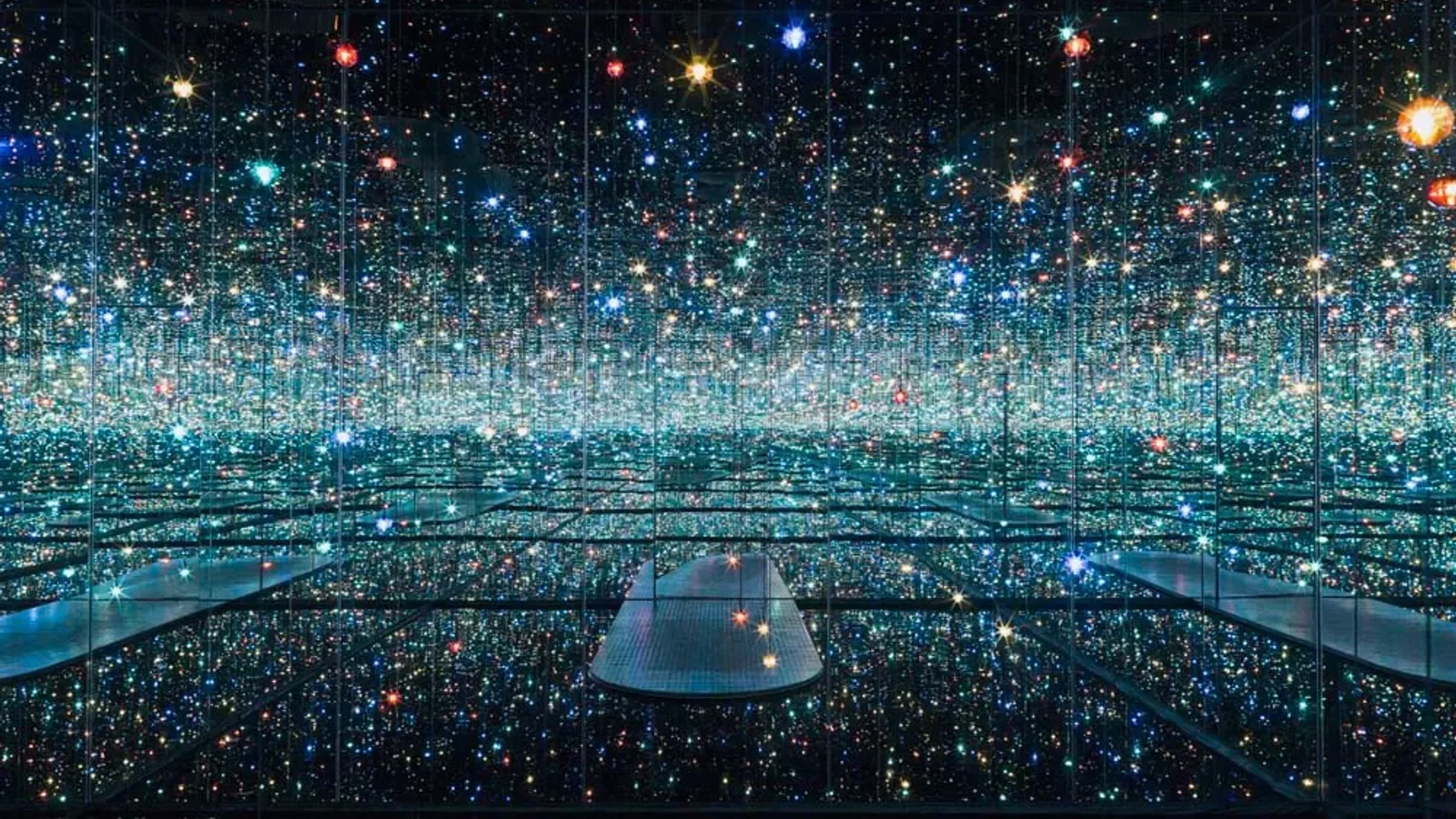
Yayoi Kusama's Infinity Mirror Rooms remain the template for immersive art experiences. Using mirrors, lights, and repetition, she creates the sensation of infinite space from rooms as small as closets.
Kusama has created over 20 variations since the 1960s, each exploring different configurations of light and reflection. Her work at The Broad, ICA Boston, and traveling exhibitions continues to draw crowds, proving that truly original concepts remain powerful across decades.
The rooms demonstrate that immersive art doesn't require new technology. Mirrors and lights have existed for centuries. Vision is what matters.
 Source: thebroad.org
The Future of Museum Installations
As technology advances and visitor expectations evolve, interactive installations will continue to push boundaries. Emerging trends include:
- AI-Generated Experiences: Installations that create unique content for each visitor
- Mixed Reality Integration: Blending physical installations with AR overlays
- Biometric Response: Artworks that respond to heart rate, breath, and emotional state
- Sustainable Practices: Eco-conscious installations using renewable energy and recycled materials
The most successful installations will balance technological innovation with emotional depth, creating experiences that resonate long after visitors leave.
About Utsubo
Utsubo is a creative studio specializing in interactive installations and immersive digital experiences. We combine Three.js expertise with physical installation design to create memorable brand moments.
What we offer:
- Custom interactive installations for museums, retail, and hospitality
- Three.js and WebGL development
- End-to-end design and implementation
Ready to Create Your Installation?
Let's discuss your project. We work with brands worldwide, with studios in Osaka, Japan.
Book a free 30-minute consultation
FAQs
What is an interactive museum installation?
An interactive museum installation is an artwork or exhibit that responds to visitor presence, movement, or input. Unlike traditional static displays, these installations create feedback loops between human action and artistic response, making each visit unique.
How much does a museum installation cost?
Costs vary dramatically based on scale, technology, and complexity. Simple sensor-based installations might start at $50,000, while large-scale immersive environments can exceed $5 million. Most mid-range interactive pieces fall between $200,000 and $1 million.
How long do museum installations take to develop?
Development timelines typically range from 6 months for simpler pieces to 2+ years for major installations. Factors include technical complexity, custom hardware requirements, testing periods, and institution approval processes.
What technologies are commonly used in interactive installations?
Common technologies include motion sensors (LiDAR, Kinect), projection mapping, LED displays, touchscreens, custom software (often using frameworks like TouchDesigner, openFrameworks, or Processing), and increasingly AI/ML for generative content.
How do museums measure installation success?
Success metrics include visitor dwell time, social media engagement, repeat visits, press coverage, accessibility compliance, and qualitative feedback. Many institutions now use heat mapping and visitor flow analysis to optimize placement and interaction design.


 Interactive Installations for Museums