Nearly 60% of Google searches now end without a single click to any website. AI Overviews, ChatGPT, and Perplexity are answering questions that used to drive traffic to your site. For queries where AI Overviews appear, the zero-click rate jumps to 83%.
If your website's primary job is delivering information, that job is being automated away.
This isn't another trend article about gradients, typography, or CSS tricks. This is about the strategic shift that matters for your business: when people stop visiting websites for answers, what should your website actually do? The answer is becoming clear—your website needs to become an experience worth sharing.
Here's what that means for your budget, your team, and your strategy.
Who this is for: CMOs, founders, brand managers, and marketing leads responsible for website strategy and budget. If you're evaluating a redesign, building a business case for a website upgrade, or wondering why your traffic is declining—this is your guide. Designers and developers will find more technical coverage elsewhere.
Key Takeaways
- AI Overviews and zero-click searches are reducing informational website traffic by 15–25% across verticals, with some categories seeing far worse declines.
- Websites that prioritize shareable experiences over information delivery are outperforming traditional sites in brand reach and social engagement.
- Interactive elements (mini-games, 3D, gamification) increase engagement metrics by 100–150% and social sharing by 22%.
- Three.js and WebGPU are now production-ready and budget-accessible, starting at $20K for animated storytelling sites.
- The ROI metric for websites is shifting from organic search traffic to earned media value and social reach—Utsubo's studio website generated ~5 million organic views on X with zero paid promotion.
- Budget tiers for experiential websites range from $20K (animated storytelling) to $200K+ (full 3D interactive experiences).
1. The AI Traffic Cliff: Why Information-First Websites Are Losing
1-1. Zero-click search is no longer a theory
The data is stark. According to Semrush's 2025 study, 58.5% of US searches and 59.7% of EU searches now conclude entirely within Google's search results page—no click to any website. For news and informational queries, that number surged from 56% to 69% between May 2024 and May 2025.
When Google's AI Overviews appear, the numbers get worse. Seer Interactive's September 2025 analysis found that organic click-through rates plummeted 61% for queries triggering AI Overviews—from 1.76% down to 0.61%.
And it's not just Google. ChatGPT, Perplexity, and other AI tools are replacing the "go to a website to learn something" behavior entirely. When someone asks "what are web design trends for 2026," an AI answers instantly—no website required.
1-2. Which verticals are hit hardest
Not all businesses are equally affected. The pattern is clear:
| Impact Level | Verticals | Why |
|---|---|---|
| Severe | Professional services, consulting, SaaS, B2B | Information-heavy sites that answer questions AI can now handle |
| Significant | Media, publishing, education | Content-first businesses seeing organic visits drop |
| Moderate | E-commerce, travel, hospitality | Transaction-focused sites still require visits |
| Lower | Tool-based apps, booking platforms | Functional websites that AI can't replace |
A Bain & Company survey found that 80% of consumers now rely on zero-click results for at least 40% of their searches, reducing organic web traffic by an estimated 15–25% overall.
1-3. What this means for your website strategy
If your website strategy depends on "publish helpful content → attract visitors via search → convert them," that playbook is eroding. The content you invest in writing? AI reads it, summarizes it, and delivers it to users without them ever seeing your brand.
This doesn't mean websites are dead. It means their strategic purpose must change. The websites that will thrive are the ones people visit on purpose—not because Google sent them, but because the website itself is worth the trip.
The question every decision-maker should be asking: if AI could answer every question on your website, would anyone still visit it?
Context:
- Company/industry: [your company and industry]
- Current website purpose: [information hub, lead gen, e-commerce, brand showcase]
- Top 5 pages by traffic: [list your highest-traffic pages]
- Current monthly organic visits: [approximate number]
Help me:
- Identify which of our top pages could be fully answered by AI (ChatGPT, Google AI Overview) without anyone visiting our site
- Estimate what percentage of our traffic is "information-seeking" vs. "experience-seeking"
- Suggest 3 ways to make our website worth visiting even when AI can answer our content
- Quantify the potential traffic at risk over the next 12 months
2. Websites as Shareable Experiences: The New Paradigm
2-1. The experience-first model
Think about physical retail. The stores that survived Amazon weren't the ones that were better at selling products—they were the ones that became places worth visiting. Apple Stores are more showroom than shop. Glossier turned makeup shopping into a photo-worthy social experience. Nike flagship stores let you test shoes on indoor courts.
The same shift is happening with websites. The new model isn't "come to our website to learn about us." It's "come to our website because the website itself is the experience."
An information-first website is a brochure. An experience-first website is a destination.
2-2. Social virality as a website KPI
Traditional website KPIs focus on search traffic, bounce rate, and conversion rate. These metrics assume visitors arrive through search. When that channel shrinks, you need different metrics:
- Social shares and screenshots: How often do people share your website on social media?
- Earned media impressions: How much organic social reach does your website generate?
- Time on site: Are people spending minutes exploring, or seconds scanning?
- "I have to show you this" factor: Would someone text a link to your website to a friend?
Case study: Utsubo's website went viral. The Utsubo studio website generated ~5 million organic views on X (Twitter) in 2025—without a single dollar of paid promotion. Why? Because the website was a full 3D interactive experience that felt unlike any other studio site. People screenshotted it, screen-recorded it, and shared it because the website itself was content worth sharing.
That kind of organic reach—equivalent to hundreds of thousands of dollars in paid social spend—came from the website, not from a social media campaign.
2-3. Who is already doing this
The brands winning in 2026 treat their websites as their most shareable marketing asset:
- Apple product pages use scroll-driven 3D animation to make each launch feel cinematic—and the experience itself generates social buzz before any ad runs.
- Luxury fashion houses like Balenciaga and Jacquemus have turned their websites into art installations, earning press coverage and social shares.
- Game studios extend their game worlds to the web—building hype, community, and earned media before launch day.
- Award-winning creative studios consistently generate social virality through interactive portfolios—proving that the website IS the marketing.
The pattern is clear: websites that create an emotional reaction get shared. Websites that deliver information get forgotten.
3. Playful Interactions and Mini-Games
3-1. Why playfulness works for business
Gamification isn't new. But embedding actual playful moments directly in your website is a growing trend with hard numbers behind it:
- Interactive content delivers 2× the engagement of static pages (Open Loyalty)
- Gamified elements boost social sharing by 22% and content discovery by 68%
- Engagement metrics (page views, time on site, interaction rate) increase by 100–150%
- 91% of B2B buyers prefer interactive content over static formats
This isn't about turning your homepage into a game. It's about strategic moments of delight—brief, memorable interactions that make visitors stay longer, engage deeper, and share what they found.
People spend 3–5 minutes playing an interactive element vs. 30 seconds scanning a page. That's a 6–10× increase in attention—attention you can use to build brand affinity, communicate your product story, or drive a conversion.
3-2. Types of playful web experiences
| Type | What It Is | Example Use Case |
|---|---|---|
| Interactive product explorer | 3D model visitors can rotate, customize, zoom into | Luxury watches, automotive, consumer electronics |
| Scroll-triggered mini-moments | Brief 30-second playful interactions during scroll | Brand story reveals, feature showcases |
| Generative/personalized content | Visitor inputs create unique visuals or outputs | AI-powered brand interactions, personalized recommendations |
| Easter eggs and hidden interactions | Unexpected rewards for curious visitors | Brand personality expression, social media bait |
| Interactive configurators | Build-your-own product experiences with visual flair | Furniture, fashion, automotive customization |
| Web-based brand games | Full mini-games that reinforce brand identity | Product launches, campaigns, seasonal activations |
The key is intention. Every playful element should serve a purpose: increase time on site, communicate a product benefit, generate a shareable moment, or drive a specific action.
3-3. Budget and implementation reality
| Complexity | Investment | What You Get | Timeline |
|---|---|---|---|
| Simple interactive element | $5K–$15K | Single 3D product viewer, animated hover states, scroll-triggered reveal | 2–4 weeks |
| Playful scroll experience | $20K–$60K | Multiple interactive scenes, custom animations, gamified navigation | 6–10 weeks |
| Full mini-game or interactive campaign | $60K–$150K+ | Custom game mechanics, leaderboards, social sharing integration, sound design | 10–16 weeks |
Important for decision-makers: The cost isn't just development—it's creative direction and interaction design. A well-designed 30-second scroll moment at $20K can outperform a complex game at $100K if the interaction is more memorable and shareable. Start with the moment you want to create, then scope the build.
4. Rich Animation and Motion Design
4-1. Animation as communication, not decoration
There's a fundamental difference between "a website with some animations" and an animation-driven website. The former adds polish. The latter uses motion as its primary language—guiding attention, creating hierarchy, and telling stories without relying on text.
In 2026, the best brand websites use animation to:
- Guide visitors through a curated journey (scroll-driven storytelling)
- Explain complex products through motion rather than paragraphs
- Create emotional resonance that static pages simply can't achieve
- Signal quality and craft—high-quality motion design communicates "this brand cares about detail"
For decision-makers, the important insight is this: animation isn't a nice-to-have anymore. It's how the best brands communicate. If your competitors' websites feel static and yours moves, you've already created differentiation.
4-2. Scroll-driven storytelling
The scroll is the input; the animation is the output. This is the dominant pattern for premium brand websites in 2026:
- Visitors scroll at their own pace
- Content reveals progressively—images animate, text appears, 3D objects rotate
- The experience feels cinematic but participatory
- Each scroll "scene" builds on the last, creating narrative momentum
This approach works because it gives visitors control. Unlike video (which plays at a fixed pace), scroll-driven experiences let people explore at their own speed—forward, backward, fast, or slow. That sense of agency creates deeper engagement and better recall.
For more on this approach, see our complete guide to immersive storytelling websites.
4-3. 3D and immersive web experiences
Three.js (the leading 3D web library) and WebGPU (the next-generation graphics API) have moved from experimental to production-ready. In 2026:
- Chrome, Edge, and Safari support WebGPU
- Performance on mid-range devices is now smooth at 60fps
- The visual quality gap between "3D on the web" and "pre-rendered video" has narrowed dramatically
What this enables for brands:
- Product visualization: Customers interact with photorealistic 3D products in the browser—no app download, no AR headset
- Environment exploration: Virtual spaces that visitors can navigate (showrooms, exhibitions, architectural walkthroughs)
- Memorable first impressions: A 3D-powered homepage creates an immediate "this is different" reaction
For guidance on working with studios that specialize in this, see our guide to top Three.js agencies.
4-4. What decision-makers need to know
You don't need to understand Three.js or WebGPU. You need to understand what they enable and what to demand from your agency:
- Studio selection matters more than technology choice. The same technology can produce mediocre or stunning results. Choose studios with interactive/3D portfolios, not agencies that "also do 3D."
- Performance is non-negotiable. Beautiful but slow is worse than simple but fast. Your agency must demonstrate performance optimization expertise—ask about their approach to mobile performance and loading times.
- Budget for mobile first. 60%+ of social-driven traffic is mobile. If the experience doesn't work beautifully on a phone, your sharing strategy fails.
5. AI-Native Website Features
5-1. Beyond chatbots
The first wave of AI on websites was customer service chatbots. Most of them were frustrating, ignored by visitors, and eventually hidden behind a small icon in the corner.
The second wave is more interesting. AI on websites in 2026 means:
- Personalized experiences: Returning visitors see different content based on their behavior, industry, or stated interests
- Dynamic content generation: Pages that adapt in real-time—different messaging for different audiences without manually creating variants
- Conversational product discovery: Instead of filtering through catalogs, visitors describe what they want and AI guides them to the right product
- Generative visuals: AI-created imagery that responds to visitor input, creating unique, shareable moments
5-2. The paradox: AI reduces traffic but enhances on-site experience
Here's the irony: the same AI technology that's pulling visitors away from your website can make their on-site experience dramatically better.
When someone does visit your website—whether from a social share, a direct link, or a referral—AI can make that visit significantly more valuable:
- Smart personalization that shows the right content to the right person
- Predictive engagement that identifies which visitors are likely to convert and adjusts the experience accordingly
- Natural language interaction that lets visitors ask questions in their own words instead of navigating menus
The strategy isn't to fight AI with more content. It's to use AI to make the on-site experience so good that the visit converts.
5-3. What to actually invest in (and what to skip)
| Worth investing | Why | Skip |
|---|---|---|
| Personalized landing pages | Convert better because they speak to each visitor's context | Generic AI chatbots that nobody uses |
| Conversational product discovery | Especially valuable for complex B2B with many options | AI-generated blog content (AI already summarizes this for free) |
| Dynamic visual content | Creates shareable, unique moments per visitor | AI features for AI's sake (adding AI to your homepage doesn't impress anyone anymore) |
| Predictive engagement scoring | Focus conversion efforts on high-intent visitors | Replacing human customer support entirely |
6. What This Means for Your Budget
6-1. Budget tiers for experiential websites
| Tier | Investment | What You Get | Timeline | Best For |
|---|---|---|---|---|
| Animated storytelling | $20K–$60K | Custom design, scroll-driven animation (GSAP/Lottie), responsive, basic interactivity | 8–12 weeks | Brand refreshes, product pages, campaign microsites |
| Interactive experience | $60K–$150K | 3D elements, playful interactions, custom animations, high-end craft, sound design | 12–18 weeks | Product launches, brand repositioning, flagship sites |
| Full immersive / 3D | $150K–$500K+ | Three.js/WebGPU, full 3D environments, mini-games, original music, multi-language | 16–24 weeks | Luxury brands, major launches, experience-as-marketing |
For a detailed breakdown of custom website pricing across all tiers, see our premium website cost and budget guide.
6-2. ROI reframed
Stop measuring website ROI purely through lead generation and organic search traffic. Those metrics made sense when websites were information hubs. For experience-driven websites, add:
- Earned media value: What would you pay for the same social reach through paid ads? Utsubo's ~5M views on X would cost an estimated $100K–$300K in paid social.
- Brand recall lift: Experiential sites create stronger memories—measurable through pre/post surveys.
- Recruitment impact: Talent evaluates companies by their websites. A memorable website helps attract better candidates.
- Investor and partner impression: First impressions matter. A distinctive website signals innovation and quality.
6-3. How to build the business case
Frame your experiential website as brand infrastructure, not a marketing expense:
- Compare to physical office or store renovation budgets—companies spend $100–$500/sqft on physical spaces that serve the same branding purpose.
- Calculate the cost of NOT differentiating: a template website communicates "template brand" to every visitor, prospect, and potential hire.
- Start with a single high-impact page (product launch, homepage, about page) rather than redesigning everything at once. Prove the concept, measure the impact, then expand.
Context:
- Industry: [your industry]
- Current annual website spend: [maintenance, hosting, updates]
- Main stakeholder concern: [cost, timeline, risk, ROI, competitive pressure]
- Primary goal: [brand differentiation, social virality, talent attraction, conversion lift]
- Current website monthly traffic: [approximate]
Help me draft:
- A one-paragraph executive summary of why our website strategy needs to change (include AI traffic data)
- 3 competitor or industry examples of experiential websites that would resonate with our leadership
- A recommended budget tier based on our goals (with ROI projections)
- The KPIs we should track instead of (or alongside) organic traffic
- A phased rollout plan that starts small and scales based on results
7. How to Get Started: A Decision-Maker's Roadmap
7-1. Audit your current website's purpose
Start with an honest assessment:
- What percentage of your website is purely informational? If it's mostly FAQ-style content, blog posts, and feature descriptions, that content is at risk of being summarized by AI.
- Can your website survive in a zero-click world? Remove all search traffic from your analytics. What's left? That's your website's actual direct value.
- What would someone share from your current website? If the answer is "nothing"—you have a clear investment opportunity.
7-2. Define experience goals before design goals
Most redesign briefs start with visual preferences: "we want a clean, modern look." That's the wrong starting point.
Start instead with:
- What should visitors feel? (Impressed, curious, excited, understood)
- What should visitors do? (Explore, play, configure, share)
- What's the share moment? (Work backward from "what would make someone screenshot this and post it?")
These experiential goals drive design decisions far more effectively than mood boards and color palettes.
7-3. Choose the right partner
An experiential website is not a Webflow or WordPress project. It's also not a project for a generalist digital agency that "also does some 3D."
What to look for in a studio:
- Interactive/3D portfolio: If their work doesn't move, explore, or surprise you, they can't build what you need.
- Performance expertise: Ask specifically about their approach to mobile performance, loading times, and device testing.
- Creative direction capability: The best experiential websites are directed, not just developed. You need a partner who can shape the concept, not just execute your wireframes.
Red flags:
- Portfolio is mostly template-based sites with animation libraries bolted on
- No custom 3D or interactive work
- Can't show you mobile versions of their interactive projects
For studio recommendations, see our guides to top Three.js agencies and best Japanese web design studios.
8. Common Mistakes Decision-Makers Make
Hiring a traditional web agency for an experiential project. Traditional agencies optimize for page speed, SEO, and content management. Experiential projects require creative direction, 3D development, and interaction design. These are fundamentally different skill sets—like hiring an architect for interior design.
Treating the website as IT infrastructure instead of brand strategy. When the website lives under IT's budget, it gets treated as a cost center to minimize. Experiential websites are brand assets that generate value—they belong in the marketing or brand budget.
Optimizing purely for SEO when the traffic model is changing. SEO still matters, but building your entire website strategy around organic search in 2026 is like optimizing your store layout for foot traffic in an era of declining mall visits. Diversify your traffic sources.
Underinvesting in performance. A beautiful website that takes 8 seconds to load on mobile is a beautiful website nobody will see. Performance isn't a technical detail—it's a business requirement.
Launching without a social and sharing strategy. If you're building a website designed to be shared, plan the sharing. Coordinate launch timing, prepare social content that showcases the experience, and make it easy for visitors to share specific moments.
Ignoring mobile. 60%+ of social-driven traffic arrives on mobile. If your experiential elements don't work on a phone, the entire social sharing strategy collapses. Design for mobile first, enhance for desktop.
9. About Utsubo
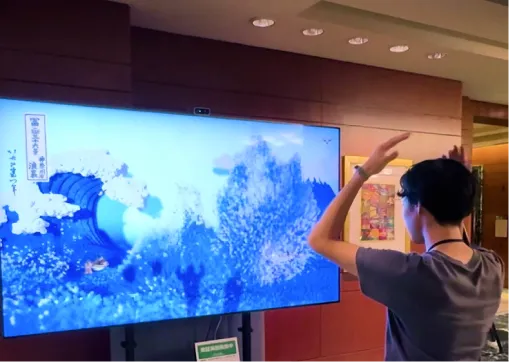
Utsubo is a creative studio specializing in interactive web experiences, immersive installations, and 3D brand projects. Based in Osaka, Japan, we work with brands worldwide.
Our studio website reached ~5 million organic views on X in 2025—proof that an experiential website can be your most powerful marketing asset. We don't just theorize about the trends in this article. We build them.
What we focus on:
- Three.js and WebGPU development for brand websites
- Scroll-driven storytelling and interactive motion design
- Playful interactions, mini-games, and generative web experiences
- High-performance optimization across all devices
10. Let's Talk
Building a website that people actually want to share? We work with brands on interactive web experiences, 3D product showcases, and immersive brand sites.
If you're exploring a partnership, let's discuss your project:
- What you're building and where your current site falls short
- Which approach (animated, interactive, full 3D) fits your goals and budget
- Whether we're the right fit to help you execute
Decision-Maker's Checklist
- Audit what percentage of your website content could be answered by AI instead of requiring a visit
- Identify 3 shareable moments your website could create
- Review competitors' websites—are they still template-based? (That's your window of opportunity.)
- Set experience goals ("what should visitors feel and do?") before design goals ("what should it look like?")
- Budget for interaction and creative direction, not just visuals and development
- Shortlist studios with interactive/3D portfolios—not generalist agencies
- Define success metrics beyond organic traffic (social reach, earned media, time on site)
- Plan a social launch strategy for the website itself
FAQs
How much does an experiential or interactive website cost?
Budget ranges from $20K for animated storytelling sites with scroll-driven animation to $200K+ for full 3D interactive experiences with custom game mechanics, sound design, and multi-language support. The biggest cost drivers are custom 3D development, interaction design complexity, and performance optimization across devices. See our complete budget guide for detailed breakdowns.
Will investing in experience over SEO hurt my search traffic?
Not if you use a hybrid approach. Keep SEO-optimized content pages (blog, guides, resource center) for search discovery, and build experiential elements for your homepage, product pages, and campaign microsites where you want to convert and impress. The goal is to diversify beyond search dependence, not abandon it entirely.
How do I measure ROI on an experiential website?
Track earned media value (social shares × equivalent ad cost), time on site, direct/referral traffic growth, and brand recall surveys alongside traditional conversion metrics. A website that generates millions of organic social views has measurable brand value even if it doesn't rank #1 on Google for a specific keyword.
Is Three.js or WebGPU ready for production business websites?
Yes. Three.js has been production-ready for years, powering websites for Apple, Nike, and hundreds of other major brands. WebGPU (the next-generation graphics API) is now supported in Chrome, Edge, and Safari, delivering significantly better performance than its predecessor WebGL. The technology isn't experimental—the challenge is finding studios skilled enough to implement it well.
How long does it take to build an interactive website?
8–12 weeks for animated scroll experiences, 12–18 weeks for interactive sites with 3D elements, and 16–24 weeks for full immersive projects. Strategy, storyboarding, and creative direction take as much time as development—rushing the creative phase leads to technically impressive but strategically weak results.
Should I rebuild my entire website or add interactive elements to the existing one?
Start focused. Pick one high-impact page—a product launch, your homepage, or a campaign microsite—and build an experiential version. Measure the impact (social shares, time on site, conversion), then use those results to justify expanding the approach. A full rebuild is a bigger investment and risk; a focused pilot proves the concept first.
What's the difference between a website with animations and an "experiential" website?
Animations decorate; experiences engage. An experiential website gives visitors agency—they control, explore, discover, and interact. If removing the interactive elements doesn't change the experience, you just have a decorated brochure. The test: would someone share this website with a colleague because the experience itself is worth seeing?
Do interactive websites work on mobile?
They must—60%+ of social-driven traffic is mobile. Good studios design for mobile in parallel, using touch interactions, gyroscope input, and aggressive performance optimization. If the experience doesn't work beautifully on a phone, the entire social sharing strategy fails. Always ask your studio to demo mobile versions of their past interactive projects before signing.


 Technology-First Creative Studio