Two decisions shape an interactive installation before any design work starts: which studios you invite, and what you tell them.
The quality of your brief determines the quality of your installation. That might sound dramatic, but after reviewing hundreds of project inquiries, one pattern is clear: clients who provide thorough, well-structured briefs receive better proposals, more accurate quotes, and ultimately, better installations. Vague briefs lead to misaligned proposals, budget surprises, and creative friction that could have been avoided.
This guide covers both steps: how to choose an interactive installation studio using seven shortlisting criteria, then how to write a brief that gets accurate quotes and great results—whether you're commissioning your first interactive installation or refining your process for the next one.
Who this is for: Marketing directors, museum project managers, brand experience leads, and anyone choosing a studio or preparing a brief for an interactive installation for the first time.
Key Takeaways
- Before you brief, shortlist 3–5 studios against 7 criteria, from real-time performance under load to maintenance SLAs and line-item budgets
- A complete brief covers 7 core areas: goals, audience, space, timeline, budget, references, and constraints
- Studios can't provide accurate quotes without floor plans and visitor numbers
- The best briefs describe problems to solve, not solutions to build
- Allow 8–12 weeks for pop-ups, 3–6+ months for permanent installations
- Sharing your budget range upfront leads to better-matched proposals
1. Why Your Brief Matters More Than You Think
1-1. Bad briefs lead to misaligned proposals
When a brief says "we want something interactive for our lobby," studios are left guessing. What's the goal—brand awareness, visitor engagement, data capture? What's the space like? What's the budget? Without answers, studios either play it safe with generic proposals or swing for the fences with concepts you can't afford.
Neither outcome serves you well.
1-2. Studios quote based on assumptions
Every missing piece of information forces studios to make assumptions. No floor plan? They'll assume a standard size and add contingency. No visitor numbers? They'll design for moderate traffic and hope it holds up. No budget range? You'll receive proposals spanning $20,000 to $500,000 for the same brief.
These assumptions add cost—to your budget and your timeline.
1-3. The brief is a screening tool
A good brief doesn't just help studios understand your project—it helps you evaluate them. How studios respond to your brief reveals their thinking process, attention to detail, and whether they're genuinely interested in solving your problem or just filling their pipeline.
Studios that ask smart follow-up questions and propose solutions that directly address your stated goals are worth keeping in the conversation.
2. Before You Brief: 7 Criteria to Shortlist Studios
A brief only works if it reaches the right studios. Before you write it, narrow the field to three to five studios you would genuinely hire. Screen their portfolios, websites, and first calls against these seven criteria.
| Criterion | What to check | Red flag |
|---|---|---|
| 1. Real-time tech that holds up under load | Live real-time 3D work (WebGL, Three.js, WebGPU, or a game engine) that stays smooth with crowds, simultaneous users, and full-day run times, plus a plan for on-site load testing | A reel of renders and videos, but no live piece that has run in public for weeks |
| 2. Hardware & sensors | Hands-on integration of depth cameras, motion tracking, RFID, LED, and projection mapping, with a reason for every hardware choice | The same kit proposed for every project, or hardware handed to a subcontractor with no one owning integration |
| 3. Creative & brand fit, including accessibility | Work that tells a story in your brand's voice, user testing during development, and accessible interaction (WCAG, ADA) designed in from the start | The technology upstages the message, or accessibility is pushed to "phase two" |
| 4. Project & site planning | A realistic timeline with milestones, a site survey, and requirements for power, weight, network, ventilation, and heat | A price quoted before anyone asks about your space |
| 5. Maintenance & SLA | A written plan covering response times, remote monitoring, spare parts, and content updates, typically 10–15% of project value per year | "We'll fix it if it breaks," with no SLA and no price |
| 6. Line-item budgets | Separate lines for design, development, hardware, installation, maintenance, and contingency | One lump sum, or a single vague "development" line |
| 7. Safety & data | Electrical equipment that meets local rules (UL/ETL listing in the US, CE marking in the EU), fire-safe materials and exit routes, secure mounting, and a plan for camera or personal data (GDPR, CCPA) | No clear answer on what visitor data is captured, where it's stored, or for how long |
One quick test works for every studio on your list: ask them to walk you through a comparable project row by row—what they built, what hardware it ran on, how it's maintained, and how the budget broke down. Studios with real installations behind them answer quickly and specifically.
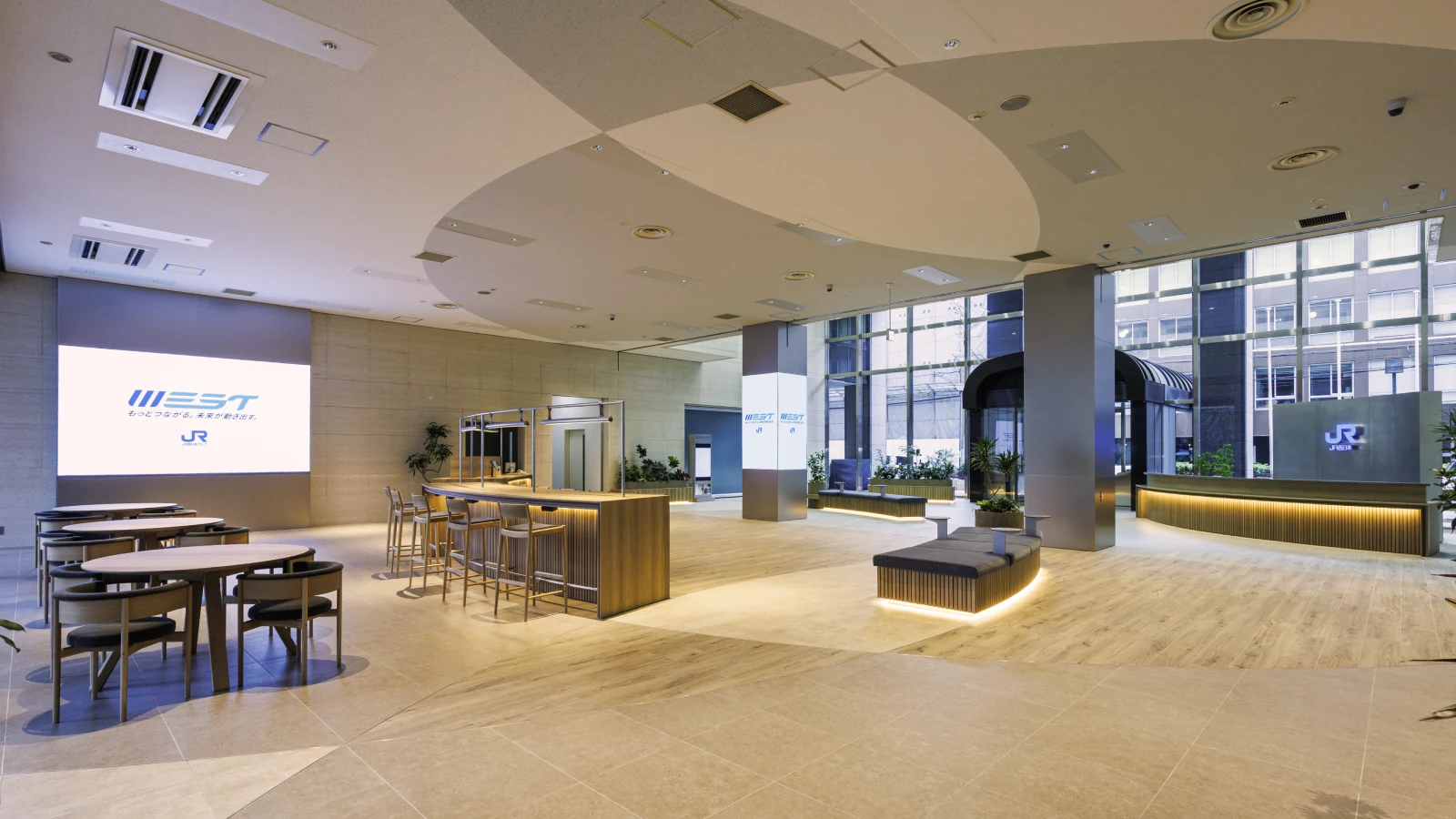
Our digital installation for JR West's headquarters renewal in Osaka, which turns employee messages into a living 3D city in real time, is a typical example: real-time rendering, on-site hardware, and a brand message all had to work together.
Need names to start from? Our guide to the best interactive installation studios in Japan gives you a shortlist to begin with, plus typical timelines and budgets. Once your shortlist is set, send every studio the same complete brief.
3. The 7 Essential Brief Components
3-1. Project Goals and Success Metrics
Start with why. What business outcome are you solving for?
Questions to answer:
- What problem does this installation solve?
- How will you measure success? (dwell time, social shares, leads captured, visitor satisfaction scores)
- What does "good" look like six months after launch?
- Are there internal goals (executive buy-in, team morale) alongside external ones?
Example:
"We want to increase average visit duration in our flagship store by 15% and generate at least 500 social media posts per month featuring the installation."
This is far more useful than "we want something Instagram-worthy."
Context:
- Project type: [exhibition / event / permanent installation]
- Organization: [describe your org and industry]
- Current challenge: [what problem are you solving]
- Timeline: [rough dates if known]
Please help me:
- Articulate 2-3 primary business objectives
- Define measurable success metrics (dwell time, engagement, social shares, leads)
- Identify internal vs. external goals
- Flag any conflicting objectives I should resolve before briefing studios
3-2. Target Audience
Who will actually interact with the installation?
Include:
- Primary and secondary audience segments
- Age range and technical comfort level
- Accessibility requirements (mobility, visual, hearing)
- Expected daily and hourly visitor volume
- Peak usage patterns (weekends, holidays, events)
- Group size (individuals, families, school groups)
Visitor volume directly impacts hardware requirements, durability specifications, and content pacing. An installation designed for 50 daily visitors will fail at 500.
3-3. Space and Site Documentation
This is where many briefs fall short. Studios need to understand your physical constraints before they can propose viable solutions.
Essential documentation:
- Floor plans with dimensions (even rough sketches help)
- Ceiling height and any overhead obstructions
- Power availability and location of outlets
- HVAC and climate control (especially for projectors and sensors)
- Natural light conditions at different times of day
- Photos from multiple angles
- Site access constraints (loading dock, elevator dimensions, door widths)
- Existing infrastructure (networking, AV systems, building management)
Tip: Walk through the space with your phone and take a video. It captures details that floor plans miss.
3-4. Timeline and Key Dates
Be explicit about deadlines and the reasoning behind them.
Include:
- Hard deadlines (grand opening, event date, board presentation)
- Internal approval milestones and who's involved
- When site access is available for installation
- Duration: permanent, semi-permanent, or temporary
- Any blackout periods when work can't happen
Typical timelines:
- Pop-up activations: 8–12 weeks (if approvals are fast)
- Permanent installations: 3–6+ months
- Large-scale or technically complex projects: 6–12 months
If your timeline is aggressive, say so. Studios will either propose creative solutions or tell you honestly that it's not feasible.
3-5. Budget Range
This is the one clients most often want to hide—and it's the one that matters most.
Why sharing a range helps both parties:
- Studios can propose solutions that actually fit your constraints
- You avoid wasting time reviewing $300,000 proposals when your budget is $80,000
- It signals you're serious and have done your homework
How to frame it:
"We're exploring a budget range of $60,000–$100,000 for this project. We'd like to understand what's possible at different points within that range."
What the budget needs to cover:
- Design and creative development
- Hardware and equipment
- Software development and content creation
- Installation and commissioning
- Training and documentation
- Ongoing maintenance (often 10–15% annually)
For guidance on typical budget ranges, see our interactive installation cost guide.
3-6. References and Inspiration
Show, don't just tell. Visual references accelerate alignment and reduce miscommunication.
Include:
- 3–5 examples of installations you admire (with URLs or images)
- For each example, explain why you like it—the aesthetic? The interaction model? The technology?
- Anti-references: examples of what you don't want, and why
- Brand guidelines (logos, colors, typography, tone of voice)
- Existing marketing materials for context
Tone considerations:
- Playful vs. sophisticated
- High-tech vs. natural/organic
- Educational vs. purely experiential
- Loud and attention-grabbing vs. subtle and ambient
3-7. Constraints and Requirements
Every project has non-negotiables. Surface them early.
Technical constraints:
- Must integrate with existing CMS or content management systems
- Specific hardware requirements (or restrictions)
- IT security and network policies
- Data handling requirements
Legal and compliance:
- Data privacy regulations (GDPR, CCPA, local laws)
- Accessibility standards (WCAG, ADA, local building codes)
- Permits and approvals required
Operational requirements:
- How will content be updated? By whom?
- Maintenance access (24/7, business hours only, scheduled windows)
- Staff training needs
- Multi-language support
Political realities:
- Who are the key stakeholders and decision-makers?
- What's the approval process?
- Are there competing visions within the organization?
Being upfront about internal dynamics saves everyone time.
4. What NOT to Put in Your Brief
Don't specify solutions
Your job is to define the problem. The studio's job is to propose solutions.
"We need a touchscreen wall" prescribes a solution. "We need visitors to explore our product catalog in an engaging way" describes a problem. The latter opens the door to creative solutions you might not have considered.
Don't ask for spec work
Requesting fully developed concepts, detailed wireframes, or creative pitches as part of the RFP process is a red flag for quality studios. Many will simply decline to participate.
Instead, ask for:
- Relevant portfolio examples
- A description of their process
- How they'd approach the initial discovery phase
- References from past clients
Don't hide your budget
"We'll evaluate proposals and then discuss budget" wastes everyone's time. Studios will either lowball (and cut corners later) or aim high (and price themselves out).
Don't send to 10+ studios
Mass-distributed RFPs get generic responses. Studios recognize bulk inquiries and deprioritize them. Three to five studios, shortlisted with the criteria in Section 2, will give you better proposals than ten who know they're competing against a crowd.
5. The Brief Template
Copy and paste this template into your own document, then fill in each field. Treat it as a starting point and adapt it to your project's specifics.
Project Brief: [Project Name]
1. About Your Organization
- Company/institution name
- Brief description
- Website and relevant links
2. Project Overview
- What are you creating and why?
- What problem does this solve?
3. Goals and Success Metrics
- Primary objectives
- How will success be measured?
4. Target Audience
- Who will interact with the installation?
- Expected visitor volume
- Accessibility requirements
5. Space and Site
- Location address
- Floor plans attached: Yes/No
- Dimensions: [L x W x H]
- Photos attached: Yes/No
- Power and network details
- Site access constraints
6. Timeline
- Target launch date
- Key milestones
- Duration (permanent/temporary)
7. Budget
- Budget range: $______ – $______
- What's included in this budget?
8. References
- Examples you admire (with links)
- What you like about each
- Anti-references (what you don't want)
- Brand guidelines attached: Yes/No
9. Constraints
- Technical requirements
- Legal/compliance requirements
- Operational needs
10. Stakeholders and Process
- Key decision-makers
- Approval process
- Preferred communication style
11. Submission Details
- Deadline for proposals
- Questions to: [email]
- Proposal format requested
6. Common Mistakes (and How to Avoid Them)
Being vague about goals
"We want something interactive" isn't a goal. Neither is "we want to wow visitors." Push yourself to articulate specific, measurable outcomes.
Missing site documentation
Studios can't design for a space they can't visualize. Even incomplete documentation is better than none. If floor plans don't exist, create rough sketches with measurements.
Unrealistic timelines
Complex installations take time. If you need something in four weeks, be honest about what you're willing to sacrifice (scope, customization, polish). Or push back on internal stakeholders about the timeline.
Waiting until the end to give feedback
Don't save all your concerns for the final review. Regular check-ins during concept development prevent expensive pivots later. Establish a feedback rhythm in your brief.
Treating it as a contest for free ideas
If you want studios to invest significant creative effort upfront, expect to pay for it (or lose access to the best studios). The brief is for screening and alignment—not a design competition.
Not having a decision-maker in the loop
Nothing derails a project faster than a stakeholder who appears at the end to override decisions. Identify decision-makers upfront and keep them informed throughout.
7. What to Expect After Sending Your Brief
Response timeline
Give studios 2–3 weeks to respond to a comprehensive brief. Complex projects may need longer. Specify your deadline and stick to it.
What a good proposal looks like
Strong proposals should include:
- Evidence they've read and understood your brief
- A clear description of their proposed approach (not a full design)
- Relevant portfolio examples
- Preliminary timeline with key milestones
- Budget estimate with clear breakdowns
- Team composition and roles
- Questions or areas needing clarification
How to compare proposals fairly
Create a simple scoring matrix. Score each proposal from 1 to 5 on every row, multiply each score by a weight from 1 (nice to have) to 3 (critical), and compare the totals. Weighting keeps the most polished pitch from winning by default.
| Criterion | What a 5 looks like |
|---|---|
| Understanding of goals | Restates your goals and success metrics in its own words and ties the concept to them |
| Relevant experience | Comparable venue, scale, and run time, with references you can call |
| Creative approach | A clear direction that answers your brief, not a recycled showreel |
| Technical capability | Names the hardware, software, and load-testing plan, and explains the trade-offs |
| Budget alignment | Line items within your range, with maintenance and contingency shown separately |
| Team and communication fit | Named team members, a reporting rhythm, and a single point of contact |
Set the weights before you open the proposals, based on what matters most for your project.
Red flags to watch for
- Generic proposals that could apply to any project
- No questions or requests for clarification
- Vague budget estimates with large ranges
- Unwillingness to share references
- Pressure to skip discovery and jump to production
8. Let's Talk
Shortlisting studios or finalizing a brief for an interactive installation? We're a creative studio in Osaka behind interactive installations for Expo 2025 Osaka and JR West.
If you're exploring a partnership, let's discuss your project:
- What you're building and the constraints you're working with
- Which technical approach makes sense for your goals
- Whether we're the right fit to help you execute
9. Pre-Submission Checklist
Before sending your brief, verify:
- Shortlisted 3–5 studios against the seven criteria in Section 2
- Defined clear project goals and success metrics
- Documented target audience and expected visitor volume
- Gathered floor plans, dimensions, and site photos
- Set realistic timeline with key milestones
- Determined budget range (not hidden)
- Collected visual references and explained why you like each
- Listed anti-references (what you don't want)
- Included brand guidelines
- Documented technical and legal constraints
- Identified decision-makers and approval process
- Specified submission deadline and format
[Paste your brief here]
Please evaluate:
- Are the goals specific and measurable?
- Is the audience well-defined (demographics, volume, accessibility needs)?
- Is there enough space/site documentation for accurate quoting?
- Is the timeline realistic for the scope described?
- Is the budget range clear and appropriate?
- Are references helpful, or too vague/too prescriptive?
- Are technical and legal constraints clearly stated?
- What critical information is missing?
Provide specific suggestions for improvement.
FAQs
How much does an interactive installation cost? Budgets fall into four tiers. A true single-screen interactive piece starts at around $20,000 (below that, you're usually buying digital signage), and pop-up or temporary starters run $15,000–$30,000. Custom, multi-sensor installations typically cost $40,000–$80,000; fully bespoke, room-scale projects $100,000–$200,000; and multi-site programs with custom hardware $200,000+. Plan another 10–15% of project value per year for maintenance. Our interactive installation cost guide breaks down what each tier includes.
Does studio selection differ for permanent and short-term installations? Yes. For a permanent installation, weigh durability, maintenance, and long-term running costs most heavily: commercial-grade hardware, a written SLA, and a maintenance budget of roughly 10–15% of project value per year. For a pop-up or short-term activation, prioritize portability, fast setup and teardown, efficient logistics, and a studio that can deliver in 8–12 weeks.
How detailed should my installation brief be? A good brief is 2–4 pages covering goals, audience, space details, timeline, budget range, references, and constraints. Longer is fine if the detail is relevant—but avoid padding. Include floor plans and photos as attachments rather than describing them in prose.
Should I share my budget upfront with studios? Yes. Sharing a budget range helps studios propose solutions that fit your constraints. Without it, you may receive proposals ranging from $20,000 to $500,000 for the same brief. Frame it as a range you're exploring, not a ceiling to be maxed out.
How many studios should I send my brief to? Three to five is ideal. Fewer than three limits your options; more than five dilutes the quality of responses and your ability to evaluate them properly. Select studios whose portfolios and specialties align with your project.
What if I don't have floor plans yet? Create rough sketches with approximate dimensions. Take photos and videos of the space from multiple angles. Note ceiling height, power outlet locations, and any obstacles. This is far better than nothing and signals you've thought about the practical realities.
How long should I give studios to respond? Two to three weeks for a comprehensive proposal. For complex projects, allow more time. Specify the deadline clearly in your brief and be prepared to answer questions during the response period.
Can I update the brief after sending it? Yes, but communicate changes to all studios simultaneously and give them additional time to adjust their proposals. Significant changes may require restarting the process. Minor clarifications are normal and expected.


 Osaka Interactive Installation Studio