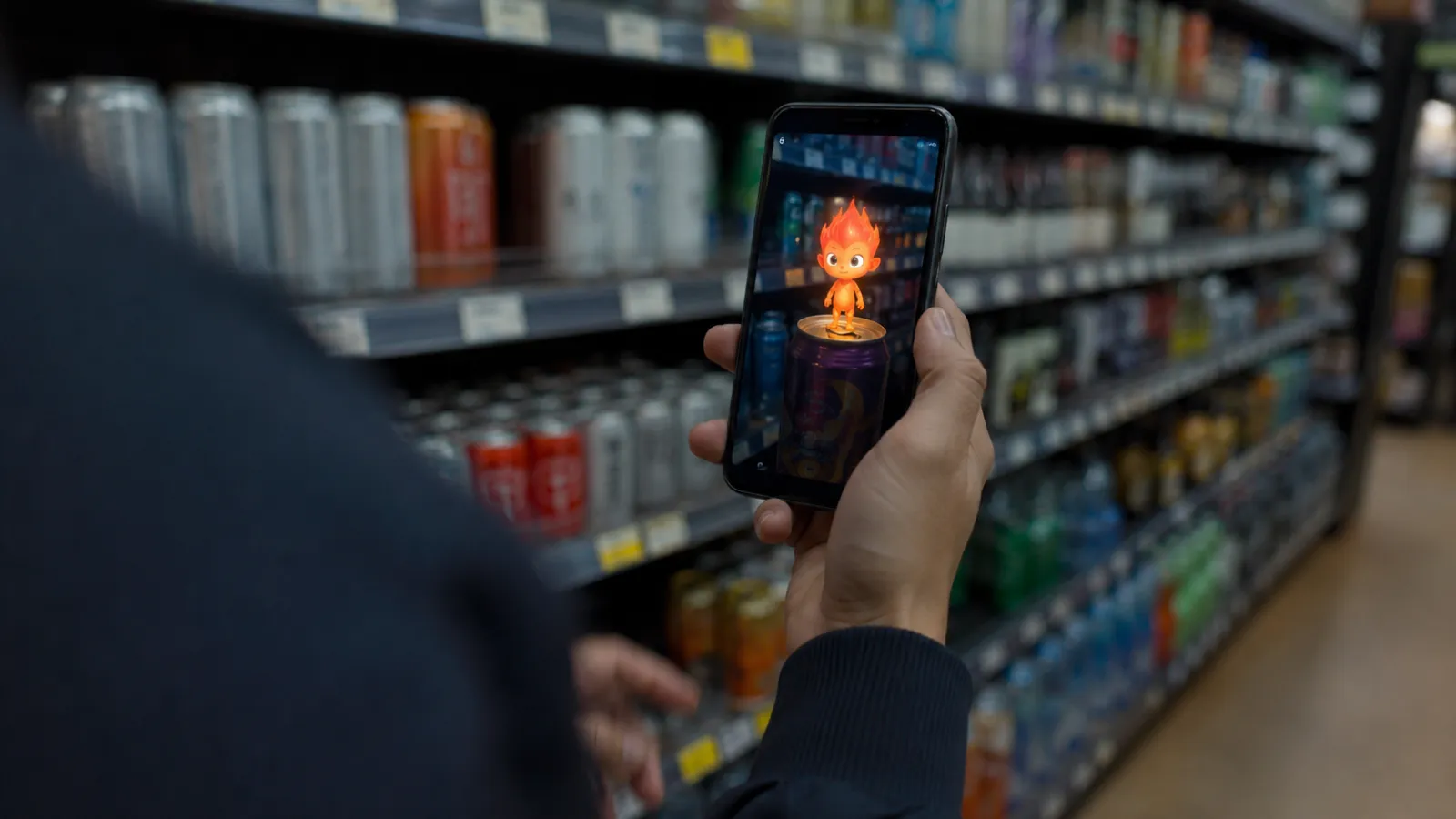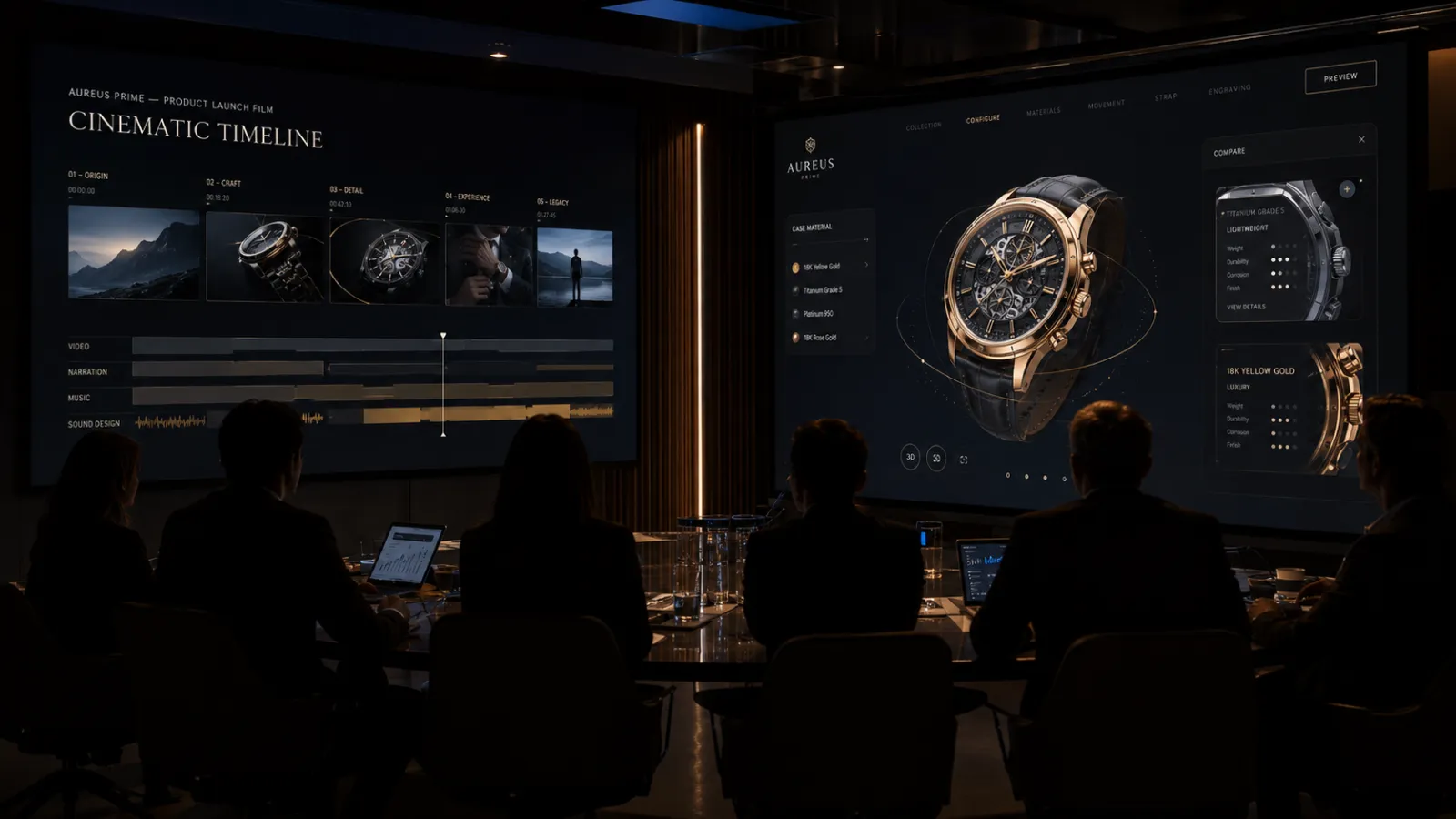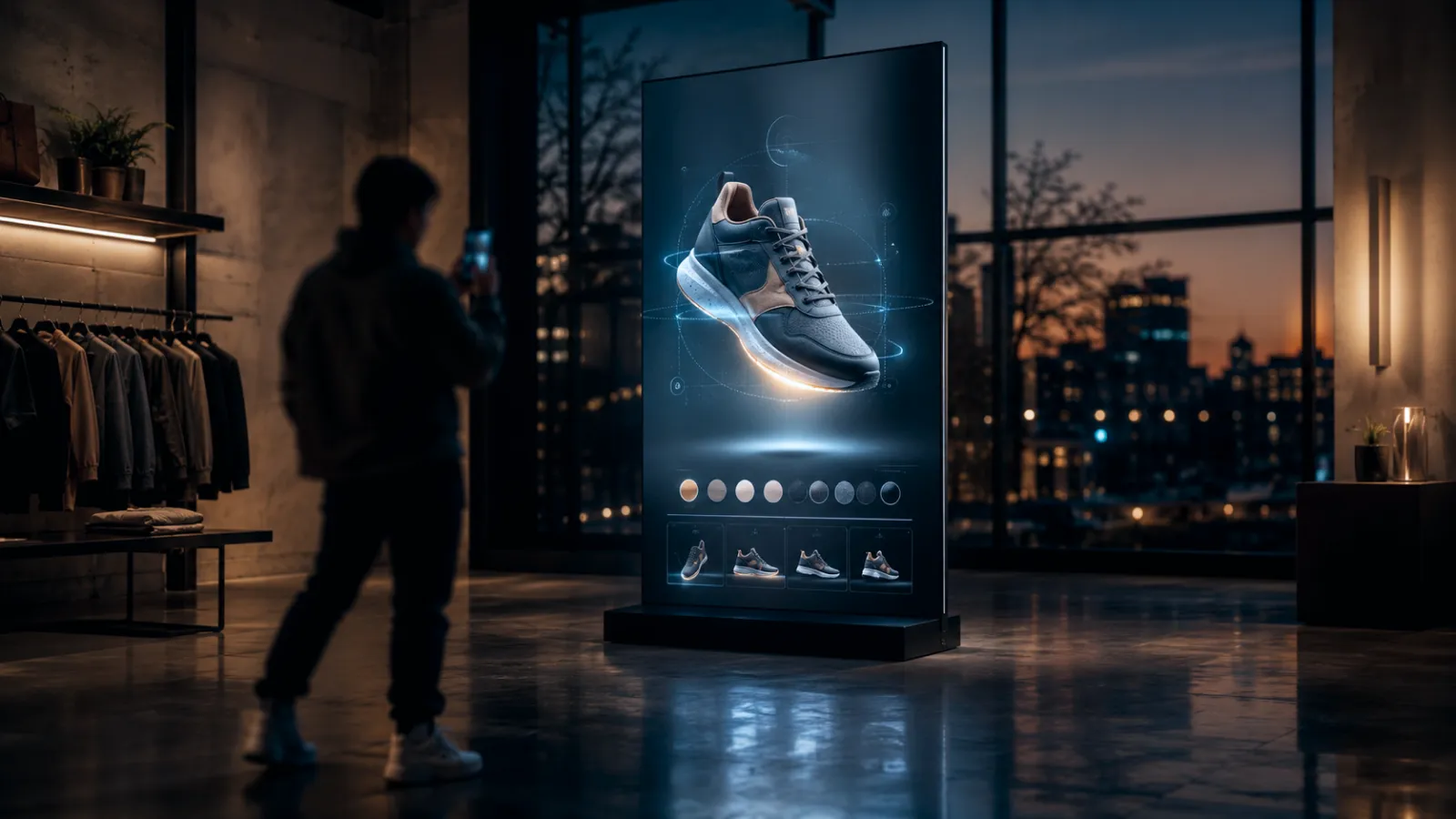
86% of Gen Z job seekers search on their phones, more than two-thirds research an employer's brand before they apply, and the first thing most of them check is how a company presents itself online. A static careers page with a job list and three stock photos doesn't survive that scrutiny. A recruit site is no longer an information page—it's the first, and often the deciding, impression of your culture.
This guide is about treating the recruit site as an employer-branding medium: scroll-driven storytelling, motion, 3D, and interactive—even playable—experiences that communicate who you are visually, not in bullet points. It covers what an immersive recruit site is, what candidates now expect, where it pays off (especially for competitive engineering hires), and how to commission one.
Who this is for: Talent acquisition leads, HR and employer-branding teams, founders, and anyone briefing or budgeting a careers/recruit site who wants it to win over hard-to-reach candidates—not just list openings.
Key Takeaways
- A recruit site is now an employer-branding medium, not an info page—candidates evaluate culture visually before they ever read a job description.
- 86% of Gen Z job seekers use smartphones to search, and 65% won't apply if a company's values don't visibly align with theirs (Handshake, Radancy).
- Video and interaction outperform text: pages with embedded video convert up to 86% higher than text-only equivalents (Firework / EyeView).
- For competitive engineer hiring, the site itself is a credibility signal—strong builders judge a company by what it ships.
- Immersive builds range from simple scroll narratives to full 3D explorable scenes; timelines typically run 10–16 weeks, with strategy and storyboarding as important as development.
- Interaction is the dividing line: if candidates can't explore, control, or play, you've made a video with extra steps.
1. Why Recruit Sites Became an Employer-Branding Channel
For two decades, a careers page was a utility: a list of openings, a benefits paragraph, an application form. Discovery happened on job boards; the careers page just closed the loop.
That model broke. The first digitally-native generation almost unanimously checks a company's online presence before applying, and more than 68% of students say they research an employer's brand when weighing a job (Handshake). They're not reading your mission statement—they're reading your medium. A polished, expressive, fast experience says "this company invests in quality." A dated template says the opposite, regardless of what the copy claims.
The shift is generational but not limited to Gen Z. Experienced candidates and senior specialists apply the same filter: the recruit site is a proxy for how the company treats craft, detail, and the people inside it. Culture is hard to assert and easy to show—and showing is a design problem.
2. What an Immersive Recruit Site Is
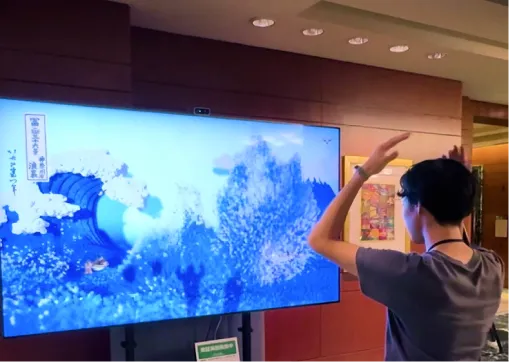
An immersive recruit site replaces the static page with an experience: a scroll-driven narrative that reveals your story as the candidate moves through it, 3D environments like an explorable office or product, motion-led day-in-the-life scenes, interactive values the candidate can act on rather than read, and in some cases a playable browser experience—a small game running in the browser where a candidate explores the company and even talks to NPC characters representing the team.
The key word is interactive. As we argue in our guide to immersive storytelling websites, if there's no interaction, you should have made a video. What makes a recruit experience different from a recruit page is that the candidate participates—they scroll, explore, trigger reveals, make choices. Participation creates memory, and memory is what gets you into a candidate's shortlist.
It is not: a normal careers page with a few scroll animations bolted on, an autoplay hero video, or a template with brand colors swapped in. Those are decoration. Immersive design is structure—the experience itself carries the message.
3. What Talent Expects From a Careers Site
Candidate expectations have moved faster than most careers pages. The table below maps what they now expect to the design response that satisfies it.
| Expectation | Why it matters | Design response |
|---|---|---|
| Authentic culture, not stock | Candidates detect corporate polish-as-fake instantly | Real team voices, day-in-the-life scenes, interactive culture moments |
| Mobile-first | 86% of Gen Z search on smartphones | Performance-budgeted immersive that actually runs on a phone |
| Visual and video over text walls | 73% prefer watching to reading; lower tolerance for dense copy | Motion-led storytelling, short scenes, embedded video |
| Values they can act on | 65% won't apply if values don't align | Interactive values, not a bullet list |
| Frictionless application | Drop-off spikes on broken or non-responsive flows | Immersion that never blocks the apply path |
The engineer case: the medium is the proof
There's one audience where this matters most: engineers. Engineering talent is among the hardest to hire, and the candidates worth winning evaluate a company by what it ships. A technically impressive recruit site—real-time 3D, smooth interaction, fast load—is itself a hiring signal. It demonstrates, before a single conversation, that the team can build, cares about craft, and works in the same space the candidate respects.
It's also a self-selecting filter. Engineers gravitate to companies whose work resonates with their own taste; a strong experience attracts the strong builders and quietly screens out everyone looking for a generic job. In a market this competitive, the recruit site doing the filtering for you is a meaningful advantage.
4. The Engagement Case
The reason immersive recruit sites work isn't aesthetic—it's measurable engagement.
Video beats text decisively. Adding video to a landing page can lift conversion by up to 86% versus a text-only equivalent, and roughly 90% of users say they prefer video over text (Firework / EyeView). Video also compresses information: a single minute of video carries the equivalent of millions of words of text, which is exactly why it conveys atmosphere, team chemistry, and "what it's actually like" in ways a paragraph can't.
Interaction beats passive viewing. When candidates control the pace—scroll through your story, explore a 3D space, trigger reveals—they're participating, not watching. That participation is what turns a visit into a memory and a memory into an application.
A great experience earns its own reach. This is not theoretical for us: the Utsubo studio website generated 5 million organic views on X (Twitter) in 2025—without paid promotion. A well-executed immersive site is a marketing asset that travels, which for recruiting means your employer brand reaching candidates who never searched for a job in the first place. For the mechanics behind this, see our immersive storytelling websites guide.
5. Anatomy of an Immersive Recruit Site
A strong immersive recruit site is a sequence of intentional moments, not a pile of features:
- Hook / brand moment — The first 3 seconds after load must be impactful. Bold visuals, unexpected motion, a clear sense that this isn't a normal careers page.
- Culture story — A scroll-driven narrative of who you are, what you're building, and why it matters—paced like a film, not a brochure.
- Team voices — Real people, real day-in-the-life. Short video and motion beat a grid of headshots.
- Values as interaction — Let candidates do something with your values—explore them, choose paths, see consequences—rather than reading a list.
- Explorable / playable scene — Where it fits, a small game running in the browser: an explorable office or world where NPC characters represent the team and the candidate can hold a dialogue. We built exactly this kind of playable, character-driven browser world for Sougen—a 3D world that runs in any browser in one click—and the same technique applied to recruiting turns "learn about us" into "spend time with us." It also doubles as a culture-as-space tour, the digital cousin of the physical office installations companies use to signal who they are.
- Application flow — The apply path must be frictionless and never break immersion. The experience earns attention; the form must not waste it.
6. Plain vs Immersive Recruit Site
| Dimension | Plain info page | Immersive recruit site |
|---|---|---|
| Primary goal | List openings and requirements | Communicate brand and culture, then convert |
| Culture conveyed by | Text and a few photos | Motion, 3D, interaction, scroll narrative |
| Candidate perception | Generic, forgettable | Premium—"this company gets it" |
| Build | CMS template | Custom (Three.js / WebGPU / GSAP) |
| Engineer signal | Neutral or negative | Strong credibility cue |
| Best for | High-volume, commodity roles | Employer branding, competitive talent |
Both have a place. High-volume hiring for interchangeable roles may not need an immersive build. But for competitive talent—engineers, designers, senior specialists—the plain page is a quiet disadvantage.
7. Budget and Timeline
Immersive recruit sites span a wide range depending on ambition. Rather than fixed prices, think in tiers:
- Simple / motion-enhanced — A custom-designed careers experience with scroll-driven motion (GSAP) and embedded video. The entry point into "this is clearly not a template." Faster to produce.
- Mid / interactive — Adds genuine interactivity, light 3D, and a stronger narrative arc. The candidate explores rather than scrolls past.
- Immersive / flagship — Full scroll-narrative with real-time 3D / WebGPU, a playable or explorable scene, and full storyboarding. The kind of experience that earns organic reach on its own.
Timelines typically run 10–16 weeks from kickoff to launch—simpler builds faster, full 3D productions longer. Crucially, the strategy and storyboarding phases matter as much as development; the experience is only as good as the story it's built to tell. The cost premium over a template reflects skills closer to game development than typical web work—which is precisely why the result reads as credible to technical candidates.
Context:
- Company / what we build: [fill in]
- Roles we most need to win: [fill in, e.g. senior engineers]
- What makes our culture genuinely different: [fill in]
- What candidates currently misunderstand about us: [fill in]
Please help me:
- Articulate a single core narrative the site should communicate
- Identify 3-4 "scenes" that show (not tell) this story
- Flag which scenes are best served by video, 3D, or interaction
- Note the one moment a candidate should remember after leaving
8. Common Pitfalls
- Immersion over usability. A beautiful experience that buries the openings or breaks the apply flow loses candidates. Brand and conversion must coexist.
- No mobile plan. With most candidates on phones, "we'll optimize mobile later" means launching broken for the majority of your audience.
- Motion with no story. Animation is decoration; narrative is structure. Effects without meaning read as noise.
- Treating it like a video. If the candidate only watches, make a video instead—it's cheaper. The justification for an immersive build is interaction.
- Ignoring performance and SEO. Immersive sites aren't built primarily for search, so pair them with discoverable, indexable entry points and a tuned asset pipeline so they load fast.
9. How to Commission One
- Strategy — Define the audience (which roles, which candidates) and the single story the site must tell. Get HR, brand, and leadership aligned before design starts.
- Storyboard — Map the scenes and the one memorable moment. This is where the experience is won or lost.
- Design — Visual language, motion language, and the interactive concepts—prototyped, not just mocked up.
- Build — Production with a studio that has real-time 3D and performance expertise, not a generalist agency.
Choosing the right partner is the highest-leverage decision. A recruit experience lives or dies on execution quality, and most web agencies don't have the 3D and interaction skills it requires. For how to evaluate studios on exactly these criteria, see our guide to the best Japanese web design studios—the selection framework applies internationally.
10. About Utsubo
Utsubo is a tech-first creative studio. We build the kind of work—real-time 3D, WebGPU, playable browser experiences—that resonates with the exact audience companies struggle to hire: engineers and technical talent. That's not incidental. Because we live in that medium, we understand how to speak to that audience, which is precisely what an engineering-focused recruit site needs.
Our projects have been recognized by international awards including Awwwards, FWA, and The Webby Awards: our Vectr case study (a Three.js WebGPU brand site) won FWA of the Day, and our Ivress project won FWA of the Month. As a small, foreign-led studio, our portfolio reached 5 million organic views on X in 2025—proof that the right experience travels on its own. We also build playable, character-driven browser worlds like Sougen—the same capability that turns a recruit site into something candidates actually want to spend time in.
11. Let's Talk
Building a recruit site that has to win competitive talent—engineers especially? We work with teams on immersive, interactive brand experiences: scroll-driven narratives, real-time 3D, and playable browser worlds.
If you're exploring a partnership, let's discuss your project:
- What you're hiring for and the candidates you most need to reach
- Which approach—motion, 3D, or a playable experience—fits your story
- Whether we're the right fit to help you execute
12. Checklist: Commissioning an Immersive Recruit Site
- Defined which roles/candidates the site must win (engineers, seniors, etc.)
- Agreed on a single core brand story before any design
- Storyboarded 3-4 scenes that show culture, not tell it
- Decided per scene: video, 3D, or interaction
- Mobile experience planned from day one (not retrofitted)
- Application flow kept frictionless and never breaks immersion
- Discoverable, indexable entry points paired with the experience
- Performance budget set so 3D loads fast on real devices
- Partner chosen for real-time 3D / interaction expertise, not generalists
- Analytics in place: scroll depth, interaction, application conversion
FAQs
How much does an immersive recruit site cost?
It depends entirely on ambition. A motion-enhanced custom careers experience sits at the entry level; a full flagship build with real-time 3D and a playable scene sits at the top. The cost premium over a CMS template reflects specialized skills closer to game development than typical web work. The right framing is tiers—simple, interactive, immersive—not a single number; scope the experience to the roles you most need to win.
How long does it take to build?
Typically 10–16 weeks from kickoff to launch. Simpler scroll-and-motion builds are faster; full 3D or playable experiences take longer. The strategy and storyboarding phases are as important as development—rushing them is the most common way these projects underperform.
Will an immersive recruit site hurt application conversion?
Not if it's designed correctly. The risk is real only when immersion buries the openings or breaks the apply flow. A well-built experience earns attention and then channels it straight into a frictionless application. Brand and conversion are complementary, not opposed.
Is this the same as a multilingual or foreign-talent recruit site?
No—different problem. Multilingual structure, visa transparency, and language-specific information architecture are their own discipline; we cover that in our guide to foreign-talent recruitment site design. This article is about brand storytelling and immersive design. The two can absolutely combine on one project.
Does an immersive recruit site work on mobile?
Yes, with intentional design. Most candidates are on phones, so mobile isn't an afterthought—it's the primary case. That means tap interactions instead of hover, aggressively optimized 3D assets, and a fast first load. "Mobile later" means launching broken for the majority.
Will it hurt my SEO?
Immersive experiences aren't built primarily for search ranking—they're built for brand impact and organic sharing. The fix is a hybrid: discoverable, indexable pages for search, and the immersive experience for conversion. See our immersive storytelling guide for how to balance the two.
What's the difference versus just adding animations to our careers page?
Animations are decoration; immersive design is structure. More importantly, interaction is the dividing line. If a candidate can only watch—if they can't explore, control, or play—you should have made a video. The justification for the build is participation.
Who should own this project internally?
It works best with three parties at the table: HR/talent acquisition (the goals), brand/marketing (the story), and the studio (the execution). Misalignment between HR and brand is the most common reason these projects stall—settle the single core story before design begins.


 Technology-First Creative Studio