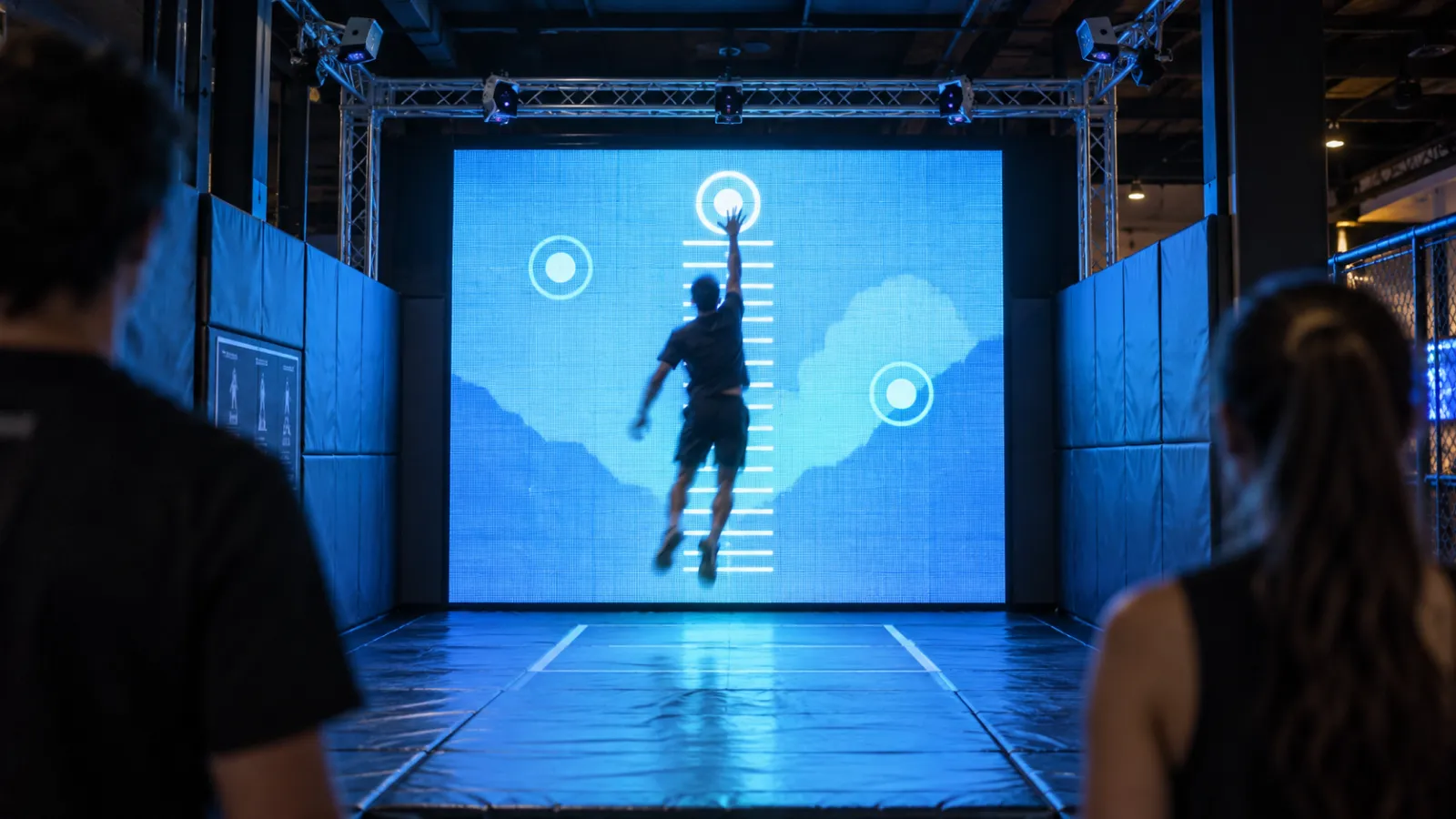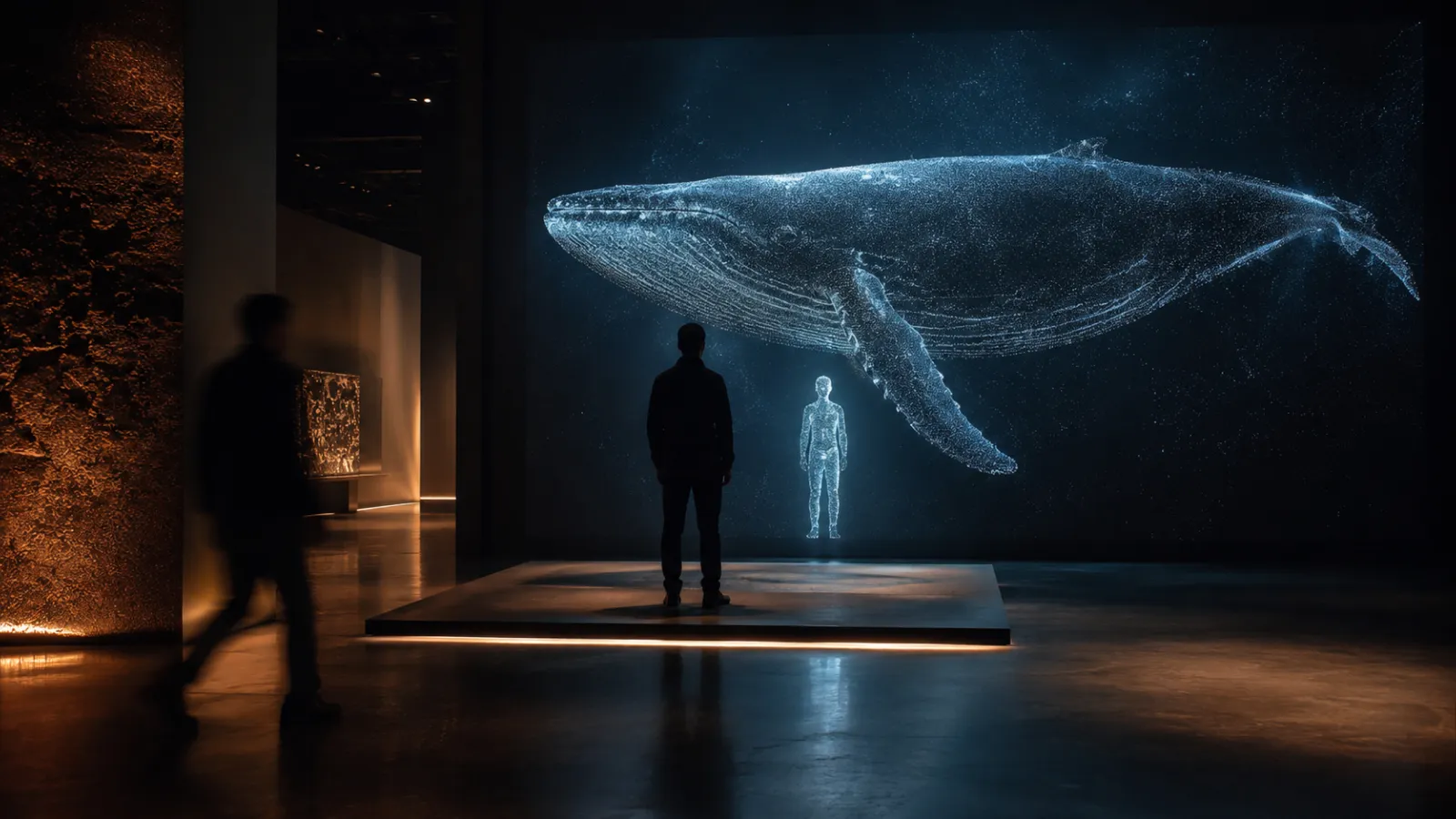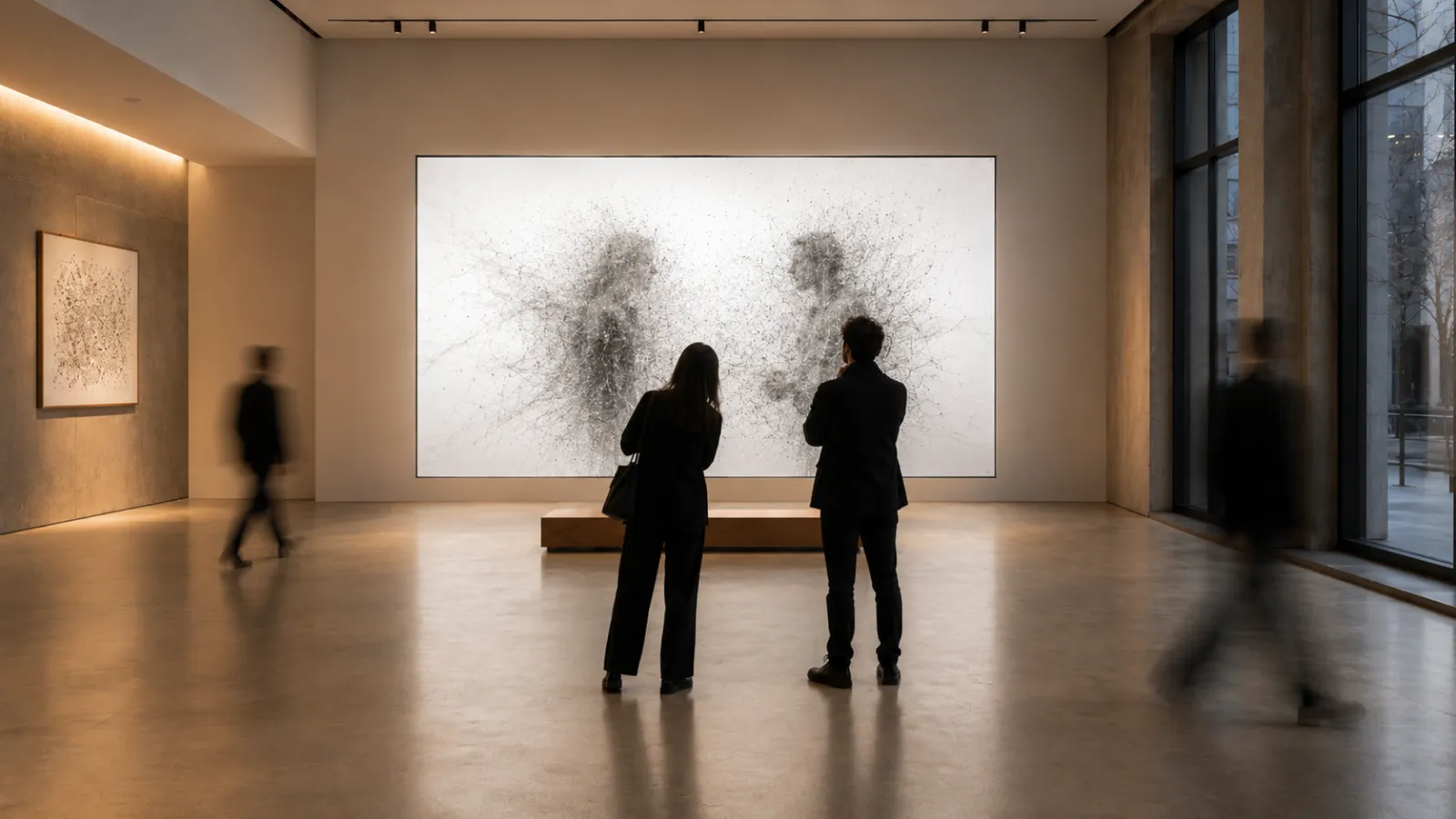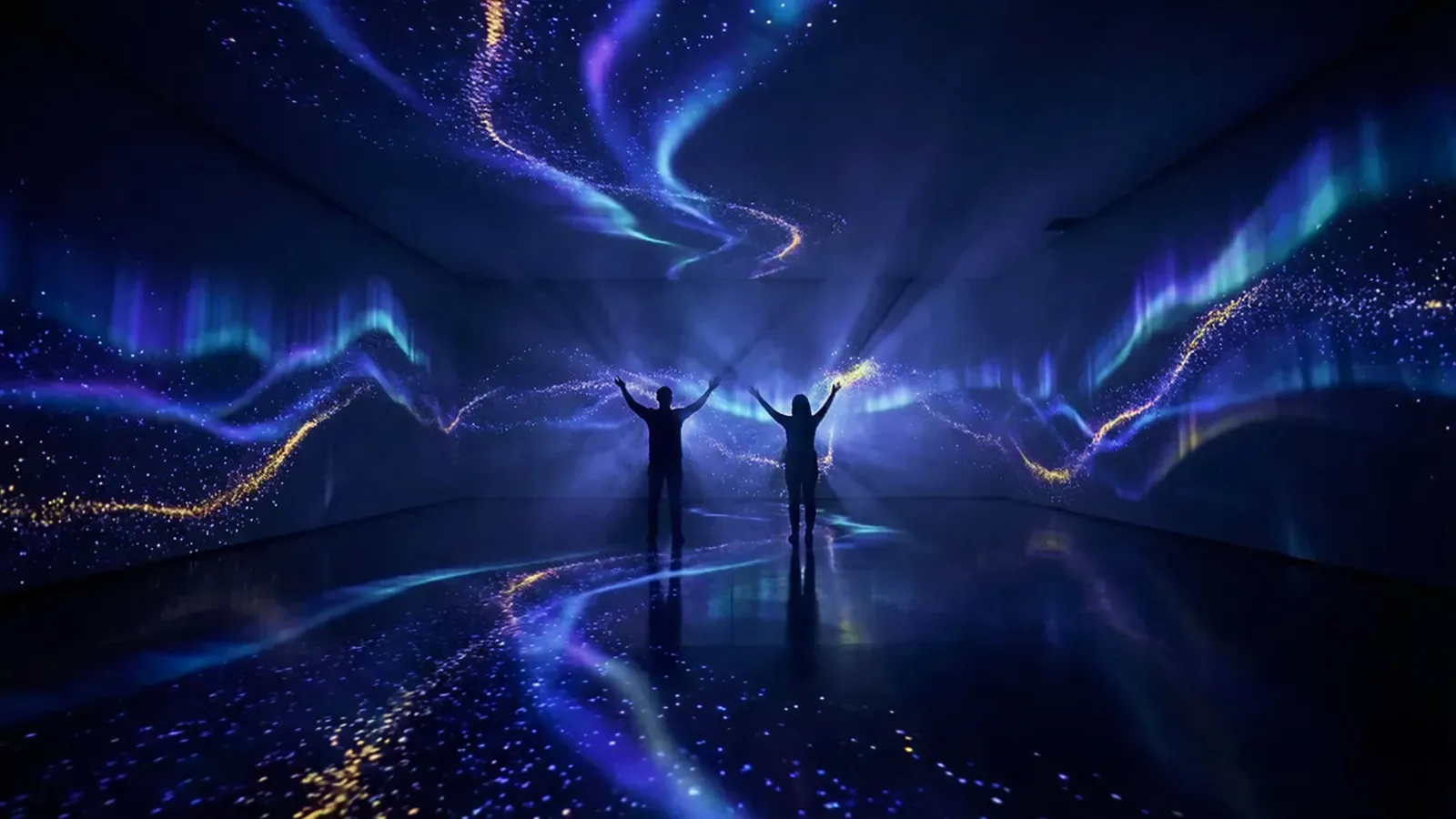
Step into a room-sized projection. Particles swirl around you, responding to your movement. Thirty seconds in, you forget you are in a building. Your pulse slows. Time bends. You reach out to touch something that is not there.
This is not magic. It is neuroscience. Over the past decade, researchers have identified at least seven distinct brain mechanisms that activate differently in immersive 3D environments compared to flat screens. The result is a convergence effect — mirror neurons, dopamine loops, spatial presence, and awe circuits firing together — that no amount of screen resolution can replicate.
This article maps those seven mechanisms, cites the studies behind them, and translates each into a design principle for anyone commissioning or creating immersive installations.
Who this is for: Experience designers, museum directors, brand strategists, and anyone commissioning immersive installations who needs neuroscience-backed evidence for why spatial experiences outperform flat screens.
Key Takeaways
- Immersive 3D activates at least 7 distinct neural mechanisms that flat screens cannot fully engage — mirror neurons, spatial presence, dopamine reward loops, awe circuits, embodied cognition, flow states, and episodic memory encoding.
- EEG studies show higher beta-band brain activity in 3D vs. 2D environments, and VR produces 60% higher peak neurologic immersion than identical 2D content.
- Awe — the emotion triggered by vastness and cognitive accommodation — can be deliberately engineered in digital environments through scale, impossible physics, and perspective shifts.
- Visitors in immersive spaces show 2.5x longer dwell times, 8.8% higher recall accuracy, and 3.75x stronger emotional connection than flat-screen equivalents.
- Each mechanism maps to a specific design principle: first-person perspective, spatial richness, progressive surprise, vastness moments, and physical exploration.
- The science comes with caveats — immersion intensifies emotion but can impair factual recall, and audiences habituate over time.
- Decision-makers can use these findings to build evidence-based business cases for immersive installations over traditional displays.
1. The Flat Screen Problem: Why 2D Falls Short
A flat screen is a window. You look through it at content on the other side. Your brain knows the difference.
EEG research confirms this. A study published in PLOS One found that 3D environments generate significantly higher beta-band power (21-30 Hz) than 2D presentations — a marker of elevated cognitive engagement and emotional arousal. The brain processes the two modes differently at a physiological level.
A 2024 study by van Limpt-Broers et al. in Virtual Reality went further. Using EEG during a VR space journey, they found significantly reduced beta and gamma power during the defining "overview effect" moment — indicating the brain was actively restructuring its internal models to accommodate the experience. This is not the same brain state you enter while watching a YouTube video.
The distinction matters for anyone investing in visitor experiences. A flat display communicates information. An immersive space transforms how the brain processes that information. The seven mechanisms below explain why.
2. Mirror Neurons: Your Brain Rehearses What It Sees
When you watch someone reach for an object, neurons in your premotor cortex fire as though you were reaching for it yourself. These are mirror neurons, first documented by Rizzolatti and Craighero (2004) in their foundational review in the Annual Review of Neuroscience. The brain does not merely observe — it internally rehearses.
2-1. Why Immersive 3D Amplifies the Effect
The critical variable is perspective. A 2022 study by Fan and Luo published in Behavioural Brain Research found that VR-based action observation from a first-person perspective produces stronger mirror neuron system activation than flat-screen viewing — larger event-related potentials, more significant EEG suppression, and enhanced functional connectivity between the mirror neuron system and sensorimotor cortex.
A VR-fMRI study by Adamovich et al. (2009) confirmed the finding: VR tasks recruited significantly greater activation of the inferior parietal lobule — the human homologue of primate mirror neuron regions.
2-2. What This Means for Installation Design
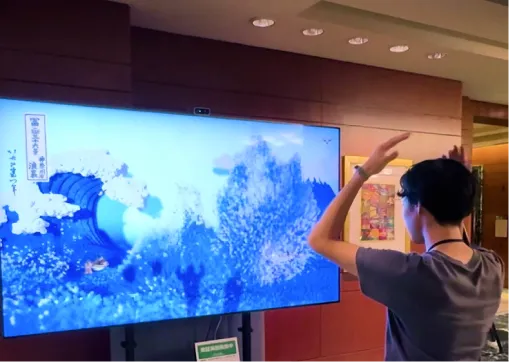
When visitors see interactive 3D content responding to their movements from a first-person perspective, their mirror neuron systems fire more intensely than when viewing the same content on a flat screen. This creates a visceral sense of participation — the brain does not merely observe the experience, it internally rehearses it.
Design principle: Always present content from the visitor's own perspective. First-person interactions — where the environment responds to your body — amplify neural engagement more than third-person observation.
3. Spatial Presence: When the Digital World Becomes "Real"
Spatial presence is the subjective feeling of "being there" — the moment when a mediated environment becomes your primary frame of reference and the physical world fades from awareness.
3-1. The Two-Step Process
Wirth et al. (2007) formalized this as a two-step cognitive process in Media Psychology. First, the brain constructs a mental model of the mediated space — a Primary Egocentric Reference Frame (PERF). Second, if immersive cues are strong enough and distractions are low enough, the virtual environment wins the "reference frame competition" and becomes where you feel you are.
Schubert (2009) described spatial presence as a "cognitive feeling" — feedback from unconscious spatial processing. Presence develops specifically from "the representation of navigation of the own body as a possible action in the virtual world." If you feel you could walk deeper into the environment, presence strengthens.
3-2. New Evidence: Presence as Awe Amplifier
A 2025 study by Jia et al. (N=179 across two experiments) demonstrated that VR significantly enhances spatial presence compared to 2D media, and this presence directly boosts the core dimensions of awe: perceived vastness, need for accommodation, and self-diminishment. Spatial presence is not just a nice-to-have — it is the gateway mechanism for deeper emotional transformation.
Design principle: Engineer spatial presence deliberately. Step 1 requires rich spatial cues — depth, parallax, consistent spatial audio, environmental detail. Step 2 requires minimizing distractions from the physical environment — ambient noise, visible hardware, exit signs. The more the space feels navigable, the stronger the presence.
4. Dopamine and Novelty: The Exploration Reward Loop
Interactive 3D installations are novelty-generating machines. Every gesture produces a unique visual response — and the brain's dopamine system treats each novel outcome as a micro-reward.
4-1. The Neuroscience of "What Happens Next?"
Bunzeck and Duzel (2006) demonstrated in Neuron that the human substantia nigra / ventral tegmental area (SN/VTA) — a dopamine-releasing midbrain structure — codes absolute stimulus novelty. Novel images activated the SN/VTA, and this activation correlated directly with enhanced learning.
The finding goes deeper. Wittmann et al. (2007) showed that even the anticipation of novelty activates the SN/VTA and hippocampus simultaneously. The dopamine-releasing regions and memory-forming regions fire in concert when novelty is expected.
4-2. 60% Higher Peak Immersion in VR
A 2025 randomized controlled trial by Keckler et al. with 70 participants measured "neurologic immersion" — a composite metric derived from attention (dopamine binding in prefrontal cortex) and emotional resonance (oxytocin release). VR produced 60% higher peak immersion than identical 2D content (p=0.014, Cohen's d=0.61). These peaks predicted empathic concern, which in turn mediated prosocial volunteering behavior.
4-3. The Self-Reinforcing Loop
This creates a cycle: explore → encounter novelty → receive dopamine → want to explore more. Installations that build expectation — visual foreshadowing, progressive reveals, moments of suspense before a transition — are neurochemically priming visitors for deeper engagement. The dopamine-hippocampus coupling also means novel experiences are simultaneously more pleasurable and more memorable.
Design principle: Layer progressive surprises. Start simple, then reveal deeper layers of interaction. Build moments of anticipation before visual transitions. Never let the installation feel predictable — varied responses to similar gestures keep the dopamine loop active.
5. The Neuroscience of Awe: Vastness Meets Accommodation
Awe is the emotion you feel when something exceeds your current framework for understanding the world. It is cognitively distinct from surprise, beauty, or excitement — and it can be deliberately engineered in digital environments.
5-1. The Two-Component Framework
Keltner and Haidt (2003) defined awe as requiring two cognitive appraisals: perceived vastness (something larger than the self — physical, temporal, or conceptual) and a need for accommodation (the experience exceeds current mental schemas, forcing cognitive restructuring).
5-2. The "Small Self" Effect
Across five studies with 2,078 participants, Piff et al. (2015) demonstrated that awe diminishes the individual self and increases prosocial behavior. Dispositional awe predicted greater generosity, ethical decision-making, and prosocial values. A naturalistic awe induction — standing in a grove of towering trees — enhanced prosocial helping and decreased entitlement. The mechanism: feelings of a "small self."
For brands and institutions, this is significant. Visitors who experience awe leave with diminished ego-focus and increased openness to connection — making them more receptive to messages, more likely to share experiences, and more generous toward the hosting organization.
5-3. VR Can Deliberately Induce Awe
Chirico et al. (2017) in Scientific Reports found that immersive VR significantly enhanced the intensity of self-reported awe and sense of presence compared to 2D screen videos. A 2018 follow-up in Frontiers in Psychology went further: three specifically designed VR environments (tall trees, high snow mountains, Earth view from space) induced significantly greater awe than neutral stimuli. Awe can be designed.
The 2024 van Limpt-Broers EEG study confirmed this at the neural level — the "overview effect" produced measurable EEG changes and elevated self-transcendence scores (AWE-S median 4.73 out of 5).
5-4. Default Mode Network Suppression
During awe, the Default Mode Network (DMN) — the brain's self-referential "autopilot" — quiets down. This is the same network that drives mind-wandering and rumination. When DMN suppresses, attention shifts outward, self-boundaries soften, and the brain becomes more receptive to new information. Immersive environments that trigger awe effectively reset the visitor's mental state.
Design principle: Create moments of vastness. Scale matters — environments that dwarf human proportion, transitions that reveal impossible expanses, perspective shifts from intimate to infinite. Combine physical scale with conceptual scale (deep time, cosmic distances, evolutionary timelines) for stronger accommodation triggers.
6. Embodied Cognition: Why Moving Your Body Changes How You Think
The gap between clicking a mouse and moving your body through a responsive 3D space is not ergonomic — it is epistemological. How you physically interact with something shapes how you conceptually understand it.
6-1. Grounded Cognition
Barsalou (2008) rejected the traditional view that cognition is computation independent of the body. In his grounded cognition framework, sensory-motor activation patterns become "perceptual symbols" stored in long-term memory. Physical interaction does not just deliver information — it shapes the cognitive structures used to understand it.
6-2. Museum Evidence
Research on whole-body interaction in museum installations found that visitors who moved more dynamically reported more insight. Full-body motion tracking in interactive installations showed positive effects on engagement, spatial performance, and temporal awareness. The installation by Bristol's Brigstow Institute, "I Am Your Mirror" (2025), explicitly targets mirror-neuron networks through movement and creative technology, fostering social connection and empathy alongside awe.
6-3. Proprioceptive Dialogs
Research on embodied learning through immersive VR found that haptic feedback plays a "crucial, transformative role" in spatial cognition. Simple tasks like resizing or rotating objects develop into proprioceptive dialogs — the body's awareness of its position actively structures perception rather than merely informing it.
Design principle: Enable physical exploration. Gesture-based interaction, body tracking, proximity sensors, and spatial audio that responds to movement create embodied experiences that produce fundamentally deeper cognitive representations than the same content delivered via mouse and keyboard.
7. Flow State: When Time Disappears
When visitors lose track of time in an installation, they are in flow — the optimal state of total absorption first described by Csikszentmihalyi. Flow requires clear goals, immediate feedback, and a balance between challenge and skill.
7-1. Immersive 3D Satisfies Flow Conditions Naturally
Interactive 3D installations inherently satisfy several flow preconditions. Visual feedback is immediate (gestures produce instant responses). The spatial environment provides implicit goals (explore, discover, transform). The challenge of learning a new interaction paradigm matches the gradual skill acquisition of a first-time visitor.
7-2. VR Flow and Time Distortion
Rutrecht et al. (2021) found that VR participants experienced stronger flow states and better performance than 2D counterparts. Crucially, the more flow participants experienced, the less they thought about time and the faster time passed subjectively.
Lemmens and von Munchhausen (2023) confirmed that medium difficulty produces the strongest flow in VR, with time passing faster than in easy or hard conditions. Too easy and visitors disengage; too complex and they become frustrated.
Design principle: Design a progressive difficulty curve. Start with simple, obvious interactions that anyone can discover in the first 5 seconds. Layer hidden complexity underneath — deeper interactions, Easter eggs, evolving responses — that reward sustained engagement without frustrating newcomers.
8. Memory: Why Immersive Experiences Stick
People say "I remember being there" about immersive installations, not "I remember reading that." This is not just language — it reflects a fundamental difference in how the brain encodes the information.
8-1. Place Cells and Episodic Memory
John O'Keefe's discovery of place cells in the hippocampus — awarded the 2014 Nobel Prize — revealed that the brain anchors memories to spatial locations. During virtual navigation tasks, place-responsive hippocampal cells activated during encoding become active again during free recall, even when participants are not navigating. Spatial context guides memory retrieval.
8-2. 8.8% Higher Recall in VR
Krokos, Plaisant, and Varshney (2019) tested 40 participants using virtual memory palaces. Head-mounted display users achieved 8.8% higher overall recall accuracy (median 90.48% vs. 78.57% desktop), with 40% of participants scoring at least 10% higher in VR. The advantage: VR leverages vestibular and proprioceptive senses, allowing users to map information relative to their bodies.
8-3. The Training Data
PwC's VR training study found VR-trained employees completed training 4x faster than classroom instruction, scored 44% higher on assessments than e-learners, and were 275% more confident to act on what they learned. VR learners felt 3.75x more emotionally connected to content than classroom learners.
When information is experienced within a navigable 3D space, the hippocampus encodes it as episodic memory — a personal event with spatial, temporal, and emotional context — rather than semantic memory (abstract facts). Episodic memories are more vivid, more emotionally charged, and more resistant to decay.
Design principle: Design installations as explorable spaces, not sequential presentations. Let visitors move through content spatially rather than consuming it linearly. Anchor key messages to specific locations within the experience — the hippocampal place cell system will do the rest.
9. The Numbers: Measurable Outcomes
For decision-makers building business cases, the research provides concrete metrics across four categories.
Engagement
| Metric | Finding | Source |
|---|---|---|
| Dwell time | Interactive museum installations produce 2.5x longer dwell times than static exhibits | Museum industry data |
| Web engagement | Immersive 3D content increases user engagement time by up to 70% | Noomo Agency |
| Retail dwell time | AR navigation increases customer dwell time by 40% | SingleGrain |
Recall and Learning
| Metric | Finding | Source |
|---|---|---|
| Recall accuracy | VR memory palaces: 8.8% higher than desktop | Krokos et al., 2019 |
| Assessment scores | VR-trained employees score 44% higher than e-learners | PwC, 2020 |
| Training speed | VR training completed 4x faster than classroom | PwC, 2020 |
| Message retention | AR experiences: 70-80% vs. 10-20% for standard ads | Influencers Time |
Emotional Response
| Metric | Finding | Source |
|---|---|---|
| Peak immersion | VR produces 60% higher peak neurologic immersion vs. 2D | Keckler et al., 2025 |
| Emotional connection | VR learners feel 3.75x more emotionally connected | PwC, 2020 |
| Brand connection | 68% of immersive attendees report stronger brand connection | Immersive Experience Network |
| Confidence to act | VR learners 275% more confident to apply learning | PwC, 2020 |
Business Impact
| Metric | Finding | Source |
|---|---|---|
| Add-to-cart | 3D product viewers: 44% more likely to add to cart | Immexive |
| Conversion rate | Immersive product demos: 22% higher conversion | SingleGrain |
| Brand recall | XR storytelling: 35% improvement in brand recall | SingleGrain |
| ROI boost | Experiential campaigns deliver 65% ROI boost | ProfileTree |
These numbers represent the cumulative effect of the seven mechanisms working together. No single mechanism produces these results alone — it is the convergence of mirror neurons, presence, dopamine, awe, embodied cognition, flow, and episodic memory encoding that creates the measurable gap between immersive and flat.
10. Design Principles: 5 Neuroscience-Backed Rules for Digital Awe
Each principle maps directly to a neural mechanism.
10-1. Design for First-Person Perspective (Mirror Neurons)
Present content from the visitor's viewpoint. Environments that respond to your gestures — not a character's actions on screen — fire mirror neurons more intensely. First-person interactive experiences produce stronger motor resonance than third-person observation.
10-2. Build Spatial Richness (Spatial Presence)
Depth, parallax, spatial audio, environmental detail. The brain needs enough data to construct a mental model of the space. Minimize physical-world intrusions — visible equipment, ambient noise, harsh lighting transitions. The environment should feel like a place you could move through.
10-3. Layer Progressive Surprises (Dopamine and Novelty)
Never let the experience become predictable. Start with accessible interactions, then reveal deeper layers. Build anticipation before transitions. Vary responses to similar gestures. Each novel outcome is a micro-reward that drives further exploration.
10-4. Create Vastness Moments (Awe)
At least three moments should exceed human scale — environments that dwarf visitors, transitions from intimate to infinite, perspective shifts that reveal unexpected expanses. Combine physical vastness with conceptual vastness (deep time, cosmic distances) for stronger accommodation triggers. The experience economy is fundamentally about engineering these transformative moments.
10-5. Enable Physical Exploration (Embodied Cognition)
Gesture controls, body tracking, proximity sensors, responsive spatial audio. Moving through content creates deeper cognitive representations than clicking through it. Design for the full body, not just the hands. Installations where visitors can approach, retreat, circle, and reach create richer proprioceptive feedback loops.
These principles work best in combination. An installation that uses first-person perspective (mirror neurons), surrounds the visitor with spatial richness (presence), responds to movement (embodied cognition), layers progressive surprises (dopamine), and includes at least one moment of genuine vastness (awe) will activate all seven mechanisms simultaneously.
For context on how these principles translate to specific venues, see our guides on interactive museum installations, immersive storytelling on the web, and interactive art.
11. The Counterarguments: What to Watch For
The neuroscience is compelling, but it comes with caveats that inform better design.
11-1. The Emotion-Memory Tradeoff
A study by Bujic et al. (2023) with 87 participants found that immersion intensifies emotional response but can impair factual recall. The brain prioritizes feeling over facts when fully immersed. This means installations designed to convey specific information — museum labels, product specifications, safety instructions — need intentional "decompression" moments where immersion softens and cognitive processing can catch up.
11-2. Digital Saturation
As audiences encounter more immersive experiences, the novelty effect diminishes. What felt awe-inspiring in 2020 may feel routine by 2026. Designers must continuously evolve the interaction vocabulary — new modalities, unexpected combinations, context-dependent responses — to stay ahead of habituation.
11-3. Vergence-Accommodation Conflict
In headset-based VR, the eyes focus at a fixed distance (the display) while converging at varying virtual distances. This mismatch can cause discomfort and limits session length. Projection-based installations and spatial computing avoid this entirely, which is one reason why room-scale immersive installations often outperform headset experiences for public venues.
11-4. Individual Variation
The 2025 Barth et al. study found that immersive video effects were equivalent for VR novices and experienced users — encouraging for public installations. But He et al. (2025) found that children respond more to fictional environments while adults respond to high-fidelity graphics. Audience matters. Know who your visitors are and design accordingly.
These are not reasons to avoid immersive design — they are constraints that make the design better. The best installations account for these tradeoffs explicitly.
12. About Utsubo
Utsubo is a creative studio specializing in interactive installations and immersive digital experiences. We combine Three.js expertise with physical installation design to create memorable brand moments — from museum exhibits to hotel lobbies to retail activations.
What we offer:
- Custom interactive installations for museums, retail, and hospitality
- Three.js and WebGL development
- End-to-end design and implementation
- Sound design integration for multi-sensory experiences
13. Let's Talk
Building something ambitious with 3D on the web or in physical space? We work with teams on interactive experiences, product configurators, and immersive brand projects.
If you are exploring a partnership, let's discuss your project:
- What you are building and the constraints you are working with
- Which technical approach makes sense for your goals
- Whether we are the right fit to help you execute
Checklist: Designing for Digital Awe
- Does the experience offer first-person perspective?
- Are there at least 3 moments of vastness or scale shift?
- Does interaction produce novel, unexpected visual feedback?
- Can visitors explore physically (gesture, movement, proximity)?
- Is the difficulty curve progressive (simple to complex)?
- Are physical-world distractions minimized (hardware hidden, ambient noise managed)?
- Have you planned decompression moments for the emotion-memory tradeoff?
- Does the spatial design feel navigable (not just viewable)?
- Have you tested with your target audience (children vs. adults respond differently)?
- Does the installation evolve over time to counter habituation?
My concept:
- Environment type: [describe the space]
- Interaction method: [gesture / touch / proximity / movement]
- Key visual moments: [describe 2-3 planned highlights]
- Target audience: [who will experience this]
- Duration: [expected visitor dwell time]
Please evaluate against these 5 principles and score each 1-5:
- First-person perspective (mirror neuron activation)
- Spatial richness (spatial presence formation)
- Progressive surprise (dopamine reward loop)
- Vastness moments (awe induction)
- Physical exploration (embodied cognition)
For any principle scoring below 3, suggest specific improvements.
FAQs
What is digital awe?
Digital awe is the emotion of awe — a response to perceived vastness that exceeds your current mental frameworks — triggered by a digital or technologically mediated experience rather than a natural phenomenon. Research by Chirico et al. (2017, 2018) has demonstrated that VR environments can reliably induce awe with measurable physiological and psychological effects comparable to real-world awe experiences.
How do mirror neurons respond to immersive 3D differently than flat screens?
Mirror neurons fire when you observe an action as if you were performing it yourself. In immersive 3D, particularly from a first-person perspective, the mirror neuron system shows larger event-related potentials, stronger EEG suppression, and enhanced connectivity with the sensorimotor cortex compared to flat-screen observation (Fan and Luo, 2022). The brain rehearses the experience more intensely when it feels spatially present.
Why do immersive experiences feel more "real" than screens?
Spatial presence theory explains this as a two-step process (Wirth et al., 2007). First, rich spatial cues allow the brain to build a mental model of the virtual space. Second, if those cues are compelling enough, the brain adopts the virtual environment as its primary reference frame — the physical world fades and the digital world becomes "where you are." This is a cognitive shift, not just a perceptual one.
Can you measure the difference between immersive and flat experiences?
Yes, across multiple dimensions. EEG shows higher beta-band activity in 3D vs. 2D. Peak neurologic immersion is 60% higher in VR than 2D (Keckler et al., 2025). Recall accuracy is 8.8% higher in VR memory palaces (Krokos et al., 2019). Emotional connection is 3.75x stronger (PwC, 2020). Dwell time in interactive installations is 2.5x longer than static exhibits.
What is spatial presence and why does it matter for installations?
Spatial presence is the subjective feeling of "being there" in a mediated environment. It matters because it is the gateway mechanism — once spatial presence is established, awe, embodied cognition, and episodic memory encoding all strengthen. Without spatial presence, visitors remain aware they are looking at a screen, and the deeper neural mechanisms are not fully engaged.
Does the memory advantage of immersive experiences last?
Immersive experiences are encoded as episodic memories (personal events with spatial and emotional context) rather than semantic memories (abstract facts). Episodic memories are more vivid and more resistant to decay. Research on VR training shows participants retain and act on information better months after VR learning compared to traditional methods (PwC, 2020). However, the Bujic et al. (2023) study found that factual details may be recalled less accurately when emotional immersion is high — design accordingly.
What budget is needed for an awe-inspiring installation?
Immersive installations that activate all five design principles typically start at $50,000 for a single-room projection-based experience and scale to $500,000+ for multi-room, multi-sensory environments. For detailed budget breakdowns by project type, see our interactive installation cost guide. The neuroscience suggests the ROI justification is strong — 2.5x dwell time (museum industry data), 3.75x emotional connection (PwC, 2020), and a 65% ROI boost for experiential campaigns (ProfileTree); see "The Numbers: Measurable Outcomes" above for the full sourced evidence.
How does embodied cognition apply to installation design?
Embodied cognition means the body's physical interaction with content shapes how the brain understands that content. In installation design, this translates to: gesture controls produce deeper understanding than button presses, walking through a space produces better memory than scrolling through it, and reaching toward content creates stronger neural encoding than clicking on it. Design for the full body, not just the eyes and fingertips.


 Design your next signature moment