A guide to interactive technology in zoos and aquariums — what works, what it costs, and how to keep the animal as the star.
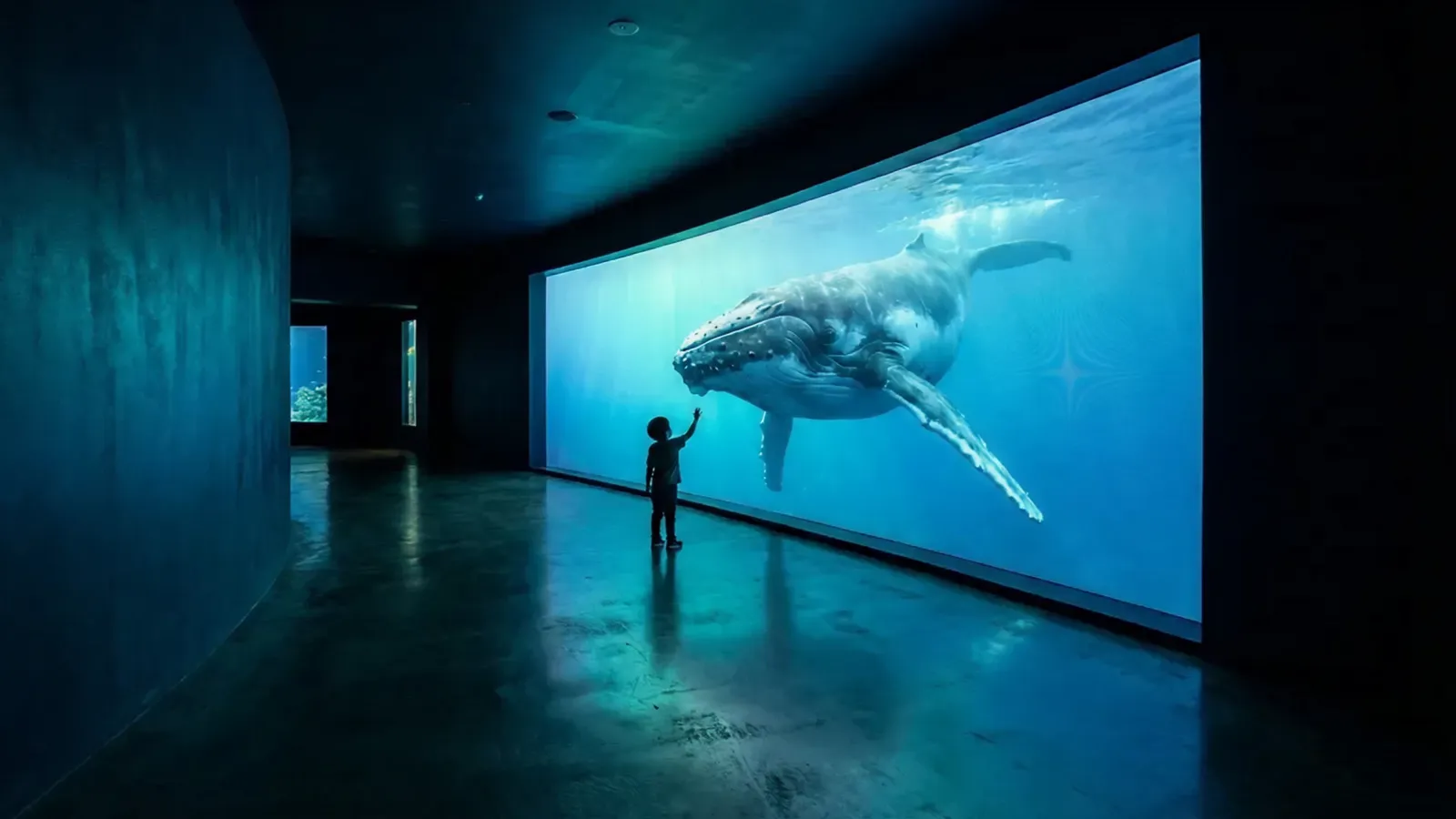
A visitor stands in front of a 137-square-meter LED facade. Behind the glass, a virtual whale notices her, turns, and swims closer. She steps to the left; a ray follows. Her child waves — a dolphin rolls. No touchscreen, no app, no instructions. Just a body and a response.
This is NEMO, Oceanic Splendours at Pairi Daiza in Belgium, one of a growing number of interactive installations proving that technology and live-animal institutions can coexist — when the design gets the balance right.
But the balance is the hard part.
Zoos and aquariums sit at the center of a tension that museums and retail never face: every screen competes with a living creature for attention. Get it wrong, and visitors stare at pixels while an endangered species goes unnoticed three meters away. Get it right, and technology becomes invisible scaffolding that deepens the visitor's emotional connection to the animal — and to conservation.
This guide covers what works, what doesn't, and what it costs.
Who this is for: Exhibit directors, capital campaign managers, and COOs at AZA/EAZA-accredited zoos and aquariums planning exhibit refreshes with interactive technology.
Key Takeaways
- Interactive installations in zoos and aquariums range from $100K café projections to $88M flagship exhibit zones — digital/AV typically represents 10–30% of total project cost
- Immersive exhibits produce 2–6x longer dwell times and significantly more conservation-related visitor comments vs. static displays
- San Diego Zoo's Wildlife Explorers Basecamp ($88M, 2022) helped drive record attendance of 5.6 million — the highest in the institution's history
- Body-tracking, touchless, and sensor-based interactions are replacing touchscreens — better for hygiene, durability, and the "wow" factor
- AZA/EAZA/WAZA guidelines require technology to support animal welfare first: animals must have choice and control in any proximity interaction
- The strongest installations make the animal the star — technology reveals what the naked eye can't see, not what a screen can invent
- Conservation storytelling through immersive tech increases likelihood of donation by 48% vs. traditional flat video (Bremen University study)
1. The Nature-Tech Tension — Why Zoos Are Different
1-1. The distraction risk
Every institution that puts a screen near an animal exhibit faces the same question from staff, board members, and visitors:
"Will people look at the screen instead of the animal?"
It's a valid concern. A 2019 study published in the Journal of Zoo and Aquarium Research found that poorly placed interactive stations can indeed redirect attention away from live exhibits — especially among younger visitors who gravitate toward anything with a screen.
But the same research revealed the opposite effect when interactives were designed as bridges to the animal, not alternatives. Walk-through immersive exhibits produced 6x longer dwell times and significantly deeper conservation engagement.
1-2. When technology enhances vs. competes
The difference comes down to design intent:
| Competes with the animal | Enhances the animal |
|---|---|
| Standalone game unrelated to the exhibit | Microscope station showing what you can't see with the naked eye |
| Touchscreen quiz in front of a viewing window | Projection mapping that extends the habitat beyond the glass |
| VR headset that isolates the visitor | Body-tracked wall that mirrors the animal's movement |
| Generic species database on a kiosk | Real-time data visualization of migration or population |
The installations that work treat technology as a lens, not a destination. They make the visitor see the animal differently — not look away from it.
2. What Works — Proven Installation Types for Zoos & Aquariums
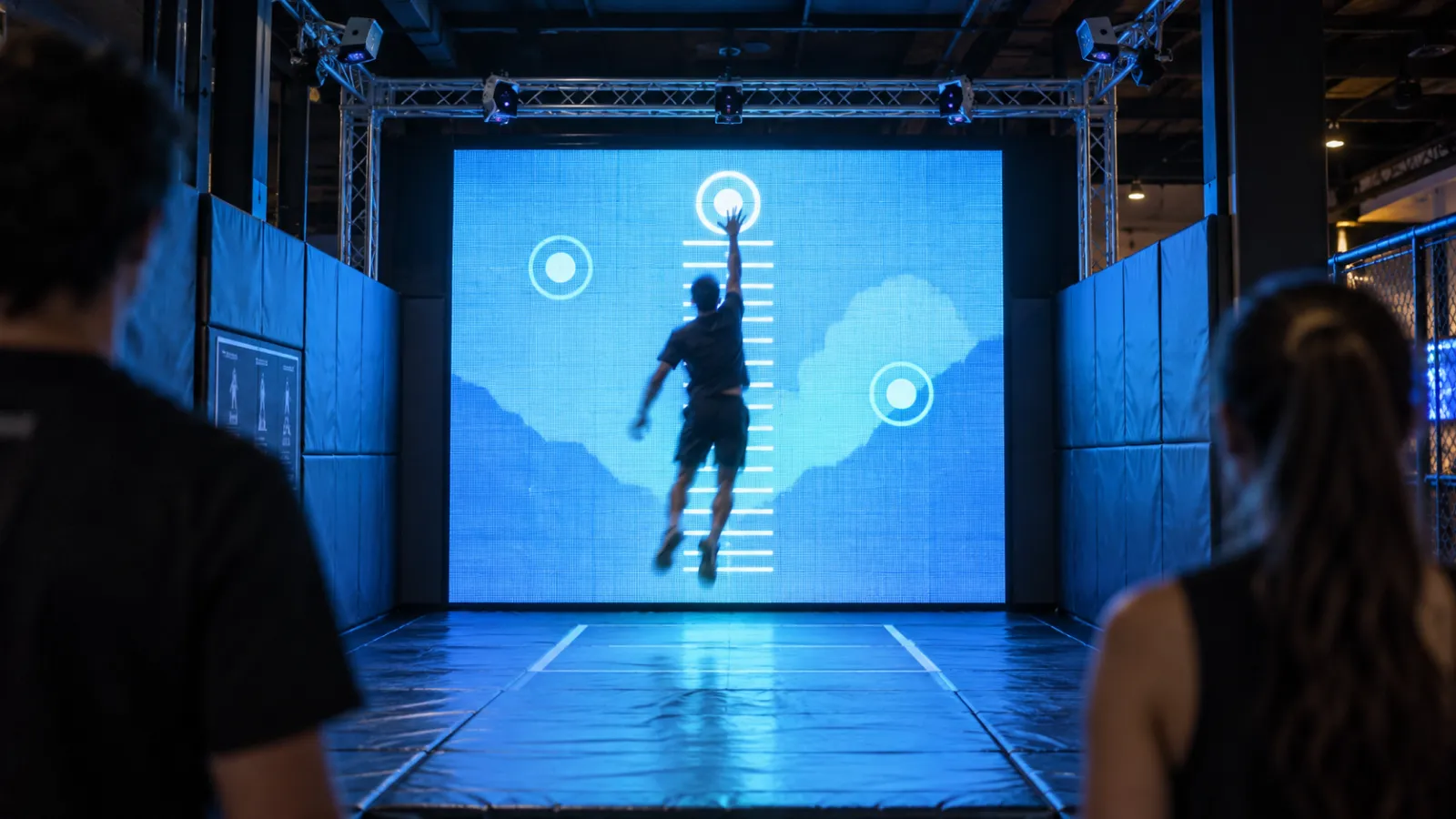
2-1. Body-tracked immersive walls
Sensor-based installations where visitors control visuals with their body — no touchscreen, no controller, no instructions needed.
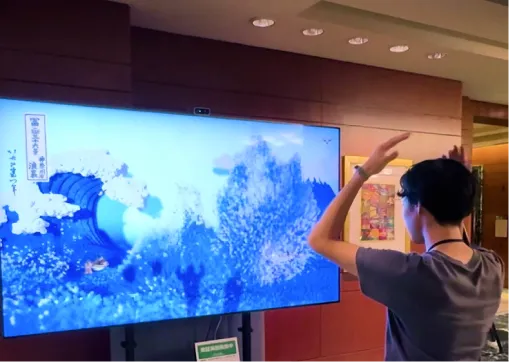
This is the approach we used at Expo 2025 Osaka with Waves of Connection, a body-tracked installation where visitors moved Hokusai's Great Wave using nothing but their gestures. Up to six people were tracked simultaneously, with a million particles responding in real time via WebGPU. Children queued again and again; adults who started out hesitant ended up dancing in front of the screen.
The same technology applies directly to zoo and aquarium contexts:
- Underwater movement: visitors "swim" alongside projected fish, with their gestures creating currents and disturbances
- Habitat simulation: body movement triggers ecosystem changes — raise your arms and a flock of birds takes flight
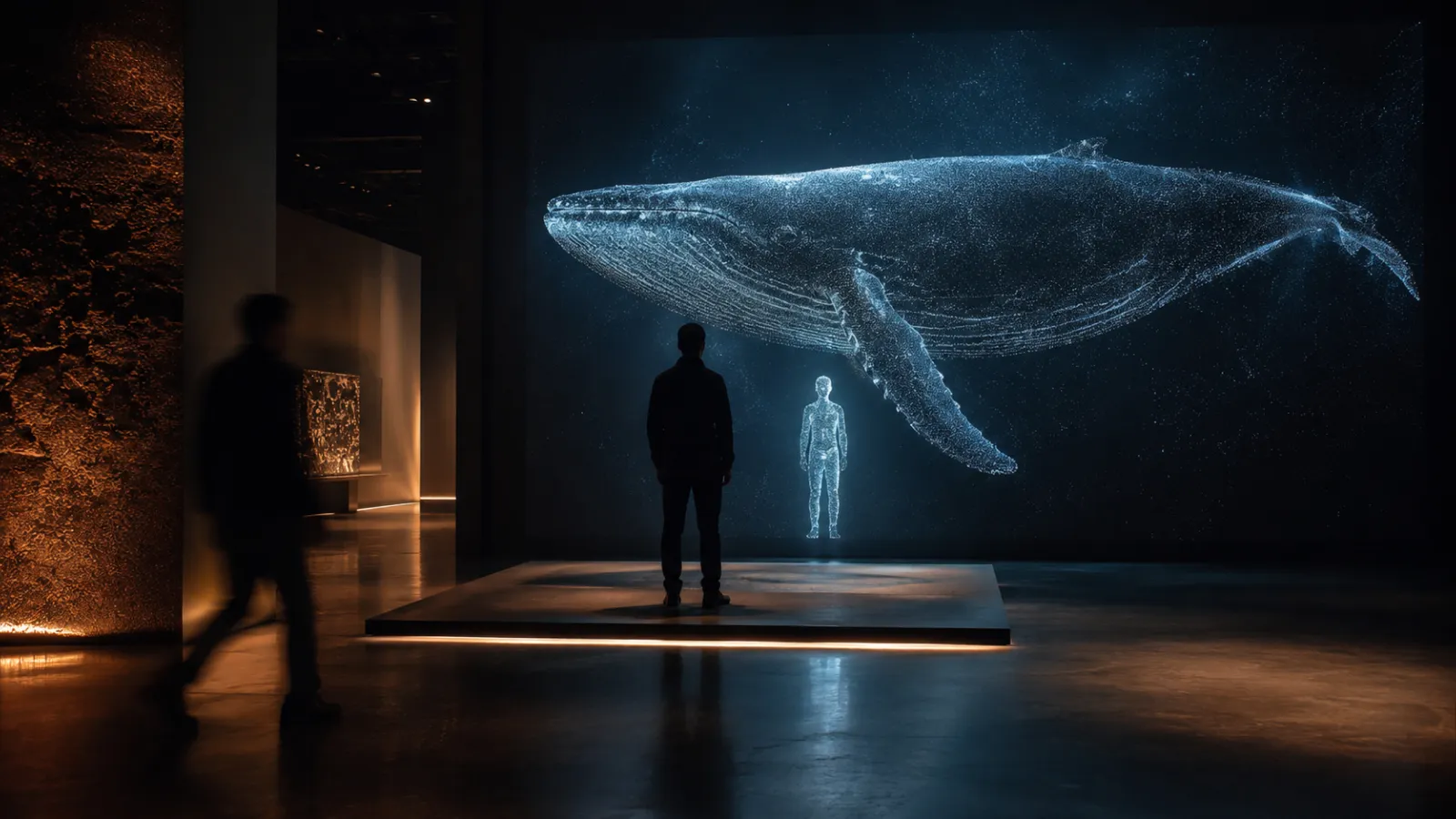
- Scale comparison: stand next to a life-size projected whale and see your silhouette in proportion
Body-tracked walls work because they feel like play, not education — and the learning happens anyway.
2-2. Sensor-interactive facades and LED walls
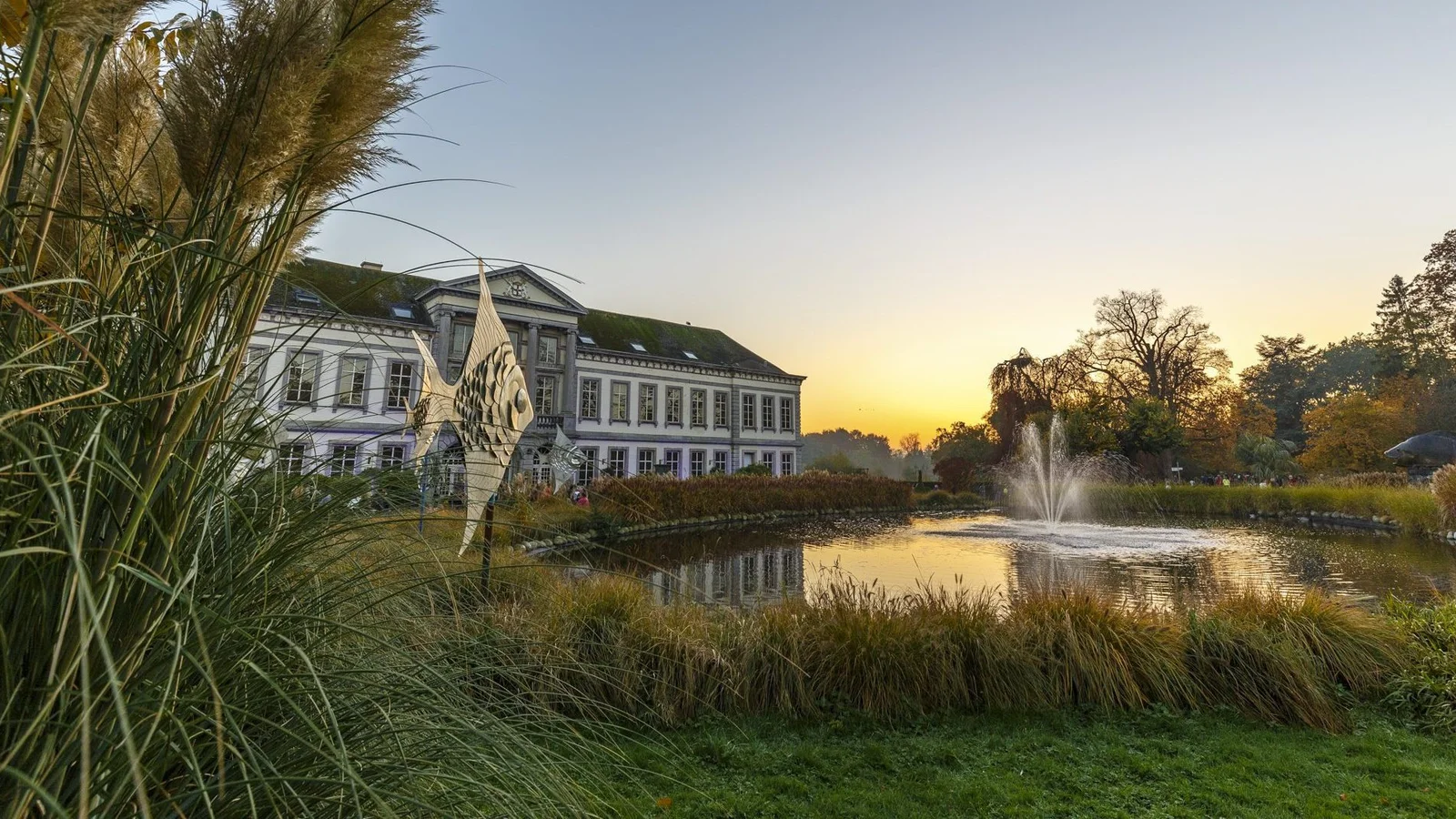
Pairi Daiza's NEMO installation (2024) transformed a historic castle facade into a 137 m² LED ocean using 18.9 million LEDs. Sensors detect visitors approaching, and virtual marine animals — whales, rays, dolphins — swim toward them and respond to movement.
This type of installation works exceptionally well for:
- Building exteriors near animal exhibits
- Transition zones between indoor and outdoor areas
- Evening and nighttime experiences (extending visitor hours)
2-3. Draw-and-project interactive stations
Georgia Aquarium's Explorers Cove (2024) features a "draw-a-fish" station where visitors create species on paper, scan them, and watch their creations swim and interact on a giant video wall alongside other visitors' fish.
This format:
- Creates a personal connection to marine life
- Encourages repeat visits (children want to draw different species)
- Generates shareable content (families photograph their creation on the wall)
- Bridges art, biology, and play
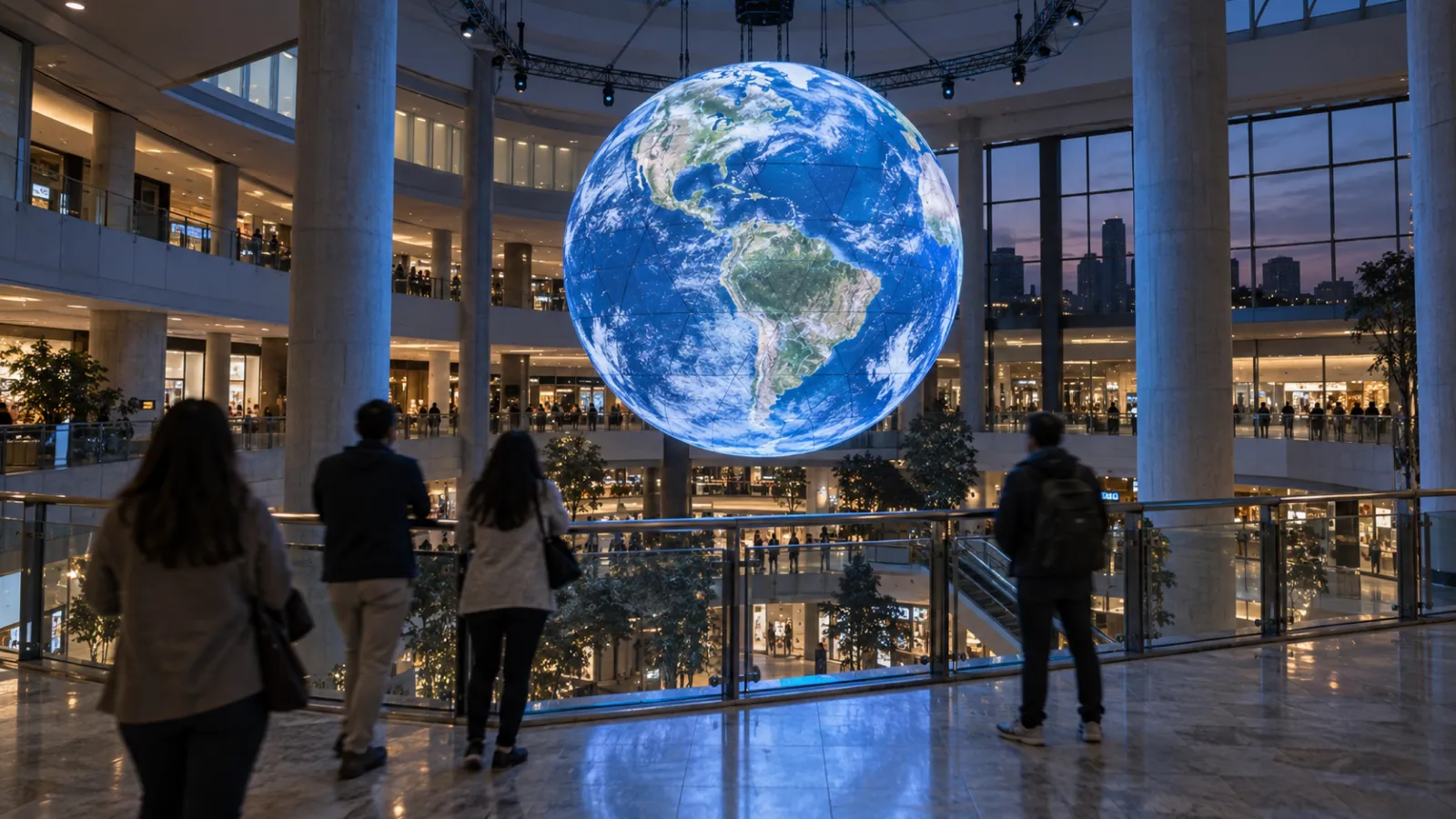
2-4. Full-dome and projection-mapped environments
San Diego Zoo's Wildlife Explorers Basecamp ($88 million, opened 2022) includes a Migration Full-Dome Experience — a projective dome showing butterflies, fireflies, and insects migrating through a day-to-night cycle, with 7.1 surround sound and ambient scents.
Dome content has its own delivery format and its own comfort constraints, both covered in our LED sphere and dome content guide.
Projection mapping also transforms static spaces into living environments:
- Georgia Aquarium's Coastline Café: sea creatures projected swimming around diners during meals
- Monterey Bay Aquarium's Into the Deep: an immersive Sea Floor Diorama with custom projection mapping (Elumenati systems) simulating 10,000-foot abyssal zones
- Chester Zoo's BEASTS! (2024): an eight-minute 360° multi-screen animated adventure with floor projections blending mythical creatures with real ecological roles
2-5. RFID-gamified exploration
Singapore's Mandai Exploria (10,000 sqm, opening March 2026) uses RFID wristbands for gamified badge collection, avatar creation, and personal scorekeeping across five interconnected immersive worlds — from dinosaurs to bioluminescent oceans.
This approach works for institutions that want to:
- Incentivize full-campus exploration (badges unlock at different zones)
- Drive repeat visits (collect all badges across multiple trips)
- Capture anonymous engagement data (which zones get the most time)
3. Real Examples — Three Installations That Got It Right
3-1. San Diego Zoo — Wildlife Explorers Basecamp
| Detail | Specification |
|---|---|
| Opened | March 2022 |
| Budget | ~$88 million (total); digital/AV est. 10–30% |
| Size | 3.2 acres, 20+ custom digital exhibits |
| Key tech | Full-dome projection (Unity 3D), 3,245-LED Living River sculpture, multiscreen games, microscope stations with photo capture/email |
| Impact | Record 2022 attendance: 5.6M+ combined Zoo/Safari Park; AZA Exhibit Award Top Honors |
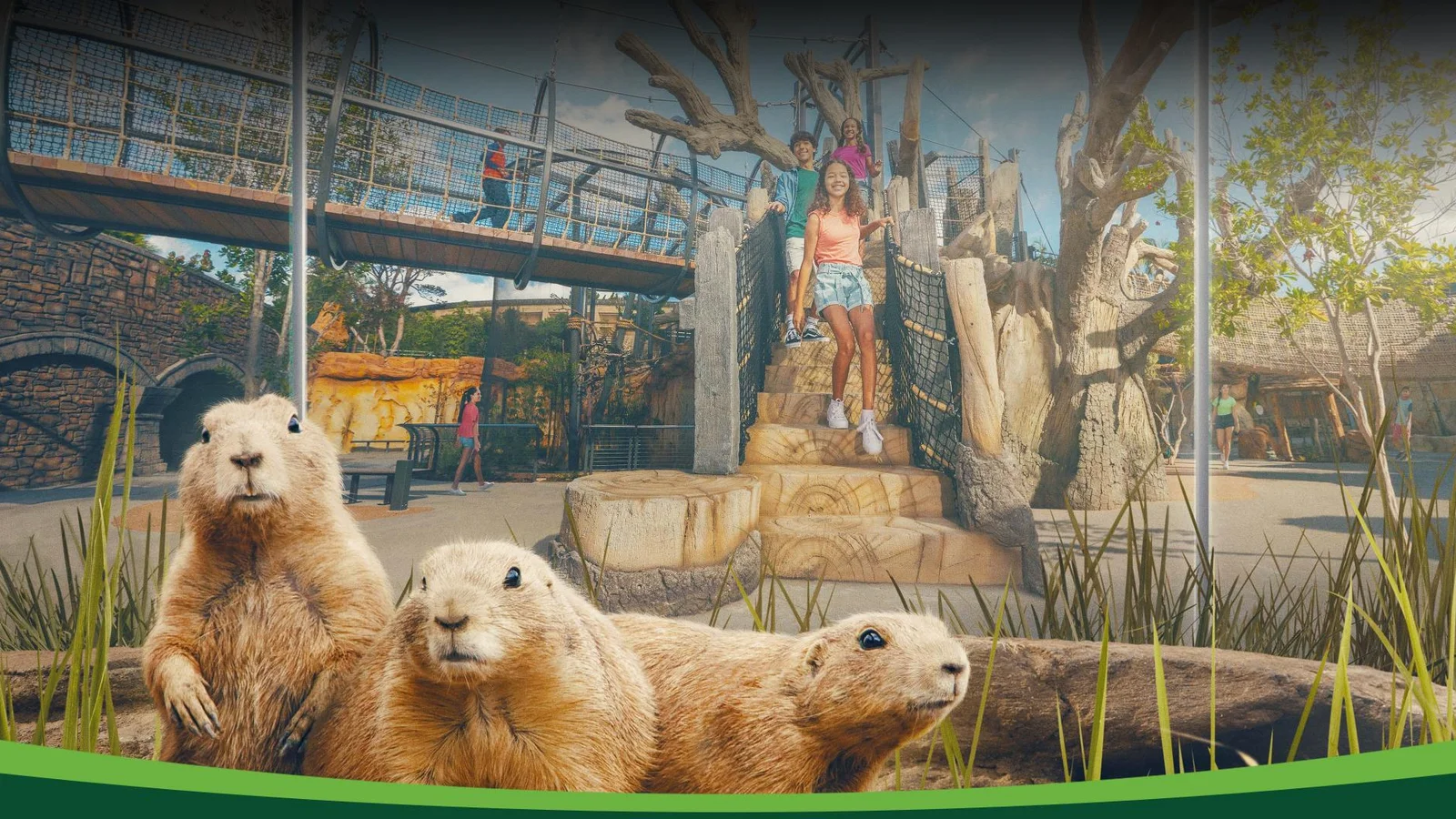
The Basecamp spans four habitat zones (Rainforest, Wild Woods, Marsh Meadows, Desert Dunes) and was designed with Ideum. Conservation games let visitors earn digital tools for a virtual backpack and rank as conservationists — play that teaches stewardship without lecturing.
3-2. Monterey Bay Aquarium — Into the Deep
| Detail | Specification |
|---|---|
| Opened | April 2022 |
| Budget | $15 million (5-year development) |
| Size | 10,000 sq ft, 21 live exhibits, 50+ species |
| Key tech | Interactive topographic model of Monterey Canyon, Sea Floor Diorama with Elumenati projection mapping |
| Impact | Featured previously undisplayed deep-sea species; first fully bilingual online experience |
Into the Deep descends visitors from sunlit waters to 10,000-foot abyssal zones. The interactive Monterey Canyon model lets visitors explore terrain that's impossible to visit in person — technology as a lens into the inaccessible, not a replacement for the accessible.
3-3. Georgia Aquarium — Explorers Cove
| Detail | Specification |
|---|---|
| Opened | Summer 2024 |
| Key tech | Draw-a-fish video wall, motion-responsive projection floor, Coastline Café projection mapping |
| Impact | Family-focused immersion; included in general admission |
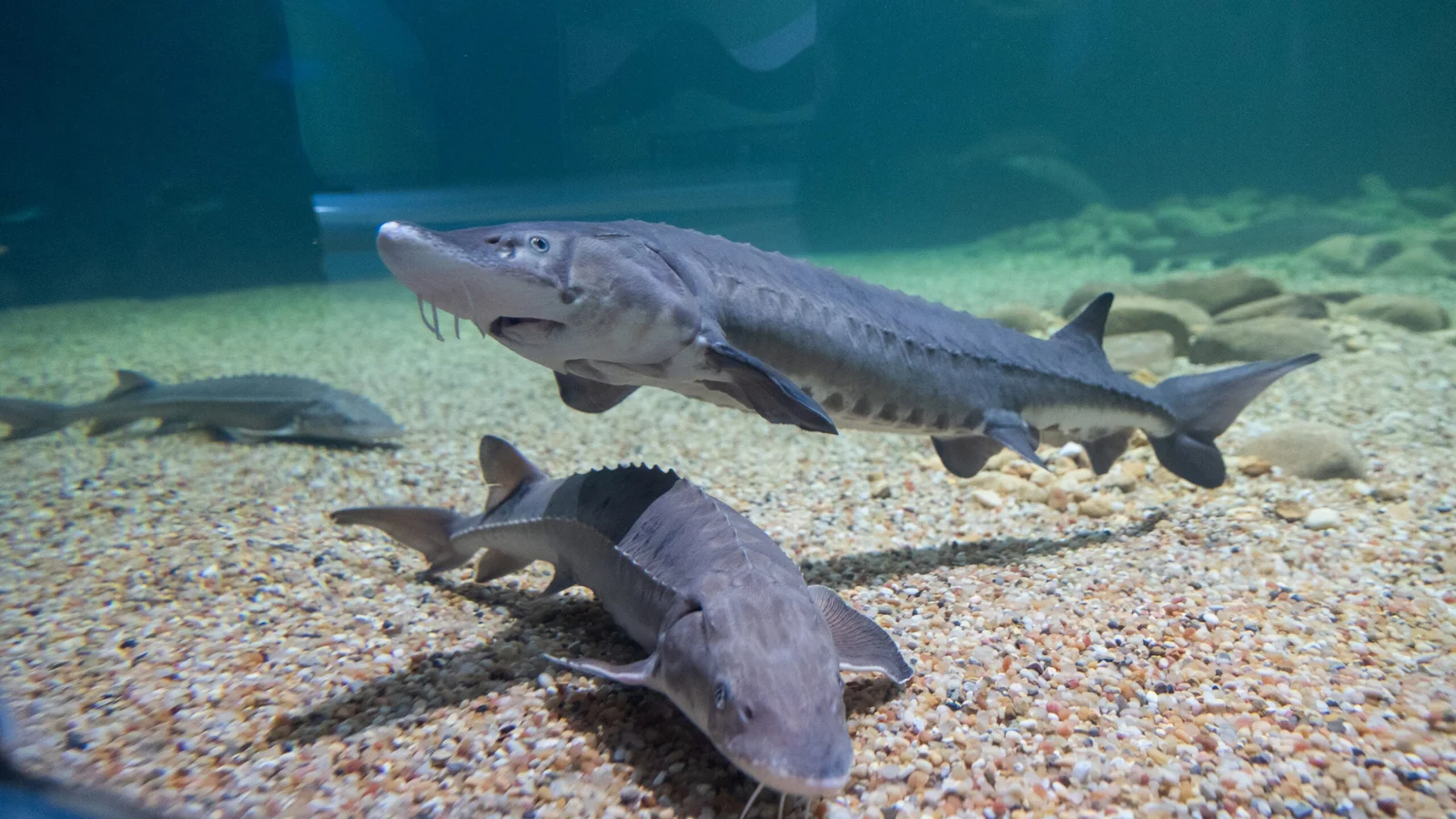
Explorers Cove integrates multiple interaction types — touch pools for direct animal contact, draw-and-project for creative engagement, and motion-responsive projections in walkways. The Coastline Café turns dining into an exhibit: sea creatures swim around tables and react to diners' movements.
4. Conservation Storytelling — Making the Mission Tangible
The strongest argument for interactive installations in zoos and aquariums isn't engagement — it's impact on conservation behavior.
4-1. Immersive experiences increase donations
A study from Bremen University compared 360° immersive video vs. traditional flat video for conservation causes. Participants who experienced the immersive version were 48% more likely to donate.
This aligns with the neuroscience of digital awe — immersive experiences activate mirror neurons and spatial presence, creating emotional connections that flat media can't match.
4-2. Data visualization makes the invisible visible
Interactive installations can turn abstract conservation data into visceral experiences:
- Population counters: a real-time display showing a species' declining population — each dot on screen represents an individual
- Habitat loss timelines: visitors scrub through decades of satellite imagery showing deforestation or coral bleaching
- Carbon footprint calculators: personalized impact visualizations tied to daily choices
4-3. Call-to-action integration
The best conservation tech doesn't just inform — it prompts action:
- Pledge walls where visitors commit to one behavior change (projected, shareable)
- Donation moments embedded in the emotional peak of an immersive experience
- Adopt-an-animal integrated into RFID or app-based journeys
- Post-visit email sequences triggered by exhibit interactions (RFID data)
5. Budget & ROI — What Exhibit Refreshes Actually Cost
5-1. Budget tiers
| Tier | Budget range | What you get | Example |
|---|---|---|---|
| Café / corridor refresh | $100K–$500K | Projection mapping in dining/transition areas, single interactive station | Georgia Aquarium Coastline Café |
| Gallery-scale digital | $500K–$3M | 2-5 interactive stations, projection mapping, themed AV environment | Chester Zoo BEASTS! 360° |
| Signature exhibit | $3M–$15M | Full exhibit hall with integrated interactives, immersive environments, custom hardware | Monterey Bay Into the Deep ($15M) |
| Campus-scale transformation | $15M–$88M+ | Multi-zone immersive campus, gamified exploration, dozens of digital touchpoints | San Diego Zoo Basecamp ($88M) |
Digital and AV components typically represent 10–30% of total project costs, with the rest going to construction, animal life support systems, and landscaping.
5-2. Funding sources
| Source | Typical contribution | Notes |
|---|---|---|
| Capital campaigns | $25M–$40M+ | Cleveland Zoo: $4.1M for Tiger Passage; Indianapolis Zoo: active campaign |
| Philanthropic donors | Named galleries and exhibits | San Diego Basecamp: "Denny Sanford" naming |
| Government grants | $100K–$5M | NSF, IMLS, state arts councils |
| Corporate sponsors | $50K–$2M per exhibit | Tech companies for digital components |
| Operating budget | $50K–$500K/year | Maintenance, content updates, staffing |
5-3. ROI metrics that matter
Direct ticket-revenue attribution for individual exhibits is rarely isolated in public reporting. But the indirect metrics are compelling:
- Attendance lift: San Diego Zoo's record 5.6M visitors in Basecamp's launch year
- Dwell time: 2–6x increase in immersive vs. static exhibits
- Membership conversion: interactive experiences drive 2–5x higher conversion rates
- Donor engagement: capital campaigns with flagship digital exhibits raise more, faster
- Conservation attitude shift: measurable via pre/post visitor surveys
- Evening revenue: projection and LED installations extend operating hours
For a deeper dive on measuring installation ROI, see our complete budget guide.
6. Animal-Safe Design — What AZA/EAZA/WAZA Guidelines Mean for Tech
6-1. The welfare-first framework
Three accreditation bodies govern how technology can be used near animals:
- AZA (Association of Zoos and Aquariums): Creating Successful Exhibits course, Technology Scientific Advisory Group, Ambassador Animal Guidelines
- EAZA (European Association of Zoos and Aquaria): Standards for Welfare, Accommodation and Management — explicitly limits demonstration/interactive environments that could harm wellbeing
- WAZA (World Association of Zoos and Aquariums): Animal-Visitor Interaction Guidelines, 2025 Animal Welfare Strategy
All three follow the Five Domains model: nutrition, environment, health, behavioral interactions, and mental state. Technology must contribute positively to at least one domain — or, at minimum, not negatively impact any.
6-2. Practical constraints for tech near animals
| Constraint | What it means for installation design |
|---|---|
| Sound | Max SPL levels near animal habitats (varies by species). Directional speakers or silent zones required |
| Light | No strobing, limited blue-spectrum light near nocturnal exhibits. LED color temperature must be controllable |
| Vibration | Subwoofers and haptic floors must be isolated from animal enclosures |
| Visitor flow | Interactive stations must not create bottlenecks that increase crowd noise near animals |
| Animal choice | Animals must be able to retreat from any tech-adjacent viewing area |
| Emergency override | All AV systems must have instant-off capability for animal emergencies |
6-3. The "buffer zone" principle
Best practice: place interactive technology in transition zones — the spaces between animal exhibits, not directly in front of viewing windows. This approach:
- Eliminates distraction competition with live animals
- Gives animals a visual and acoustic buffer
- Creates natural pacing: observe → interact → reflect → observe
7. Technical Requirements — Hardware That Survives a Zoo
7-1. Environmental durability
Zoo and aquarium environments are far harsher than museum galleries:
| Challenge | Solution |
|---|---|
| Humidity (aquariums: 60–90% RH) | IP65-rated enclosures, marine-grade connectors, conformal coating on PCBs |
| Temperature swings (outdoor exhibits) | Industrial-grade displays rated -20°C to 50°C, active cooling/heating |
| UV exposure (outdoor) | UV-resistant housings, anti-glare optical bonding |
| Water splash (touch pools, rain) | IP67 minimum for splash zones, NEMA 4X enclosures |
| Dust and debris (outdoor, construction) | Filtered ventilation, positive-pressure enclosures |
7-2. Vandal and visitor resistance
Zoos serve millions of visitors annually, including unsupervised children:
- Tempered or polycarbonate glazing over all screen surfaces
- Tamper-proof mounting hardware (security screws, recessed panels)
- No exposed cables — all routing through conduit or behind walls
- Touch surfaces rated for 50M+ touches (if using touchscreens)
- Daily cleaning protocol — surfaces must tolerate frequent sanitization
7-3. Maintenance and uptime
| Requirement | Recommendation |
|---|---|
| Uptime target | 99%+ during operating hours |
| Remote monitoring | Dashboard for all AV systems, automated alerts |
| Content management | CMS for updating visuals, data, and messaging without on-site technician |
| Spare parts | On-site stock of critical components (media players, projector lamps) |
| Service contract | Annual maintenance agreement with response SLA |
8. Common Pitfalls
1. Tech overshadowing animals The screen becomes the exhibit. Solution: place interactives in transition zones, not viewing windows. Test with visitors: if more than 30% ignore the animal to use the screen, redesign.
2. Neglecting accessibility Interactive stations at a single height, no audio descriptions, no alternatives for wheelchair users. Follow accessibility guidelines for interactive installations — ADA and WCAG 2.1 AA are the minimum.
3. Underestimating maintenance budgets A $500K installation with a $10K/year maintenance budget will fail within 18 months. Plan for 10–15% of capital cost per year in ongoing maintenance and content updates.
4. Ignoring seasonal variation Outdoor zoo installations face peak summer crowds and near-empty winter days. Design for both: scalable content, weather-proof hardware, and staffing models that flex.
5. Building for opening day, not year five Exhibits that can't be updated become stale. Insist on a content management system that allows non-technical staff to refresh visuals, data, and messaging.
6. Forgetting audio design Sound bleeds between exhibits, stresses animals, and annoys repeat visitors. Sound design for interactive installations is a discipline, not an afterthought.
9. How to Get Started — From Concept to Opening Day
9-1. Typical timeline
| Phase | Duration | Key activities |
|---|---|---|
| Concept & feasibility | 2–4 months | Define goals, survey site, benchmark competitors, set budget range |
| Design development | 3–6 months | Schematic design, tech selection, AV engineering, animal welfare review |
| Fabrication & build | 4–8 months | Hardware procurement, software development, custom fabrication |
| Installation & commissioning | 1–3 months | On-site install, integration testing, staff training |
| Soft opening & iteration | 1–2 months | Visitor testing, data collection, adjustments |
Total: 12–24 months from concept to public opening, depending on scale.
9-2. Your first steps
- Audit your current exhibits — which spaces have the highest foot traffic but lowest dwell time? Those are your opportunities.
- Define the conservation message — every interactive should answer: "What do we want visitors to feel, know, and do after this experience?"
- Set a realistic budget — include 10–15% annual maintenance and a content refresh cycle.
- Brief a studio — see our guide to briefing an interactive installation studio for a template.
- Involve animal care staff early — welfare constraints shape design. Retrofitting is expensive.
Context:
- Institution type: [zoo / aquarium / zoo-aquarium hybrid]
- Annual visitors: [number]
- Target exhibit area: [name and approximate size]
- Current state: [describe what's there now]
- Budget range: [estimate]
- Timeline: [when do you need it open?]
- Conservation message: [what species or issue should this support?]
Please help me:
- Define 3 clear objectives for the installation
- Identify the best interaction type for our space and audience
- Flag potential animal welfare considerations
- Create a phased timeline with milestones
- List questions to ask potential studio partners
10. About Utsubo
Utsubo is an interactive creative studio specializing in body-tracked installations, real-time 3D experiences, and WebGPU-powered visual systems.
Our Waves of Connection installation at Expo 2025 Osaka — a body-tracked piece where visitors moved a million-particle Great Wave using their gestures — demonstrated the kind of touchless, high-impact interaction that translates directly to zoo and aquarium environments:
- No touchscreen, no controller — visitors interact with their body
- Multi-user — up to 6 people tracked simultaneously
- All ages — children and seniors engage intuitively, without instructions
- Durable — no moving parts, no surfaces to clean or break
We combine Three.js and WebGPU expertise with physical installation design to create experiences that work in demanding public environments.
11. Let's Talk
Planning an exhibit refresh with interactive technology? We work with institutions on immersive experiences that put conservation storytelling first.
If you're exploring a partnership, let's discuss your project:
- What you're building and the constraints you're working with
- Which technical approach makes sense for your space and species
- Whether we're the right fit to help you execute
Checklist: Interactive Installation for Zoos & Aquariums
- Conservation message defined for each interactive
- Animal welfare review completed with care staff
- AZA/EAZA/WAZA guidelines reviewed for tech near animals
- Budget includes 10–15% annual maintenance allocation
- Interactive stations placed in transition zones, not viewing windows
- Hardware rated for humidity, temperature, and visitor volume
- Accessibility audit (ADA/WCAG 2.1 AA) completed
- Content management system specified for ongoing updates
- Sound design reviewed for animal and visitor impact
- Staff training plan included in project scope
- Soft opening period scheduled for visitor testing and iteration
FAQs
How much does an interactive installation cost for a zoo or aquarium?
Budgets range from $100K for a single café projection to $88M+ for a campus-scale transformation. A typical gallery-scale exhibit with 3–5 interactive stations runs $500K–$3M. Digital and AV components usually represent 10–30% of total project cost — the rest goes to construction, animal life support, and landscaping.
Will interactive screens distract visitors from live animals?
They can, if poorly placed. Research shows that standalone screens in front of viewing windows do compete for attention. But interactives placed in transition zones — between exhibits — actually increase overall dwell time by 2–6x. The key is designing technology as a bridge to the animal, not an alternative.
What are the AZA guidelines for technology near animal exhibits?
AZA doesn't ban technology near animals, but requires that all exhibits follow the Five Domains model (nutrition, environment, health, behavioral interactions, mental state). Technology must allow animals to have choice and control — they must be able to retreat from tech-adjacent areas. Sound, light, and vibration must be assessed for each species. AZA's Technology Scientific Advisory Group and Creating Successful Exhibits course provide specific frameworks.
How long does it take to develop an interactive exhibit for a zoo?
From concept to public opening, expect 12–24 months depending on scale. A café projection mapping refresh can be completed in 6–8 months. A flagship multi-zone exhibit like San Diego Zoo's Basecamp took several years of planning and construction.
Can interactive installations work outdoors?
Yes, but they require industrial-grade hardware: IP65/IP67-rated enclosures, temperature-rated displays (-20°C to 50°C), UV-resistant housings, and filtered ventilation. Outdoor installations cost 20–40% more than indoor equivalents due to environmental hardening. LED walls and projection mapping are more common outdoors than touchscreens.
How do we measure ROI on a zoo interactive installation?
Direct ticket-revenue attribution is difficult to isolate. Most institutions measure: attendance lift after opening, dwell time increases, membership conversion rates, donor engagement during capital campaigns, and conservation attitude shifts via pre/post visitor surveys. San Diego Zoo's Basecamp correlated with record 5.6M attendance in its launch year.
What's the best interactive technology for aquariums specifically?
Projection mapping works exceptionally well in aquariums — it extends the underwater environment beyond the glass. Body-tracked installations create visceral "swimming alongside" experiences. Draw-and-project stations (like Georgia Aquarium's draw-a-fish wall) are strong for family engagement. Avoid touchscreens in high-humidity zones (60–90% RH) — use gesture or body tracking instead.
Do we need permanent staff to run interactive installations?
Most modern installations are designed to run unattended during operating hours, with automated startup/shutdown and remote monitoring. However, you'll need: a dedicated technician or AV contractor for weekly maintenance, CMS-trained staff for content updates, and a service contract with the installation studio for hardware issues. Budget 0.5–1.0 FTE for ongoing support of a medium-scale installation.


 Osaka Interactive Installation Studio