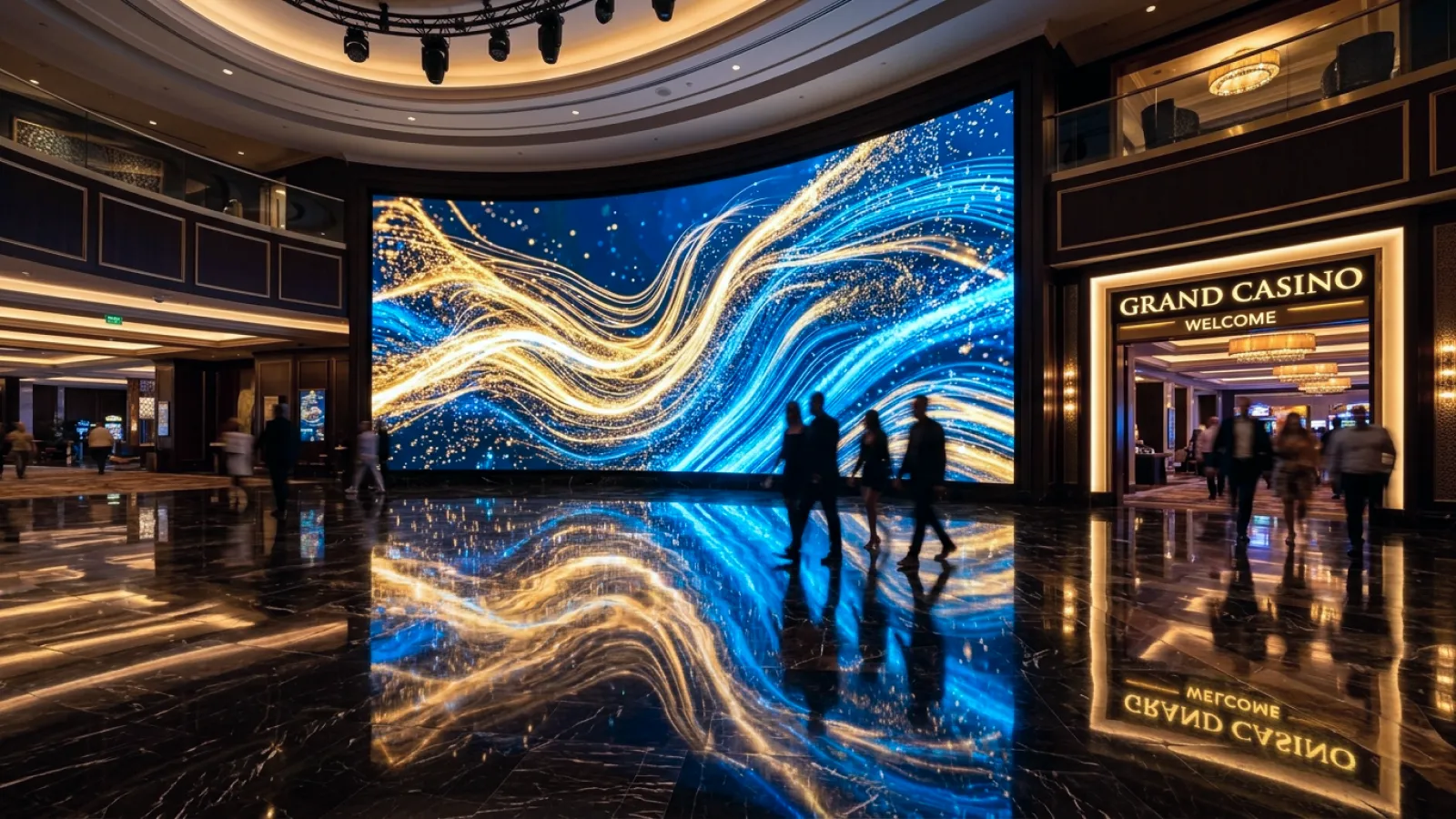
Non-gaming revenue now accounts for 65% of Las Vegas Strip income---and the gap is widening. US commercial gaming hit $71.92B in 2024 (a fourth consecutive record), but the real growth story is in the spaces between the slot machines: lobbies, corridors, restaurants, entertainment districts, and VIP lounges.
Interactive installations are becoming the competitive edge that separates a memorable destination from a forgettable one. This is part of a broader shift toward the experience economy: guests increasingly value moments over amenities, and the venues that deliver those moments capture more time, more spend, and more loyalty.
This guide covers what casino-grade installations look like, where they work, what they cost ($50K--$2M+), and how to measure their impact---with real-world examples from The Sphere, Resorts World, MGM Cotai, and Casino de Montreal.
Who this is for: Casino operators, entertainment venue directors, guest experience VPs, resort architects, and hospitality design firms evaluating interactive technology investments.
Key Takeaways
- Non-gaming revenue is now the growth engine---65% of Strip revenue---and interactive installations are a primary driver of that shift.
- The location-based entertainment market is growing from $5.63B to $25.9B by 2030 (28.5% CAGR). Casinos are leading adopters.
- Budget tiers range from $50K (single feature wall) to $2M+ (immersive multi-zone environment), with ongoing content refresh at 15--20% of initial content cost per year.
- Digital signage alone increases profitability by 124%; interactive installations extend guest dwell time by 15--20 minutes beyond that.
- 24/7 casino operation demands commercial-grade hardware, remote monitoring, and content automation---consumer equipment fails within months.
- Integration with loyalty and CRM systems creates measurable guest intelligence ROI that justifies the investment to stakeholders.
1. Why the Casino Floor Alone Can't Drive Revenue Anymore
1-1. The non-gaming revenue shift
The numbers tell the story clearly. On the Las Vegas Strip, gaming's share of total revenue dropped from 59% to 35% over the past two decades. Today, non-gaming amenities---restaurants, entertainment, retail, nightlife---generate the majority of revenue.
This isn't a Las Vegas anomaly. Globally, the most profitable casino resorts derive 40--60% of revenue from non-gaming sources. The casino floor gets guests through the door; everything else determines whether they stay, spend, and return.
1-2. Millennial and Gen-Z expectations
83.9% of millennials say non-gaming activities influence which casino they visit. This generation grew up on interactive screens, immersive games, and shareable experiences. A row of slot machines doesn't create the kind of moment they want to post---but a reactive LED wall or an interactive floor does.
Guests now spend roughly 75% of their trip budgets on non-gaming amenities. Properties that invest in experiential spaces capture more of that spend.
1-3. Competition from immersive entertainment
Casino resorts now compete with purpose-built immersive venues:
- teamLab Borderless and Planets attract 4.2 million visitors annually
- The Sphere generated $781.4M in revenue in 2025---from a single venue
- The location-based entertainment market is on track to hit $25.9B by 2030
Guests who've experienced these venues arrive at your property with higher expectations. Static lobbies and video walls no longer impress.
2. What Is an Interactive Casino Installation?
An interactive casino installation is a digital experience that responds to guest presence, movement, touch, or input---transforming non-gaming spaces from passive to participatory.
The goal isn't spectacle for its own sake. It's strategic engagement: keeping guests on-property longer, guiding them toward revenue-generating amenities, and creating moments they photograph, share, and remember.
Common formats:
- Lobby feature walls: Large-scale LED or projection displays with reactive visuals that respond to movement, time of day, or events
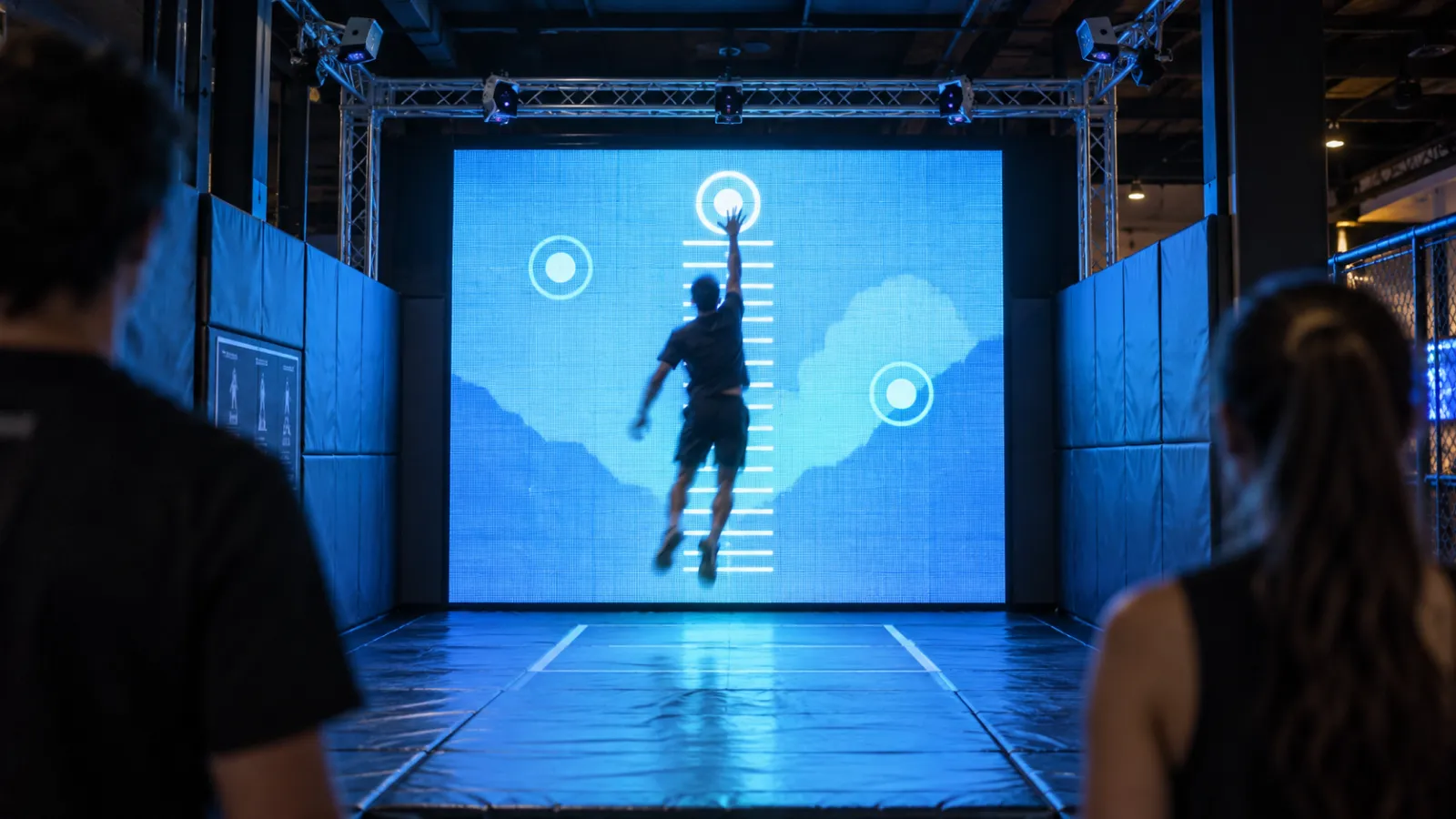
- Interactive floors and surfaces: Motion-tracked experiences where guests walk through, trigger, and shape digital content
- Digital concierge and wayfinding: Touch or gesture-controlled kiosks that recommend restaurants, shows, and amenities while collecting preference data
- F&B ambiance systems: Responsive visuals in restaurants and bars that shift with music, crowd energy, or time
- VIP experience rooms: Personalized environments for high-rollers with bespoke content tied to loyalty status
- Gamification overlays: Non-gaming interactive experiences (photo activations, digital scavenger hunts, competitive challenges) that extend the gaming energy beyond the casino floor
The distinction from digital signage matters: signage broadcasts a message, while installations create a two-way interaction that generates data, dwell time, and emotional connection.
3. Where Installations Work in a Casino/Entertainment Venue
Not every space needs an installation. The best deployments target high-traffic transition zones where guests are making decisions about where to go next.
3-1. Lobby and entrance (porte-cochere)
The first and last impression. This is where you set the tone for the entire visit. Features here include:
- Arrival experiences that shift with time, season, or major events
- LED ceiling or wall treatments that create a sense of arrival
- Photo opportunities that generate immediate social sharing
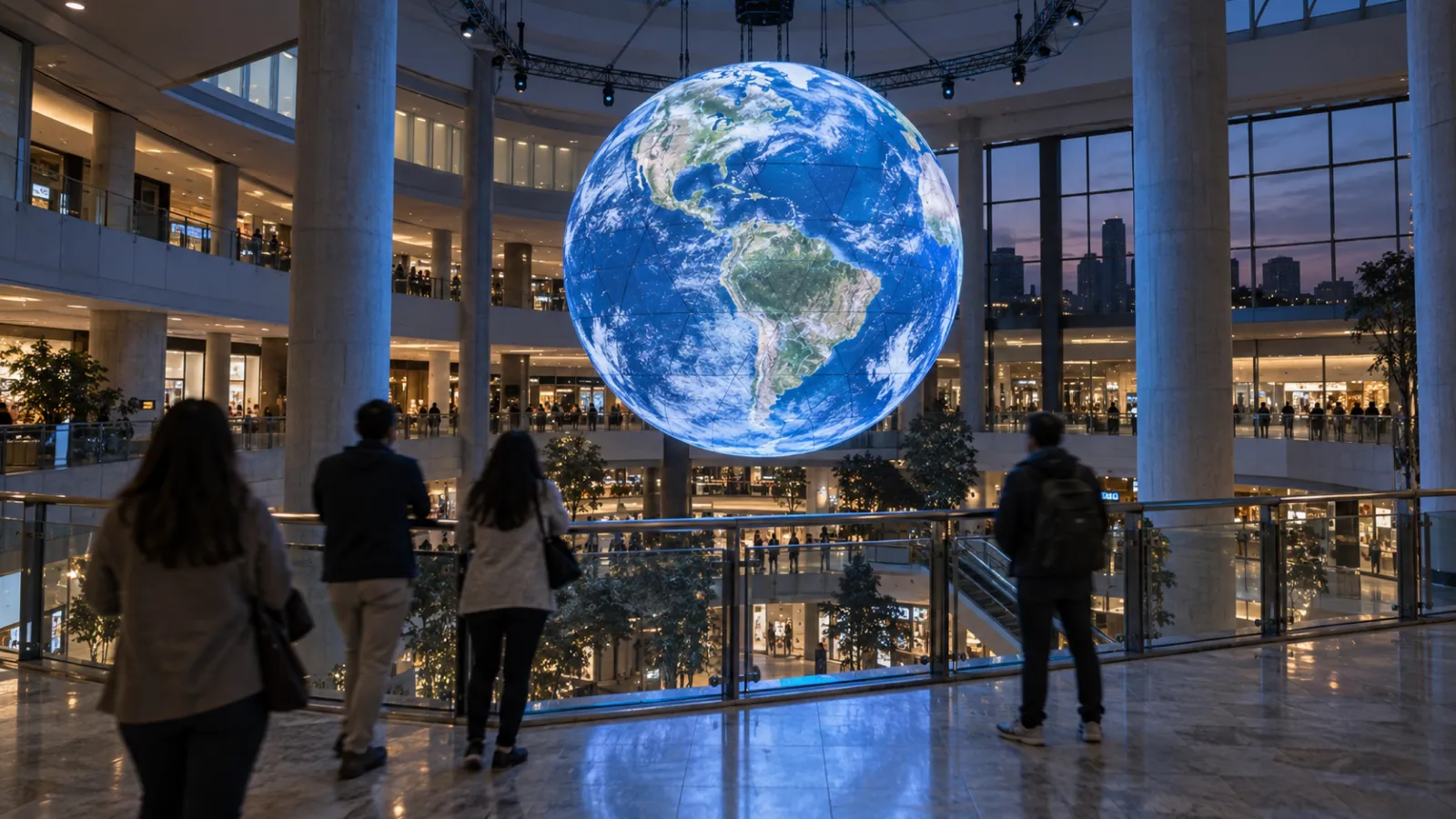
Resorts World Las Vegas invested in a 100,000-square-foot LED screen and a 50-foot digital globe with 20 million pixels at their entrance---creating an arrival experience visible from the Strip.
3-2. Non-gaming corridors and transition spaces
Guests walk these routes repeatedly between the casino floor, hotel rooms, restaurants, and entertainment venues. These spaces are typically under-leveraged:
- Interactive wayfinding that promotes nearby F&B and shows
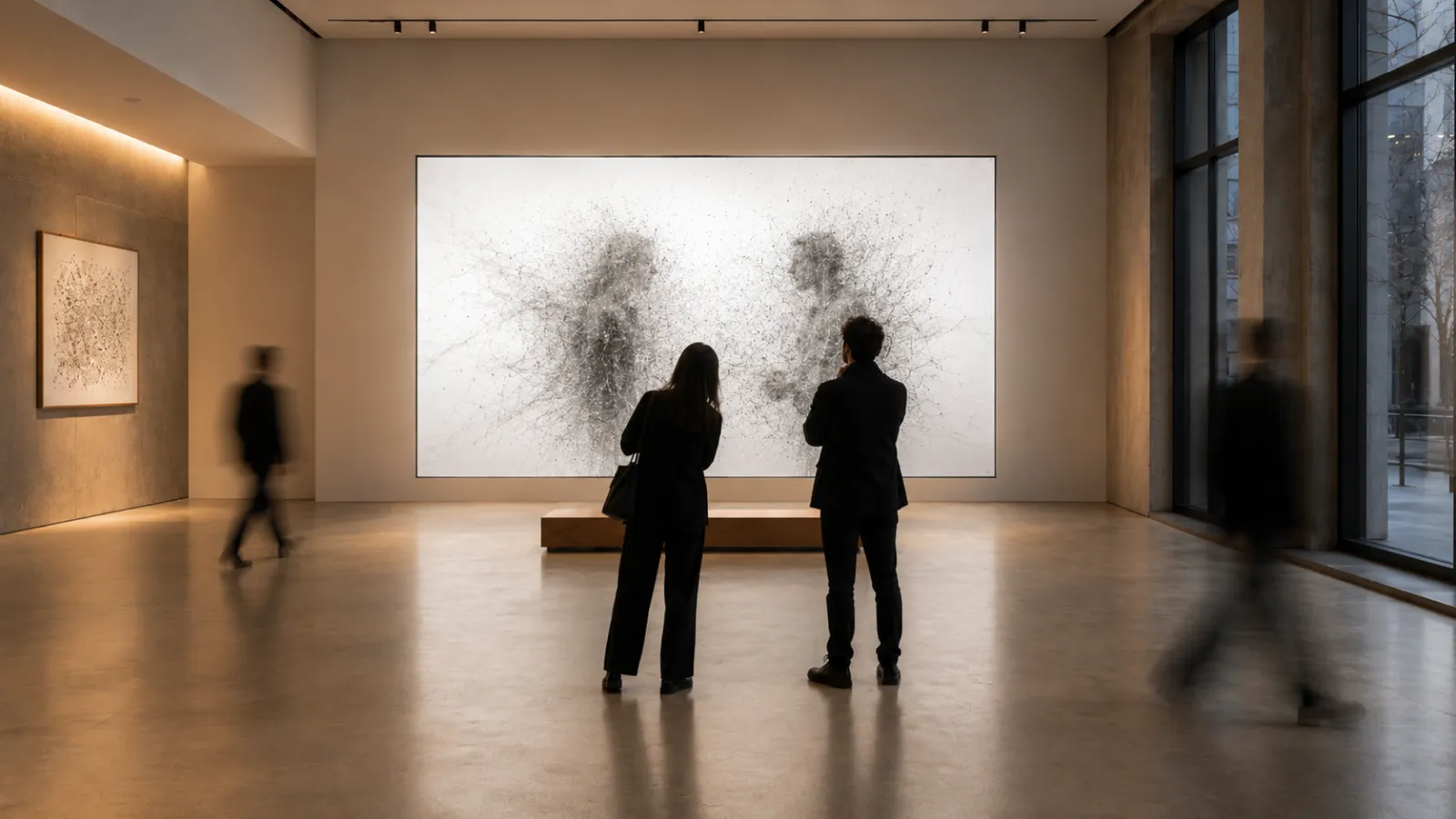
- Ambient generative art that evolves throughout the day
- Surprise moments that reward exploration ("I found something cool down this hallway")
3-3. F&B venues
Restaurants, bars, and lounges are prime real estate for immersive technology:
- Projection-mapped tables and walls that change with the menu or time of day
- Interactive cocktail presentations or sommelier experiences
- Dayparted digital content that drives double-digit increases in off-peak orders
3-4. VIP and high-roller areas
VIP guests expect differentiation. Interactive technology in these spaces creates:
- Personalized environments that recognize loyalty tier
- Private interactive experiences unavailable on the main floor
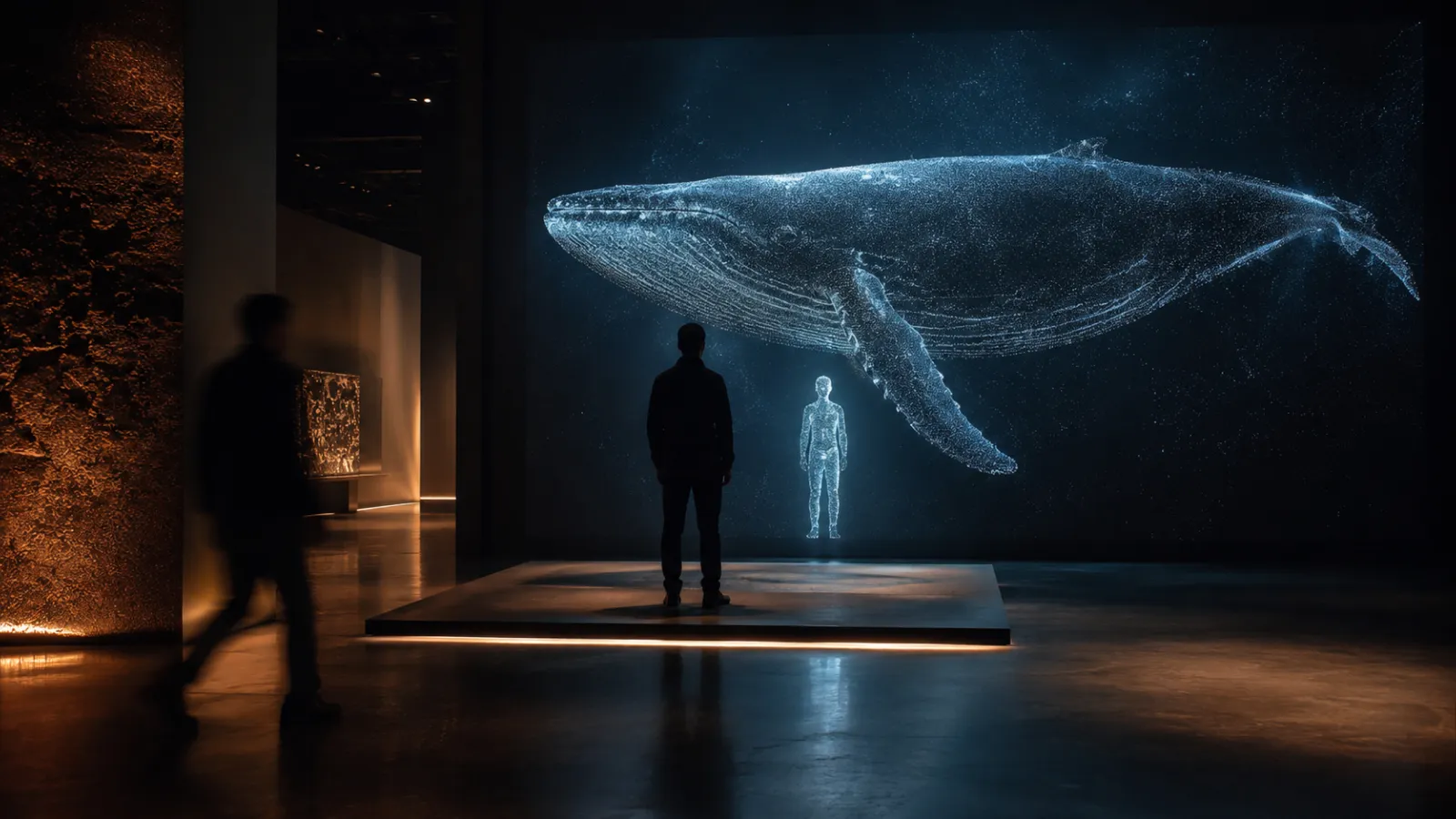
- Bespoke content for events, celebrations, or whale entertainment
3-5. Entertainment and theater spaces
Beyond the main show, lobbies and pre-show areas benefit from:
- Themed pre-show environments that build anticipation
- Post-show interactive activations that extend the experience (and capture UGC)
- Transformable spaces that adapt between events
3-6. Outdoor and approach areas
The guest experience begins before they enter the building:
- Architectural-scale LED facades (like The Sphere's 580,000-square-foot exterior)
- Interactive water features or landscape elements
- Arrival sequences that create anticipation on the approach
4. The 5 Outcomes for Casino Operators
4-1. Extended dwell time and secondary spend
When guests stop to interact---or even just watch others interact---they spend more time in non-gaming spaces. More time means more exposure to F&B, retail, and entertainment options. Research shows interactive installations extend guest dwell time by 15--20 minutes, and guests at properties with expanded non-gaming options spend 5--10% more per visit.
4-2. Non-gaming revenue growth
Interactive installations directly support the non-gaming revenue model:
- Wayfinding kiosks that recommend restaurants increase F&B discovery
- Photo activations drive guests to specific locations on-property
- Interactive experiences can be ticketed themselves (The Sphere charges $50--$200+ per ticket)
4-3. UGC and social proof
The best casino installations include a designed "share peak"---a moment so photogenic that guests photograph it without prompting:
- The visual is naturally photogenic
- Guests appear in or alongside the content
- Sharing is frictionless (no app required, just point and shoot)
This generates organic social proof and marketing reach without increasing ad spend. Guests become your marketing channel.
4-4. VIP differentiation
High-value guests bring disproportionate revenue. Interactive technology creates VIP differentiation through:
- Exclusive experiences unavailable to general guests
- Personalized greetings and environments
- Technology that recognizes and rewards loyalty status
4-5. Data and guest intelligence
Unlike static decor, interactive installations generate behavioral data:
- Which zones get the most engagement
- How long guests linger and where they go next
- What content drives the most interaction
- Guest flow patterns that inform operational decisions
When integrated with loyalty and CRM systems, this data becomes actionable guest intelligence---informing everything from staffing to promotional targeting. Privacy-first analytics (heat maps, aggregate patterns) deliver this without collecting personal data.
5. Real-World Examples
5-1. The Sphere, Las Vegas ($2.3B)
The most ambitious entertainment venue ever built. 16,000 interior LED panels (16K x 16K resolution), 167,000 speakers with beamforming audio, and 4D effects including scent, wind, and haptics. Revenue hit $781.4M in 2025 (+27% YoY), with The Wizard of Oz surpassing 2 million tickets sold. The 580,000-square-foot exterior exosphere functions as the world's largest digital billboard.
5-2. Resorts World Las Vegas ($4.3B)
The first ground-up resort on the Strip in over a decade features 100,000 square feet of LED displays and a 50-foot digital globe with 20 million pixels. Content was created by Moment Factory and won the 2022 DIZZIE Award. The LED integration was designed to be content-first---every surface tells a story that evolves with seasons, events, and time of day.
Spherical displays are a category of their own to produce for, because the delivery format is a pixel map specific to the panel layout rather than a video file. If you are specifying a globe at any scale, see our LED sphere and dome content guide.
5-3. MGM Cotai "The Spectacle" ($3.4B)
MGM's Macau property features 25 LED walls spanning over 4 stories in a 96,000-square-foot atrium---the world's largest permanent indoor LED installation. Integrated by Electrosonic, the system creates immersive environments that transform the non-gaming experience for millions of annual visitors.
5-4. Casino de Montreal (Moment Factory)
Moment Factory designed an interactive floor gaming experience using motion detection and projection mapping, plus a 3-story digital wall. The ARcade project turned a corridor into an interactive playground---demonstrating that installations don't require mega-resort budgets to create memorable moments.
5-5. The Cosmopolitan "Opulence" (350+ displays)
A digital art installation spanning 350+ commercial displays delivering 265 million pixels of content across multiple casino zones. Over 60 team members were involved in the integration. The project demonstrates how distributed installations---many screens across many spaces---can create a cohesive environmental identity.
6. Technology for Casino-Grade Environments
6-1. LED walls vs. projection mapping
Both technologies serve different needs in casino environments:
| Factor | LED Walls | Projection Mapping |
|---|---|---|
| Brightness | High (visible in ambient light) | Lower (requires controlled lighting) |
| Resolution | Excellent at close viewing distance | Best at larger distances |
| Durability | Very high (50,000+ hour lifespan) | Moderate (lamp/laser replacement) |
| Flexibility | Fixed form factor | Maps to irregular surfaces |
| Cost per sqm | $400--$900+ (hardware only) | $200--$500+ (hardware only) |
| Best for | Lobbies, feature walls, signage | Architectural surfaces, immersive rooms |
For a deeper comparison, see our installation vs. projection mapping guide.
6-2. Interactive floors and surfaces
Motion-tracking floors use overhead cameras or embedded sensors to detect guest movement and trigger responsive visuals. Casino applications include:
- Walk-through experiences in corridors
- Interactive gaming experiences in non-gaming zones
- Photo activation areas that generate shareable content
6-3. Motion tracking and gesture control
Camera-based tracking (depth sensors, computer vision) enables touchless interaction:
- Gesture-controlled wayfinding and information kiosks
- Body-reactive art walls that respond to guest proximity
- Crowd-reactive environments that shift with occupancy levels
Touchless interaction is especially relevant in high-traffic casino environments where hygiene and flow are concerns.
6-4. Content management for 24/7 operation
Casino installations run continuously. Content management requires:
- Automated scheduling: Different content for morning, afternoon, evening, and late-night
- Event triggers: Automatic content changes for shows, fights, sporting events
- Remote updates: Cloud-based CMS for content pushes without on-site intervention
- Failover systems: Automatic fallback to cached content if network connectivity drops
6-5. Integration with loyalty and CRM systems
The most strategic installations connect to existing casino systems:
- Loyalty kiosks that display personalized offers based on player tier
- Interactive displays that recognize VIP guests (opt-in facial recognition or RFID)
- Promotional content that adapts to current property occupancy and revenue targets
- Data feeds that inform marketing about guest engagement patterns
7. Budget Tiers & Timeline
7-1. Tier 1: $50K--$150K (single feature wall or interactive kiosk)
What you get:
- One LED or projection feature wall (up to ~30 sqm)
- Pre-built interactive content with seasonal variations
- Basic CMS for content updates
- 1-year hardware warranty
Timeline: 8--12 weeks from concept to launch
Best for: Regional casinos, single-zone pilots, F&B venue enhancements
7-2. Tier 2: $150K--$500K (multi-zone experience)
What you get:
- 2--4 connected installation zones
- Custom interactive content and generative systems
- Motion tracking or gesture-based interaction
- Integration with existing CMS or signage infrastructure
- Remote monitoring and maintenance plan
Timeline: 12--20 weeks from concept to launch
Best for: Mid-size properties, VIP lounge upgrades, entertainment venue lobbies
7-3. Tier 3: $500K--$2M+ (immersive environment)
What you get:
- Full-environment immersive experience (room-scale or multi-room)
- Custom hardware design and fabrication
- Advanced tracking systems (multi-guest, gesture, proximity)
- CRM/loyalty system integration
- Dedicated content pipeline and refresh schedule
- 3--5 year maintenance and support plan
Timeline: 20--40 weeks from concept to launch
Best for: Flagship resort lobbies, destination entertainment spaces, VIP centers
7-4. Ongoing costs
Budget for these recurring expenses:
- Content refresh: 15--20% of initial content cost per year (critical for repeat visitors)
- Hardware maintenance: LED has 40--60% lower TCO than alternatives over 5 years
- Software licensing: CMS, analytics, monitoring platforms ($2K--$10K/month depending on scale)
- Facility integration: HVAC, electrical, and structural maintenance ($2K+/month)
For a detailed breakdown, see our interactive installation cost and budget guide.
8. ROI & Measurement
8-1. Dwell time tracking
Use privacy-first analytics (aggregate heat maps, zone counters) to measure:
- Average time spent in installation zones vs. non-installation zones
- Flow patterns showing where guests go after engaging
- Peak engagement times and days
8-2. Secondary spend attribution
Connect installation engagement to revenue:
- Track F&B and retail spend for guests who pass through installation zones vs. those who don't
- Monitor promotional conversion when installations display real-time offers
- Measure ticket sales for experiences adjacent to installation zones
8-3. Social media monitoring
Quantify organic reach:
- Track venue-specific hashtags and geotags
- Monitor UGC volume from installation zones
- Calculate earned media value from organic social posts
8-4. Guest satisfaction scores
Interactive installations directly impact satisfaction metrics:
- 65% of hotel/resort guests say digital experiences improved their stay
- Emotionally connected guests are 13x more likely to be highly satisfied (Gallup)
- Properties with strong experiential programming see higher Net Promoter Scores
8-5. Comparing to traditional marketing ROI
Interactive installations generate ongoing returns unlike one-time campaigns:
- A $200K installation generates 3--5 years of daily engagement
- Earned media from UGC compounds over time
- Guest intelligence data improves targeting for all other marketing channels
Nearly 75% of Fortune 1000 companies increased experiential marketing budgets in 2025---a signal that measurable ROI is being validated across industries.
9. Common Pitfalls
Over-engineering the interaction. Not every surface needs to be interactive. The most effective casino installations balance ambient beauty (always-on, no interaction required) with interactive peaks (moments that reward engagement). Over-engineering creates experiences that feel like work rather than discovery.
Ignoring 24/7 demands. Consumer hardware fails within months in a 24/7 casino environment. Commercial-grade displays, industrial PCs, and redundant systems aren't optional---they're the baseline. Budget for them upfront or pay more in downtime and emergency replacements.
Regulatory blind spots. Casino installations face regulations that other venues don't: gaming commission review, ADA compliance, fire safety for enclosed immersive spaces, and restrictions on what can be displayed near the gaming floor. Engage compliance teams early.
Neglecting content refresh. A stunning installation becomes invisible within months if the content never changes. Budget for ongoing content production and plan a refresh cadence that matches your repeat-visitor cycle.
Sound design as an afterthought. Casino floors already generate significant ambient noise. Installations near gaming areas need careful sound design---either silent operation, directional audio, or acoustic isolation. Poor sound design creates complaints; good sound design creates atmosphere.
No integration strategy. A standalone installation is a decoration. An installation integrated with your loyalty program, CRM, and operational systems is a business tool. Plan the integration from day one.
10. How to Get Started
Step 1: Audit your non-gaming spaces. Walk your property with fresh eyes. Where do guests pause, where do they rush through, and where do they make decisions about what to do next? Those decision points are your highest-value installation locations.
Step 2: Define measurable goals. "We want something cool" isn't a brief. Define what success looks like: dwell time increase, F&B revenue lift, social media mentions, VIP satisfaction improvement. See our studio briefing guide for how to write an effective brief.
Step 3: Start with a pilot. A single-zone Tier 1 installation ($50K--$150K) lets you test engagement, gather data, and build internal confidence before committing to a multi-zone rollout.
Step 4: Choose a partner with 24/7 experience. Casino installations require partners who understand always-on reliability, regulatory requirements, and commercial-grade hardware. A studio that builds museum installations may not have this expertise.
Step 5: Plan the content lifecycle. Before hardware ships, map out your first year of content: seasonal themes, event tie-ins, promotional integrations, and the refresh cadence that keeps repeat visitors engaged.
11. About Utsubo
Utsubo is a creative studio specializing in interactive installations and immersive digital experiences. We combine Three.js expertise with physical installation design to create memorable brand moments.
What we offer:
- Custom interactive installations for casinos, entertainment venues, hotels, museums, and retail
- Three.js and WebGL development for real-time generative content
- End-to-end design and implementation, from concept through ongoing support
12. Let's Talk
Building an interactive experience for a casino or entertainment venue? We work with teams on immersive environments, feature walls, and guest engagement technology.
If you're exploring a partnership, let's discuss your project:
- What you're building and the constraints you're working with
- Which technical approach makes sense for your goals
- Whether we're the right fit to help you execute
Casino & Entertainment Venue Checklist
- Identified high-traffic non-gaming spaces where installations add the most value
- Defined measurable goals (dwell time, secondary spend, UGC, VIP differentiation)
- Evaluated LED wall vs. projection mapping vs. interactive floor for each zone
- Planned for 24/7 reliability: commercial-grade hardware, remote monitoring, failover systems
- Confirmed integration requirements with existing loyalty and CRM systems
- Budgeted for ongoing content refresh and hardware maintenance
- Reviewed sound design for gaming floor proximity
- Confirmed regulatory requirements (gaming commission, ADA, fire safety)
- Defined a pilot scope before committing to full-scale rollout
- Established an ROI measurement framework before launch
FAQs
What's the difference between an interactive installation and digital signage in a casino?
Digital signage broadcasts a one-way message---promotions, wayfinding, event schedules. An interactive installation creates a two-way experience that responds to guest presence, movement, or input. Signage informs; installations engage. The ROI difference is significant: interactive experiences generate 15--20 minutes of additional dwell time and create shareable moments that signage cannot. For a detailed comparison, see our digital signage vs. interactive installations guide.
How do you ensure 24/7 reliability in a casino environment?
Three layers: commercial-grade hardware rated for continuous operation (not consumer displays), redundant systems with automatic failover so a single component failure doesn't take down the experience, and remote monitoring that alerts your team to issues before guests notice. Budget 10--15% of hardware cost annually for preventive maintenance.
Can installations integrate with existing casino loyalty systems?
Yes. Modern installations connect to CRM and loyalty platforms via API, enabling personalized content based on player tier, visit frequency, or promotional eligibility. This requires planning during the design phase---retrofitting integration after launch is significantly more expensive.
What regulations apply to installations in gaming venues?
Regulations vary by jurisdiction but commonly include: gaming commission review for installations near the casino floor, ADA accessibility requirements, fire safety codes for enclosed immersive spaces, and data privacy regulations for any tracking or personalization features. Engage your compliance team during the concept phase, not after construction begins.
How long does a typical casino installation last before needing replacement?
LED hardware has a rated lifespan of 50,000+ hours (roughly 5--7 years of 24/7 operation). Projection systems require lamp or laser replacement every 20,000--30,000 hours. The content, however, should be refreshed much more frequently---quarterly at minimum for high-traffic venues. Most operators plan for a major hardware refresh at the 5-year mark.
What's the minimum budget to get started?
A single interactive feature wall or kiosk installation starts at approximately $50K, including hardware, custom content, and basic CMS. For a multi-zone experience, budget $150K--$500K. These ranges assume commercial-grade hardware and professional installation---cutting corners on hardware quality leads to significantly higher costs within the first year of 24/7 operation.
Do interactive installations work near active gaming floors?
Yes, with careful design. Key considerations include sound management (directional speakers or silent operation to avoid competing with gaming floor audio), lighting control (installations shouldn't create glare on gaming screens), and regulatory compliance (some jurisdictions restrict interactive technology near gaming areas). The most successful deployments treat the gaming floor boundary as a deliberate design constraint.
Can the content be updated for seasons, events, or promotions?
Absolutely---and it should be. A cloud-based CMS allows remote content updates without on-site intervention. The best casino installations run on automated schedules (morning, afternoon, evening, late-night) with event triggers that override regular programming for fights, concerts, or property-wide promotions. Budget 15--20% of initial content cost annually for fresh content production.


 Osaka Interactive Installation Studio