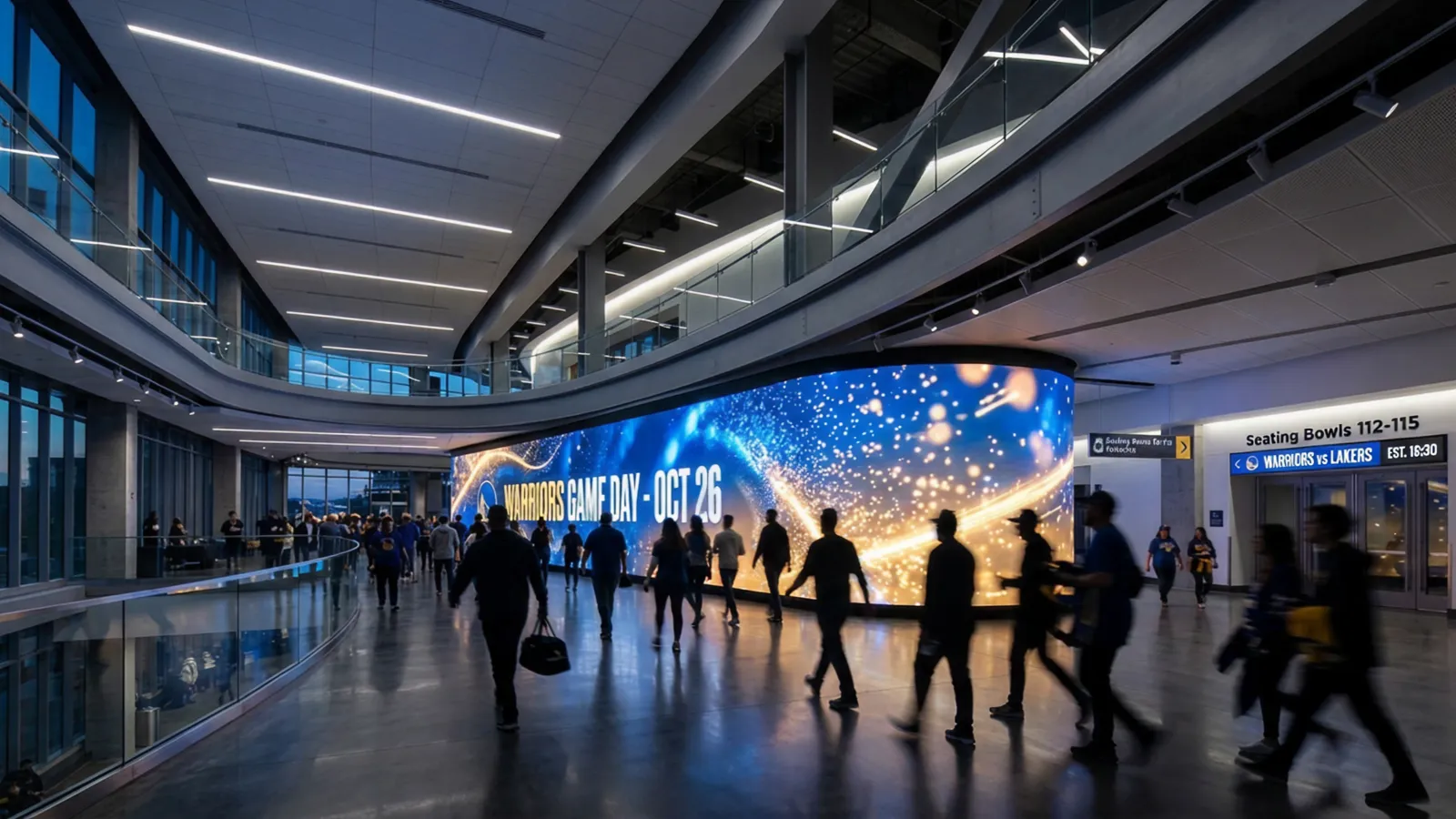
The smart stadium market hit $9.57 billion in 2025---and it's accelerating toward $35.08 billion by 2034 at a 15.5% CAGR. The driving force isn't bigger screens. It's the shift from venues that host 15 events per year to platforms that generate revenue 175+ days per year.
Interactive installations are at the center of that shift. They turn concourses, fan zones, and approach areas into experiences worth arriving early for, staying late in, and sharing online. This is the stadium extension of the experience economy: fans now choose venues for the moments they create, not just the games they host.
This guide covers what stadium-grade installations look like, where they work, what they cost ($100K--$1M+), and how to measure their impact---with real-world examples from SoFi Stadium, Intuit Dome, Mercedes-Benz Stadium, Tottenham Hotspur, and Citi Field.
Who this is for: Stadium operators, franchise experience VPs, sports marketing agencies, brand activation directors, and sponsorship teams evaluating interactive technology for venues.
Key Takeaways
- The smart stadium market is growing from $9.57B (2025) to $35.08B by 2034 (15.5% CAGR)---interactive fan experiences are the fastest-growing segment.
- Fans who engage with AR activations are 56% more likely to attend future games and 67% more likely to buy merchandise.
- Budget tiers range from $100K (single fan zone) to $1M+ (full-venue immersive ecosystem), with ongoing content refresh at 15--20% of initial cost per year.
- NHL digitally enhanced dasherboards generated a 21% year-over-year increase in sponsorship revenue across 700+ brands.
- Immersive sponsor activations deliver 75% higher brand recall than static signage---and command 2--5x the CPM.
- The real ROI driver is event density: venues that shift from 15 to 175+ active days per year fundamentally change their revenue per square foot.
1. Why Stadiums Can't Compete on Sightlines Alone
1-1. The second-screen threat
The at-home viewing experience has never been better. 4K multi-angle broadcasts, real-time stats overlays, instant replays from any angle, and zero-queue concessions (your fridge). Stadiums that offer nothing beyond the game itself are losing the argument for a $150+ ticket, parking, and four hours of commitment.
Interactive installations create what screens cannot: physical, shareable, multi-sensory moments that justify showing up. A reactive LED concourse, an AR player meet-and-greet, or a motion-tracked fan challenge---these experiences don't exist on a couch.
1-2. The 175-day venue model
The economics of stadiums are shifting. A venue with 15 home games per year amortizes its technology investment across a fraction of the calendar. But venues that program concerts, corporate events, fan tours, community activations, and off-season experiences across 175+ active days fundamentally change the math.
Interactive installations enable this density. They're not built for one event---they're platforms that adapt content for game days, concerts, private rentals, and fan festivals. The technology is the same; the content changes.
1-3. Fan demographic shift
250+ brands are now activating AI-driven experiences across live sports. That number reflects a generational expectation: younger fans grew up on interactive screens, gamified apps, and shareable moments. They don't just watch---they participate. A stadium that treats fans as passive spectators is competing for an audience that's already moved on.
The venues winning this demographic---SoFi Stadium, Intuit Dome, Tottenham Hotspur---are the ones investing in interactive infrastructure as aggressively as they invest in sightlines and seating.
2. What Is a Stadium Interactive Installation?
A stadium interactive installation is a digital experience that responds to fan presence, movement, touch, or input---transforming concourses, fan zones, and common areas from passive corridors into participatory environments.
The goal isn't spectacle for its own sake. It's strategic engagement: getting fans to arrive earlier, stay longer, spend more, and share the experience online.
Common formats:
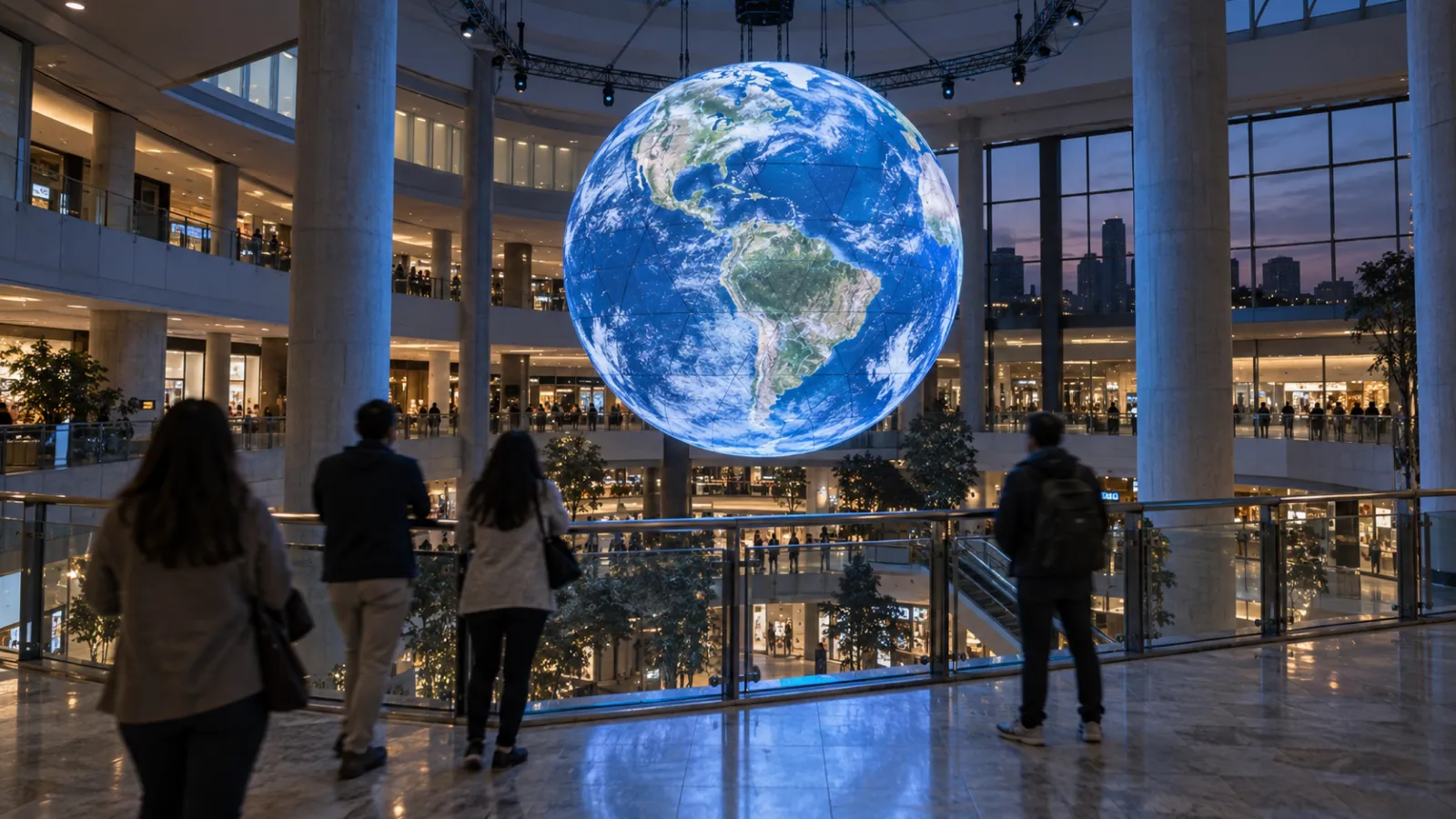
- LED concourse displays: Large-scale video walls, ribbon boards, and mesh exteriors with dynamic content that shifts with game state, time, and crowd energy
- AR overlays: Real-time stat displays, virtual player interactions, and navigation through mobile devices or in-venue screens
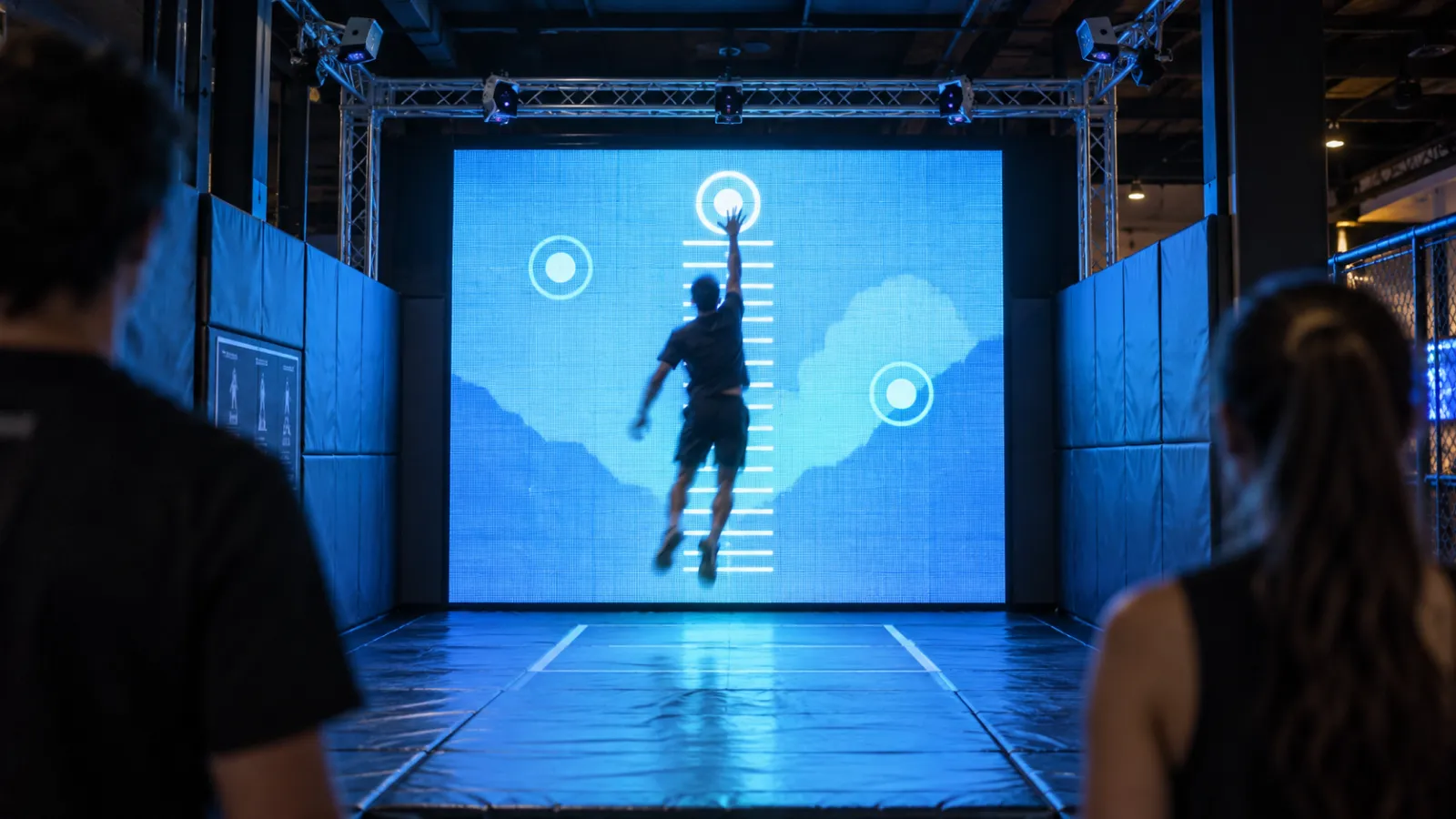
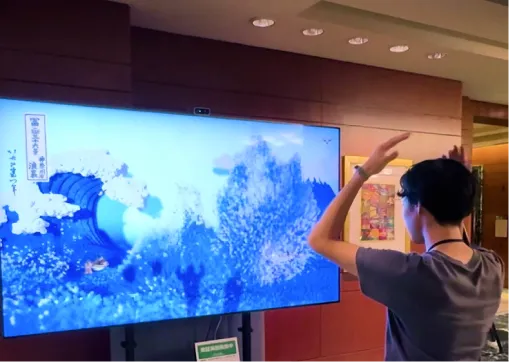
- Interactive fan zones: Touchscreen experiences, motion-tracked challenges, photo activations, and digital Lite Brite-style walls
- AI-personalized experiences: Highlight reels generated per fan, personalized wayfinding, and individualized welcome messages
- Mobile-integrated systems: In-seat ordering, wayfinding, social feeds, and location-based offers tied to the venue app
- Sponsor activation environments: Branded interactive experiences that generate measurable engagement data for partners
The distinction from digital signage matters: signage broadcasts a message, while installations create a two-way interaction that generates data, dwell time, and emotional connection.
3. Where Installations Work in a Stadium
Not every square foot needs an installation. The best deployments target high-traffic zones where fans are making decisions---arriving, waiting, or transitioning between experiences.
3-1. Exterior and approach
The fan experience begins before they enter the building:
- Architectural-scale LED mesh facades visible from highways and transit (Allegiant Stadium's 27,600-square-foot exterior mesh panel is visible from the Las Vegas Strip)
- Arrival sequences that build anticipation during the walk from parking to gate
- Digital wayfinding that guides fans to their entry point
3-2. Concourses and circulation zones
Fans spend significant time in concourses---arriving early, halftime breaks, moving between sections. These spaces are typically under-leveraged:
- Interactive walls and surfaces that respond to crowd movement
- Real-time stats and replays keeping fans engaged outside the bowl
- Discovery moments that reward exploration ("I found something cool on the upper concourse")
3-3. Fan zones and pre-game plazas
The highest-engagement window is the 1--2 hours before kickoff:
- Motion-tracked challenges and competitions (pitching speed, reaction time, penalty kicks)
- Photo activations with AR player overlays that generate UGC
- Branded interactive experiences from sponsors
3-4. Premium suites and club levels
Premium ticket holders expect differentiation:
- Personalized digital displays that recognize loyalty tier
- Exclusive interactive experiences unavailable in general admission
- Connected second-screen content with stats, replays, and camera angles on demand
3-5. In-bowl displays
The most visible installation layer:
- Jumbotrons and central scoreboards (Citi Field's centerfield display: 17,400 sq ft, 13+ million pixels)
- 360-degree halo boards (Intuit Dome's 270-degree Halo board)
- Ribbon boards for continuous sponsor rotation and crowd prompts
3-6. Retail and F&B areas
Interactive technology in concession zones drives:
- Mobile ordering to seats with real-time queue visualization
- Digital menu boards that adapt to time, inventory, and game state
- Branded F&B experiences (interactive tables, AR cocktail presentations)
4. Five Outcomes for Stadium Operators
4-1. Non-matchday revenue
Interactive installations transform idle venues into year-round destinations. Concerts, corporate events, fan tours, community programming, and off-season festivals all run on the same interactive infrastructure. The shift from 15 to 175+ active days fundamentally changes the return on every dollar of technology investment.
4-2. Sponsorship revenue uplift
This is where the numbers get compelling. The NHL's digital dasherboard system---LED boards replacing physical boards---generated a 21% year-over-year increase in sponsorship revenue with 700+ participating brands. Interactive sponsor activations deliver 75% higher brand recall than static signage and create measurable dwell time, UGC attribution, and engagement data that justify premium pricing.
4-3. Fan retention and repeat attendance
Fans who engage with AR activations are 56% more likely to attend future games and 67% more likely to purchase merchandise. While only 10--15% of fans actively participate in AR experiences on any given game day, those who do become measurably more valuable---quality of engagement matters more than volume.
The psychology of digital awe explains why: immersive experiences trigger stronger memory encoding and emotional connection than passive viewing.
4-4. UGC and earned media
The best stadium installations include a designed "share peak"---a moment so photogenic that fans capture and post it without prompting. Moody Center's 70-foot Dell Interactive Wall (a digital Lite Brite) is explicitly designed for this: fans create visual patterns, photograph them, and share. The venue gets organic social reach without increasing ad spend.
4-5. Data-driven operations
Interactive installations generate behavioral data that static infrastructure cannot:
- Aggregate heat maps showing which zones get the most engagement
- Flow patterns revealing how fans move between experiences
- Dwell time data that informs staffing, security, and concession planning
- Content performance metrics showing what drives the most interaction
Privacy-first analytics (zone-level aggregates, not individual tracking) deliver this without raising data concerns.
5. Real-World Examples
5-1. SoFi Stadium, Los Angeles
The NFL's flagship venue features a 4K Infinity Screen---a dual-sided, oval-format display suspended above the field delivering live action, replays, stats, crowd prompts, and sponsor content in real time. The connectivity layer includes 2,400 Wi-Fi access points inside the venue and 300 surrounding the grounds. Mobile ordering, facial recognition for personalized experiences, and integrated transportation scheduling create a fully connected fan ecosystem.
5-2. Intuit Dome, Los Angeles
Opened in 2024 as the LA Clippers' new home, Intuit Dome set a new standard for venue technology. AT&T Connectopia delivers an AI-powered interactive experience through a 75-inch 8K touchscreen. The Parallel Realities wayfinding system uses a 105-square-foot board to display up to 100 individualized messages simultaneously---each fan sees their own personalized directions on the same screen. A 270-degree Halo board ensures immersive viewing from every seat.
5-3. Mercedes-Benz Stadium, Atlanta
Home to the NFL's Falcons and MLS's Atlanta United, Mercedes-Benz Stadium integrates 180 pieces of art by 55 international artists alongside its digital infrastructure. AR experiences enable virtual player interactions with voice commands---fans can trigger celebration dances and virtual ride-alongs with their favorite athletes. AI chatbots handle seat upgrades and food recommendations, turning the mobile app into a personal concierge.
5-4. Tottenham Hotspur Stadium, London
The most technologically advanced football stadium in Europe features 1,000 square meters of digital screens and Wi-Fi capacity supporting all 62,000 spectators simultaneously. The Virtual Venue system provides a fully integrated 3D stadium view for ticket purchasing---fans explore exact seat views, discover premium experiences, and make purchase decisions before arriving. Crowd monitoring sensors track traffic flow for real-time security and operational optimization.
5-5. Citi Field, New York
The Mets' home underwent a comprehensive digital transformation: 1,300+ LED displays totaling 29,800 square feet and 40 million pixels. The centerfield scoreboard alone delivers 17,400 square feet of front-facing display (the largest in professional baseball) with a 10mm pixel pitch. A three-year phased upgrade enables dynamic advertising takeovers and sponsorship rotations visible from the adjacent highway---creating off-premise sponsorship value independent of in-stadium attendance.
5-6. Moody Center, Austin
The Dell Interactive Wall---a 70-foot digital Lite Brite-inspired experience---lets fans create patterns before, during, and after events. The installation is explicitly designed for social sharing: playful, colorful, and photogenic. It demonstrates that not every stadium installation requires a $10M LED grid---a single, well-designed interactive moment can drive significant UGC and brand association.
| Venue | Key Technology | Scale | Notable Metric |
|---|---|---|---|
| SoFi Stadium | 4K Infinity Screen, connected ecosystem | 2,400 Wi-Fi APs | Fully cashless, integrated transport |
| Intuit Dome | AI 8K touchscreen, Parallel Realities | 100 individualized messages | 270-degree Halo board |
| Mercedes-Benz Stadium | AR player interactions, AI chatbots | 180 art pieces | Voice-command fan engagement |
| Tottenham Hotspur | Virtual Venue 3D, crowd sensors | 62,000-capacity Wi-Fi | Pre-purchase seat exploration |
| Citi Field | LED display transformation | 29,800 sq ft, 40M pixels | Highway-visible sponsorship |
| Moody Center | Dell Interactive Wall | 70-foot Lite Brite | Designed-for-UGC activation |
6. Technology Categories for Stadium Environments
6-1. LED displays: jumbotrons, ribbon boards, exterior mesh
LED is the backbone of stadium visual technology. Key specifications vary by application:
| LED Type | Typical Cost Range | Pixel Pitch | Best For |
|---|---|---|---|
| Central jumbotron | $500K--$3M+ | 6--10mm | In-bowl focal point, replays, stats |
| Ribbon/fascia boards | $200K--$800K | 10--16mm | Continuous sponsor rotation, crowd prompts |
| Exterior mesh | $300K--$1.5M | 16--25mm | Arrival experience, highway visibility |
| Concourse displays | $50K--$300K | 2--4mm | Close-viewing wayfinding, interactive content |
Dual-sided and curved formats (SoFi's Infinity Screen, Intuit Dome's Halo board) maximize visibility but increase cost 40--60% over flat panels.
6-2. AR and mixed reality
Stadium AR uses mobile devices or in-venue screens---no headsets required:
- Real-time stats overlays during live action
- Virtual player meet-and-greets (Mercedes-Benz Stadium's voice-activated interactions)
- Navigation AR showing paths to seats, restrooms, and concessions
- Apple Vision Pro integration for multi-game picture-in-picture viewing (emerging)
AR engagement is high-quality but low-volume: 10--15% participation rates, but those participants are 56% more likely to attend and 67% more likely to buy merchandise.
6-3. AI personalization
AI transforms venue-wide technology from broadcast to personal:
- Parallel Realities (Intuit Dome): 100 individualized messages on a single screen using facial recognition
- AI-generated personalized highlight reels for each fan, delivered post-game
- Predictive offers based on location, purchase history, and behavioral patterns
- Real-time crowd flow analysis that adjusts wayfinding and staffing recommendations
6-4. Connectivity infrastructure (5G, Wi-Fi 6E, DAS)
Interactive experiences fail without reliable connectivity. Scale requirements are significant:
- SoFi Stadium: 2,400 Wi-Fi APs, redundant 40-gigabit optical connections
- Allegiant Stadium: 1,700 managed Wi-Fi APs, 227 miles of fiber, 284 miles of copper cable
- Tottenham Hotspur: Wi-Fi supporting 62,000 simultaneous connections
Budget $500K--$5M+ for comprehensive connectivity infrastructure. This is often the hidden cost---the technology is visible, but the network backbone enabling it is equally expensive.
6-5. Content management for event-driven operation
Stadium installations run on event cycles, not 24/7:
- Pre-game: Fan engagement mode (interactive challenges, sponsor activations, social feeds)
- In-game: Live action mode (replays, stats, crowd prompts, dynamic advertising)
- Halftime: Entertainment mode (interactive games, sponsor takeovers)
- Post-game: Exit mode (highlights, transportation info, next-event promotion)
- Non-event: Venue tour, corporate event, or community programming modes
A CMS that handles these transitions automatically---triggered by game clock, event schedule, or manual override---is essential for operational efficiency.
7. Sponsor Activations as Immersive Theater
7-1. From static signage to interactive brand moments
Traditional stadium sponsorship is commoditized: a logo on a board, a name on a section. Interactive installations transform sponsorship into participatory brand experiences:
- AT&T's Connectopia at Intuit Dome creates a branded technology showcase fans actively seek out
- Dell's Interactive Wall at Moody Center associates the brand with playful, shareable creativity
- NHL's digital dasherboards enable dynamic sponsor rotation with game-state-triggered placements
The shift is from impressions (how many people see the logo) to engagement (how many people interact with the brand).
7-2. Measuring sponsor ROI
Interactive activations generate data that static signage cannot:
- Brand recall: 75% increase from immersive activations vs. static signage
- Dwell time: Measurable seconds of active attention per fan
- UGC attribution: Social posts featuring sponsor branding, tagged and tracked
- Cross-platform reach: How sponsor presence spans broadcast, social, and in-venue simultaneously
This data enables value-based pricing instead of rate-card pricing---sponsors pay for measurable engagement, not estimated eyeballs.
7-3. Pricing interactive sponsorship inventory
Interactive sponsorship commands 2--5x the CPM of traditional signage because it delivers:
- Measurable engagement duration (not just impressions)
- First-party data on fan interactions
- UGC that extends reach beyond the venue
- Content that sponsors can repurpose across their own channels
For sponsorship sales teams, interactive installations don't just generate revenue---they create premium inventory that differentiates your venue from every other stadium offering the same boards and banners.
8. Budget Tiers & Timeline
8-1. Tier 1: $100K--$300K (single fan zone or interactive kiosk cluster)
What you get:
- One interactive fan zone or kiosk cluster (2--4 touchpoints)
- Custom interactive content with seasonal variations
- Basic CMS for content updates
- 1-year hardware warranty
Timeline: 8--12 weeks from concept to launch
Best for: Pilot programs, single-zone activations, sponsor-funded experiences
8-2. Tier 2: $300K--$1M (multi-zone concourse experience)
What you get:
- 3--6 connected installation zones across concourses and fan areas
- Custom interactive and generative content systems
- Motion tracking, gesture-based, or mobile-triggered interactions
- Integration with venue app and CMS infrastructure
- Remote monitoring and maintenance plan
Timeline: 16--24 weeks from concept to launch
Best for: Mid-market venues, premium level upgrades, multi-sponsor activation platforms
8-3. Tier 3: $1M+ (full-venue immersive ecosystem)
What you get:
- Venue-wide interactive infrastructure (10+ zones)
- Custom hardware design and fabrication
- AI personalization and real-time content adaptation
- Full integration with ticketing, loyalty, and sponsorship platforms
- Dedicated content pipeline and seasonal refresh schedule
- 3--5 year maintenance and support plan
Timeline: 6--12 months, typically phased across off-seasons
Best for: Flagship venues, new builds, comprehensive digital transformation programs
8-4. Ongoing costs
Budget for these recurring expenses:
- Content refresh: 15--20% of initial content cost per year (critical for season-ticket holders who visit 8--20 times)
- Hardware maintenance: LED has 40--60% lower TCO than alternatives over 5 years
- Software licensing: CMS, analytics, monitoring platforms ($2K--$10K/month depending on scale)
- Connectivity maintenance: Network infrastructure upkeep ($5K--$20K/month for large venues)
For a detailed breakdown of installation costs, see our interactive installation cost and budget guide.
9. ROI & Measurement
9-1. Attendance and retention metrics
Track the fan engagement cycle:
- Early arrival rates (are fans arriving 60+ minutes before kickoff to use interactive zones?)
- Repeat attendance (are interactive zone users returning more frequently?)
- Season ticket renewal rates among engaged vs. non-engaged fans
9-2. Sponsorship revenue attribution
Connect interactive installations to sponsor value:
- Revenue per sponsor from interactive activations vs. traditional signage
- Year-over-year sponsorship growth (NHL saw 21% uplift from digital dasherboards)
- New sponsor acquisition driven by premium interactive inventory
9-3. Per-capita spend tracking
Measure whether interactive zones drive incremental revenue:
- F&B and merchandise spend for fans who engage with installations vs. those who don't
- Conversion rates on location-based offers triggered by interactive experiences
- Premium upgrade rates for fans exposed to club-level interactive showcases
9-4. Social and UGC volume
Quantify earned media:
- Venue-specific hashtag and geotag volume on game days vs. non-game days
- UGC posts featuring interactive installations (track by location, not just hashtag)
- Earned media value calculation against equivalent paid social spend
10. Common Pitfalls
Overbuilding for matchday only. If your interactive infrastructure only activates 15--20 days per year, the ROI math doesn't work. Design for the 175-day venue model from the start---installations should serve concerts, corporate events, fan tours, and community programming, not just game days.
Ignoring connectivity infrastructure. A $500K interactive fan zone means nothing if the Wi-Fi can't support 50,000 concurrent connections. Connectivity is the invisible prerequisite. SoFi deployed 2,400 Wi-Fi access points and Allegiant ran 227 miles of fiber for a reason. Budget connectivity alongside technology, not as an afterthought.
Sound conflicts with the PA system. Stadium PA systems are designed to reach every seat. Interactive installations with audio compete for the same airspace. Careful sound design---directional speakers, acoustic zoning, or silent-with-haptics approaches---prevents complaints and ensures both systems work.
Static content after launch. A stunning installation becomes invisible by mid-season if the content never changes. Season-ticket holders visit 8--20 times per year. They need fresh content, seasonal themes, opponent-specific visuals, and event tie-ins. Budget content production as an operational expense, not a one-time project cost.
No sponsor integration strategy. Installations designed without sponsor integration leave revenue on the table. The most valuable stadium installations are platforms for sponsor activation, not standalone art pieces. Plan the sponsor framework during design, not after deployment.
Underestimating crowd-scale reliability. 50,000+ fans hitting the same Wi-Fi network, triggering the same interactive experiences, and streaming simultaneously. Consumer-grade equipment fails at this scale. Commercial-grade hardware, edge computing, redundant systems, and load-tested infrastructure are non-negotiable.
11. How to Get Started
Step 1: Audit your fan journey touchpoints. Walk the venue as a fan. Where do you arrive, wait, decide, linger, and leave? Map every touchpoint from parking lot to seat and back. The highest-value installation locations are where fans are making decisions or killing time.
Step 2: Define measurable goals. "We want a better fan experience" isn't a brief. Define what success looks like: early arrival rate increase, sponsorship revenue uplift, per-capita spend growth, UGC volume targets. See our studio briefing guide for how to write an effective brief.
Step 3: Start with a pilot zone. A single Tier 1 installation ($100K--$300K) lets you test engagement, gather data, and build internal confidence before committing to a multi-zone rollout. Choose a high-traffic zone with good connectivity---the concourse near the main entry is usually the best pilot location.
Step 4: Choose a partner with event-scale experience. Stadium installations require partners who understand crowd-scale reliability, event-driven content management, and the unique demands of a venue that goes from empty to 60,000 fans in 90 minutes. A studio that builds pop-up installations may not have this infrastructure expertise.
Step 5: Plan the content lifecycle around your season calendar. Before hardware ships, map your first year of content: pre-season launch, rivalry games, playoffs, off-season events, and the refresh cadence that keeps season-ticket holders engaged across 8--20 visits.
12. About Utsubo
Utsubo is a creative studio specializing in interactive installations and immersive digital experiences. We combine Three.js expertise with physical installation design to create memorable fan moments.
What we offer:
- Custom interactive installations for stadiums, casinos, hotels, museums, and retail
- Three.js and WebGL development for real-time generative content
- End-to-end design and implementation, from concept through ongoing support
13. Let's Talk
Planning an interactive experience for a stadium or sports venue? We work with teams on immersive fan zones, interactive concourses, and sponsor activation technology.
If you're exploring a partnership, let's discuss your project:
- What you're building and the fan journey you're enhancing
- Which technical approach makes sense for your venue and budget
- Whether we're the right fit to help you execute
Stadium Fan Experience Checklist
- Mapped the fan journey from parking to seat and identified high-value installation zones
- Defined measurable goals (early arrival rate, sponsorship revenue, per-capita spend, UGC volume)
- Evaluated LED, AR, AI personalization, and interactive surfaces for each zone
- Confirmed connectivity infrastructure supports 50,000+ concurrent connections
- Planned content lifecycle around the season calendar (pre-season, gameday, off-season)
- Designed installations for 175-day venue model, not matchday-only activation
- Built sponsor activation framework into the installation design
- Budgeted for ongoing content refresh and hardware maintenance (15--20% annually)
- Tested crowd-scale reliability under peak load conditions
- Established ROI measurement framework before launch (attendance, spend, UGC, sponsorship)
FAQs
How much does a stadium interactive installation cost?
Budget tiers range from $100K--$300K for a single fan zone or interactive kiosk cluster, $300K--$1M for a multi-zone concourse experience, and $1M+ for a full-venue immersive ecosystem. LED perimeter boards run $600--$1,500 per square meter depending on pixel pitch and brightness. Ongoing content refresh typically costs 15--20% of the initial content investment per year. For a detailed breakdown, see our interactive installation cost guide.
What is the ROI of interactive fan experiences?
Fans who engage with AR activations are 56% more likely to attend future games and 67% more likely to buy merchandise. The NHL's digital dasherboard system drove a 21% year-over-year increase in sponsorship revenue across 700+ brands. Immersive activations deliver 75% higher brand recall than static signage. The strongest ROI driver is event density---venues that shift from 15 to 175+ active days per year see fundamentally different returns on their technology investment.
Can interactive installations work during live events with 50,000+ fans?
Yes, with proper infrastructure. This requires enterprise-grade Wi-Fi (2,400+ access points at SoFi Stadium scale), edge computing for low-latency interactions, and redundant systems that handle peak load without degradation. Content should be designed for both active modes (pre-game, halftime) and ambient modes (in-game, where attention is on the field). Allegiant Stadium runs 1,700 managed Wi-Fi access points across 227 miles of fiber for this reason.
How do AR experiences work in a stadium?
Stadium AR primarily uses mobile devices or in-venue screens---no headsets required. Applications include real-time stats overlays during live action, virtual player interactions (Mercedes-Benz Stadium offers voice-activated player meet-and-greets), and navigation showing paths to seats, restrooms, and concessions. Apple Vision Pro multi-game viewing is emerging but still early. Current participation rates are 10--15% per game, but engaged fans show significantly higher retention and spend.
What connectivity infrastructure do interactive stadiums need?
Enterprise-grade Wi-Fi 6E with DAS (distributed antenna systems) is the baseline. Major venues deploy 5G small cells for outdoor areas and edge computing for latency-sensitive interactions. SoFi Stadium runs 2,400 Wi-Fi access points with redundant 40-gigabit optical connections. Budget $500K--$5M+ for comprehensive connectivity, depending on venue size and existing infrastructure. This is often the largest hidden cost in stadium technology projects.
How do sponsors benefit from interactive installations?
Interactive activations deliver 75% higher brand recall than static signage and create measurable dwell time, UGC attribution, and cross-platform engagement data. This premium inventory commands 2--5x the CPM of traditional signage because sponsors pay for measurable engagement, not estimated eyeballs. AT&T's Connectopia at Intuit Dome and Dell's Interactive Wall at Moody Center demonstrate how brands create technology showcases that fans actively seek out.
Can stadium installations generate revenue on non-event days?
Yes---and this is the core business case. Interactive installations enable concerts, corporate events, fan tours, community programming, and off-season festivals. The shift from 15 to 175+ active days per year transforms capital expenditure into recurring revenue. Installations designed only for matchday activation underperform because they amortize their cost across too few events.
How long does it take to install interactive technology in a stadium?
A single-zone pilot takes 8--12 weeks from concept to launch. Multi-zone concourse experiences require 16--24 weeks. Full-venue ecosystems run 6--12 months, typically phased across off-seasons to avoid disrupting the game schedule. Plan major deployments to begin immediately after your season ends, with commissioning complete before the next pre-season. Off-season windows are the critical path constraint for stadium technology projects.


 Osaka Interactive Installation Studio